In the rapidly evolving landscape of digital advertising, the boundary between traditional search and generative artificial intelligence has officially blurred. Following the latest series of updates from Google Marketing Live, the search giant has signaled a definitive shift: the Google Shopping Feed is no longer merely a list of products; it has become a sophisticated "data warehouse" designed to power the next generation of AI-driven consumer experiences.
As Google integrates AI-Max and AI Overviews into the core of its search engine, advertisers are facing a new reality. To maintain visibility, brands must move beyond basic optimization and adopt a suite of new feed attributes designed to provide the semantic context that large language models (LLMs) require.
Main Facts: The Transition to an AI-First Shopping Ecosystem
The central takeaway from Google’s recent announcements is the transition of Shopping campaigns into the "AI-Max" era. This update represents a fundamental change in how product data is processed and presented to users.
The Mandatory Nature of AI Adoption
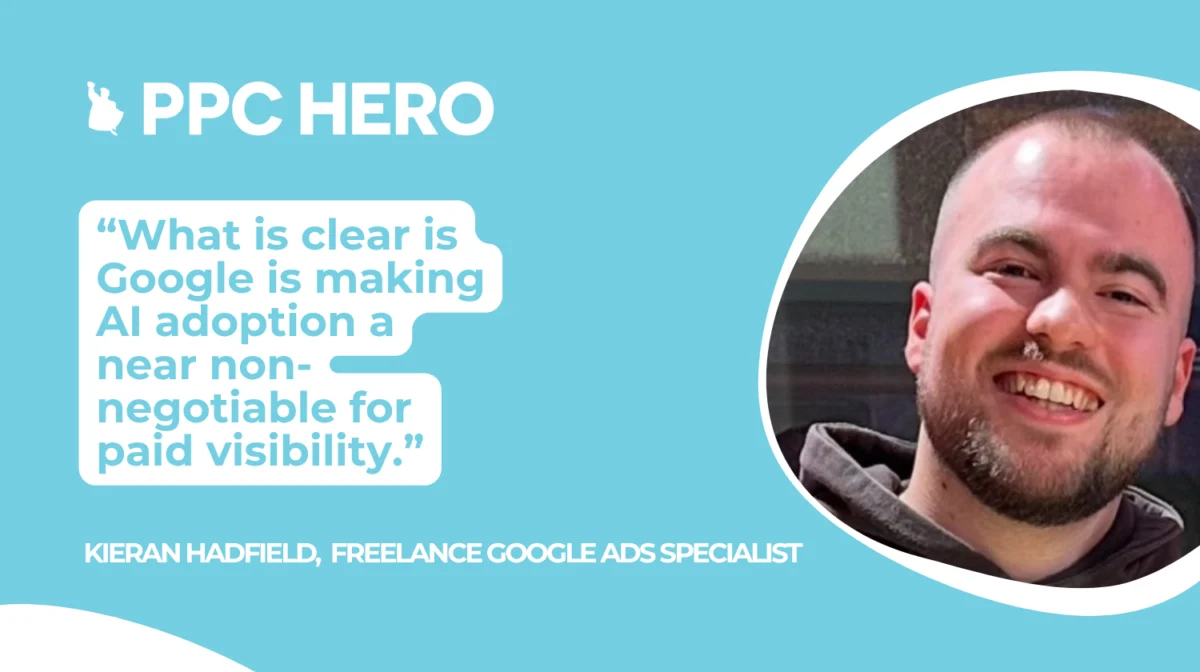
Google has made it clear that visibility in its most premium real estate—AI Overviews and the upcoming "AI Mode"—will be contingent on the use of AI-driven campaign types. Specifically, campaigns that do not leverage Broad Match, Performance Max (PMax), or the new AI-Max for Shopping will see their visibility heavily restricted. While the traditional "ten blue links" view will persist, industry analysts predict a significant migration of user attention toward AI-synthesized results, leading to a projected drop in impressions for legacy campaign structures.
The Feed as a Semantic Engine
The Shopping Feed has evolved from a simple spreadsheet of prices and titles into a rich repository of product knowledge. Google’s AI now uses this feed to:
- Dynamically rewrite titles and descriptions to better match specific user queries.
- Direct users to alternative product pages if the AI determines a different landing page better suits the user’s intent.
- Generate conversational responses using specific product data to answer complex consumer questions.
The Four Pillars of Modern Feed Optimization
To facilitate this shift, Google has introduced four critical new attributes that advertisers must integrate to ensure maximum visibility:
- FAQ Attribute (
faq): Allows for 30 pairs of questions and answers. - Product Document Attribute (
product_document): Enables the upload of PDFs for technical specifications and manuals. - Product Family Attribute (
product_family): Maps natural product pairings and upsells. - Product Popularity Score (
product_popularity_score): A merchant-defined metric to highlight hero SKUs.
Chronology: The Road to AI-Max
The path to the current AI-integrated state of Google Shopping has been a multi-year journey of increasing automation and data sophistication.
- 2012–2018: The Era of Manual Control. Advertisers focused on granular campaign structures (like the "Alpha/Beta" or "SPAGs" models) and manual bid adjustments. The feed was a static utility.
- 2019–2021: The Rise of Smart Shopping. Google introduced automated bidding and placement, marking the first major step away from manual control. This period saw the introduction of basic machine learning into the Shopping ecosystem.
- 2022–2023: The PMax Revolution. Performance Max replaced Smart Shopping, consolidating Search, YouTube, Display, and Shopping into a single "black box" campaign type. During this time, Google launched "Product Highlight" and "Product Detail" attributes, signaling a move toward more conversational data sets.
- 2024–2026: The AI-Max and Generative Era. The current phase, characterized by the announcements at Google Marketing Live, introduces AI Overviews. The feed is now the primary training set for the AI to understand a brand’s inventory in real-time.
Deep Dive: The 4 Must-Use Attributes for Maximum Visibility
To thrive in the AI-Max environment, advertisers must move beyond the "standard" feed. The following four attributes are the keys to unlocking the next level of visibility.
1. The FAQ Attribute: Bridging the Conversational Gap
The faq attribute is perhaps the most transformative addition to the feed. It allows merchants to include up to 30 pairs of Questions and Answers, totaling up to 10,000 characters.
Why it matters: In the past, Google’s AI had to "scrape" your website to find answers to user questions. By providing this data directly in the feed, you ensure that the AI has the most accurate, brand-approved information.
Strategic Application: Brands should aggregate data from customer service logs, on-site reviews, and frequently asked questions. By answering questions about compatibility, sourcing, or usage directly in the feed, you allow the AI to convert a user within the AI Overview before they even click through to your site.
2. Product Documents: Providing Technical Depth
The product_document attribute allows for the integration of up to five PDF files per product. These can include sizing guides, care instructions, assembly manuals, and ingredient breakdowns.
Why it matters: High-consideration purchases (furniture, electronics, medical supplies) often fail because the user cannot find a specific technical detail. AI Overviews can now "read" these PDFs to provide instant answers to queries like, "Will this sofa fit through a 30-inch door frame?" or "Is this camera compatible with E-mount lenses?"
Strategic Application: This reduces "bounce" rates. If a user has to leave the search result to hunt for a PDF manual on your site, you risk losing them to a competitor. Providing this data in the feed keeps your product at the center of the AI’s recommendation engine.
3. Product Family: Mapping the Consumer Journey
The product_family attribute is designed to tell Google which SKUs belong together. This isn’t just about variants (like color or size); it’s about natural pairings—a camera and its specific lens, or a dining table and its matching chairs.
Why it matters: This attribute feeds the algorithm a map of your product catalog’s connectivity. It enables more intelligent cross-selling and upselling within the AI interface.
Strategic Application: Use this to drive Average Order Value (AOV). When a user searches for a primary item, the AI can confidently suggest the "Product Family" companion, knowing they are compatible and intended to be sold together.

4. Product Popularity Score: Influencing the Algorithm
The product_popularity_score is a merchant-prescribed value (1–100) that ranks a product’s popularity relative to the rest of the catalog.
Why it matters: In a fully automated AI system, merchants often feel they have lost control over which products get "pushed." This attribute provides a lever to signal to Google which items are trending, selling fast, or represent "Hero SKUs."
Strategic Application: This is an essential tool for inventory management. If a brand has a high-margin item that is a top seller, assigning it a score of 100 ensures the AI prioritizes its visibility over lower-priority clearance stock.
Supporting Data: The Impact of AI on Search Behavior
Recent industry data underscores why this shift is happening. According to internal Google studies and third-party e-commerce benchmarks:
- Decreasing CTR on Traditional Links: As AI Overviews occupy the "top of the fold," click-through rates (CTR) on traditional organic and standard text ads have seen a measurable decline in early testing phases.
- The Rise of Conversational Queries: Search queries are becoming longer and more complex. Users are no longer just searching for "running shoes"; they are searching for "waterproof running shoes for wide feet suitable for marathon training."
- Feed Quality vs. Conversion: Data from PPC Hero and other leading agencies suggest that feeds with "Advanced Attributes" (FAQs and Documents) see a 15–20% higher engagement rate in AI-driven environments compared to basic feeds.
- The "Zero-Click" Concern: While there is concern that AI Overviews will lead to more "zero-click" searches, early data suggests that the clicks that do occur are of much higher intent, as the user has already been pre-qualified by the AI’s summary.
Official Responses and Industry Perspectives
Google’s stance is clear: AI is the "new electricity" for commerce. At Google Marketing Live, executives emphasized that AI-Max is designed to "multiply" a merchant’s expertise rather than replace it.
Google’s Perspective:
"We are moving toward a world where the search engine doesn’t just find products, but understands them. By providing more structured data through these new attributes, merchants are essentially giving our AI the tools it needs to be their best salesperson."
The Counter-Perspective (PPC Experts):
While the potential is vast, many digital marketers remain cautious. The primary concern is the "black box" nature of AI-Max. Experts argue that without proper guardrails, the AI might prioritize high-volume, low-margin products or misinterpret technical data.
To mitigate these risks, industry leaders recommend:
- Brand Exclusions: Using settings to prevent AI from bidding on core brand terms where manual control is preferred.
- Negative Keyword Themes: Continuing to apply broad negative themes to prevent irrelevant AI-generated placements.
- Script-Based Monitoring: Utilizing third-party scripts to pull data from the "hidden" parts of PMax and AI-Max to see where spend is actually going.
Implications: The Future of Retail Competition
The introduction of these attributes and the shift to AI-Max has several long-term implications for the e-commerce industry.
1. The "Data Gap" Advantage
There will be a widening gap between brands that treat their feed as a technical chore and those that treat it as a strategic asset. Brands that invest the time to populate faq and product_document attributes will effectively "monopolize" the AI Overviews, leaving less sophisticated competitors relegated to the bottom of the page.
2. The Death of Low-Quality Feeds
In the manual era, a brand could "brute force" visibility through high bids even with a poor feed. In the AI-Max era, this will become prohibitively expensive. Google’s AI will prioritize "relevance" and "helpfulness" (as defined by the depth of data in the feed) over bid price alone.
3. A Shift in Roles for Digital Marketers
The role of the PPC manager is shifting from "bid manager" to "data strategist." Success in 2025 and beyond will require a deep understanding of content strategy, technical SEO (for feed health), and data science. The focus will be on what information we are giving the AI, rather than how much we are bidding.
4. Personalization at Scale
Ultimately, these changes enable a level of personalization previously impossible. By understanding the relationships between products (Product Family) and answering specific user concerns (FAQs), Google can create a bespoke shopping mall for every single user.
Conclusion
The transition to AI-Max and the introduction of these four new Shopping Feed attributes represent a "non-negotiable" evolution for digital retailers. The feed is no longer a static list—it is the brain of your advertising operation.
As Google continues to prioritize AI-synthesized search results, the brands that win will be those that provide the most comprehensive, structured, and helpful data. Optimizing your titles and descriptions was the baseline for the last decade; populating your FAQs, technical documents, and popularity scores will be the baseline for the next. The era of AI-driven visibility is here, and it is powered by the data you provide today.