For decades, the global IT services industry—a multi-billion-dollar engine powered by human capital—has functioned on a predictable, linear model: as client demand for software integration, customization, and maintenance grew, firms scaled by adding more heads to the payroll. Today, that model is facing its most significant existential threat, and one of the industry’s most prominent figures is leading the charge.
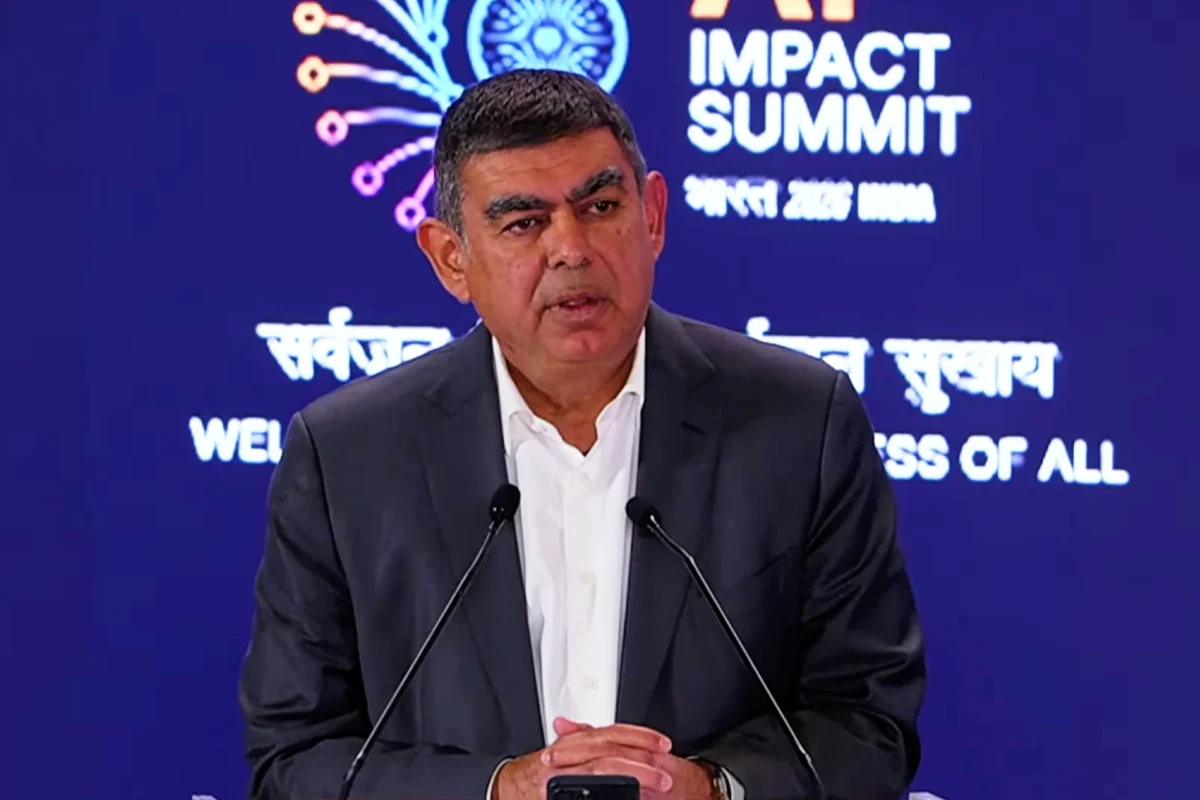
Vishal Sikka, the former CEO of Infosys and a veteran of SAP and Oracle, has officially entered the fray with a bold new venture: Hang Ten Systems. The startup, which has secured $32 million in a seed funding round led by Mayfield, aims to fundamentally rewrite the playbook for enterprise software delivery by replacing traditional, labor-intensive processes with AI-native automation.
The Core Mission: Automating the IT Lifecycle
Hang Ten Systems arrives at a critical juncture in the tech industry. As large enterprises struggle to modernize legacy infrastructures, they have historically relied on global service providers to bridge the gap. Sikka’s thesis is that the manual "sweatshop" approach to software engineering is obsolete.
The startup positions itself not as a traditional consultancy, but as an AI-driven engine that enables enterprises to continuously build, modify, and operate software. By leveraging agentic code generation and reusable "AI skills," Hang Ten aims to decouple value delivery from headcount. In the words of Mayfield managing partner Navin Chaddha, while traditional firms scale linearly with new hires, Hang Ten is designed for "non-linear" growth, where leverage increases with every project the AI undertakes.
The company is already hitting the ground running. Despite being only a month into its operational journey, Hang Ten has secured marquee clients, including Siemens Gamesa Renewable Energy and Fresenius. For Sikka, who has spent his career at the intersection of enterprise architecture and machine learning, this is the "biggest wave of our lifetimes."
Chronology: From SAP to VianAI and Beyond
To understand the weight behind Hang Ten, one must look at the trajectory of Vishal Sikka’s career. His influence on the enterprise software landscape spans over three decades, marked by a consistent focus on human-centric AI.
- The SAP Years: Before his high-profile stint at the helm of Indian IT giant Infosys, Sikka spent 12 years at SAP. During this tenure, he was instrumental in shaping the company’s technological direction, eventually serving as its first Chief Technology Officer.
- The Infosys Era (2014–2017): Sikka’s tenure at Infosys was characterized by a push toward automation and innovation. He sought to transform the company from a services-heavy model to one driven by software and IP. However, his tenure was marked by internal friction, eventually leading to his resignation in 2017.
- The VianAI Chapter (2019–Present): Following his departure from Infosys, Sikka founded VianAI. The startup focused on enterprise AI applications and decision-making tools, raising $50 million in seed funding and later securing a $140 million round led by SoftBank Vision Fund 2.
- The Launch of Hang Ten (2026): While VianAI focused on the application of AI in business processes, Hang Ten is a pivot toward the production of software itself. By focusing on agentic development, Sikka is attempting to disrupt the very services sector he once helped lead.
The "Agentic" Difference
A common question among industry observers is how Hang Ten differentiates itself from VianAI. According to investors and internal stakeholders, the distinction lies in the delivery mechanism.
VianAI was an AI-as-a-service platform designed to provide analytics and decision-support tools. Hang Ten, however, is an "AI-native services company." It functions as an agentic layer that sits between the client’s business requirements and their software stack. By utilizing domain-specific expertise combined with AI agents capable of writing, testing, and deploying code, the company claims it can execute project delivery with a fraction of the manual labor required by legacy firms.
The startup’s leadership team comprises a "band of brothers" from Sikka’s previous ventures. CTO Navin Budhiraja, Chief Design Officer Sanjay Rajagopalan, and Senior VP of Forward Deployed Engineering Tao Liu have all worked alongside Sikka at SAP, Infosys, and VianAI, creating a cohesive cultural core that allows the startup to scale at an aggressive pace.
Supporting Data and Market Realities
The launch of Hang Ten coincides with a period of profound volatility for traditional IT services firms. Infosys, once the darling of the Indian stock market, has seen its share price decline by over 35% this year as investors grapple with the "AI disruption" narrative.
The Great Debate
The industry is currently split into two camps:
- The Disruptionists: Analysts at Jefferies have argued that IT services are among the most vulnerable sectors to AI, as the core business model—billing for hours—is directly threatened by tools that can automate coding tasks.
- The Optimists: Industry leaders like Infosys Chairman Nandan Nilekani maintain that AI will actually expand the total addressable market (TAM). Nilekani recently stated that "AI-first services" could represent a $300 billion to $400 billion market opportunity by 2030, suggesting that the demand for AI integration is so vast that it will dwarf the loss of legacy service revenue.
Hang Ten is betting that the truth lies somewhere in the middle: the market is expanding, but the winners will be those who can provide that value without the crushing overhead of traditional headcount-based models.
Official Responses and Strategic Backing
The $32 million seed round led by Mayfield is a significant vote of confidence, particularly given the current skepticism surrounding AI startups that lack clear enterprise utility.
Navin Chaddha, the Managing Partner at Mayfield, emphasized that the firm’s investment was driven by two factors: Sikka’s "unparalleled domain expertise" and the unique scalability of the Hang Ten model. "Hang Ten is built so its leverage grows with every project," Chaddha noted, highlighting that the software-defined service model allows for a compounding effect on productivity that manual labor models cannot replicate.
Strategic participation from Aramco Ventures further signals that the startup is targeting large, asset-heavy industrial sectors where digital transformation has historically been slow and expensive.
Implications: The Future of IT Services
The emergence of Hang Ten raises fundamental questions about the future of the global services economy. If the "Hang Ten model" proves successful, we may see a massive shift in how Fortune 500 companies procure software services.
1. Decoupling Revenue from Headcount
If an AI agent can perform the work of ten engineers, the traditional "Time and Material" (T&M) billing model—the lifeblood of IT services—will become unsustainable. Clients will move toward outcome-based pricing, where they pay for the solution rather than the hours spent developing it.
2. The Rise of "Agentic" Engineering
Hang Ten’s focus on "agentic code generation" implies that the future of software engineering isn’t just about writing code, but about managing the agents that write, test, and deploy it. This shifts the role of the engineer from a creator to a conductor of AI-driven systems.
3. Global Talent Redistribution
Hang Ten has announced plans to expand globally, hiring across engineering, sales, and delivery. However, the nature of this hiring will be fundamentally different. The demand will likely shift toward "AI-fluent" architects who can oversee complex, automated workflows, potentially reducing the reliance on massive offshore delivery centers that define the current industry landscape.
Conclusion
Vishal Sikka is no stranger to taking on established giants, nor is he a stranger to the risks of disruption. With Hang Ten Systems, he is attempting to do what few legacy CEOs have dared: cannibalize the very service model that sustained their careers.
Whether the industry undergoes a graceful evolution or a violent displacement remains to be seen. However, one thing is clear: the era of linear, headcount-driven software services is nearing its end. As Hang Ten begins its work with clients like Siemens Gamesa, the rest of the IT world is watching closely, waiting to see if Sikka has truly discovered the way to "hang ten" on the AI wave, or if the surf is just too rough for even the most experienced veterans.