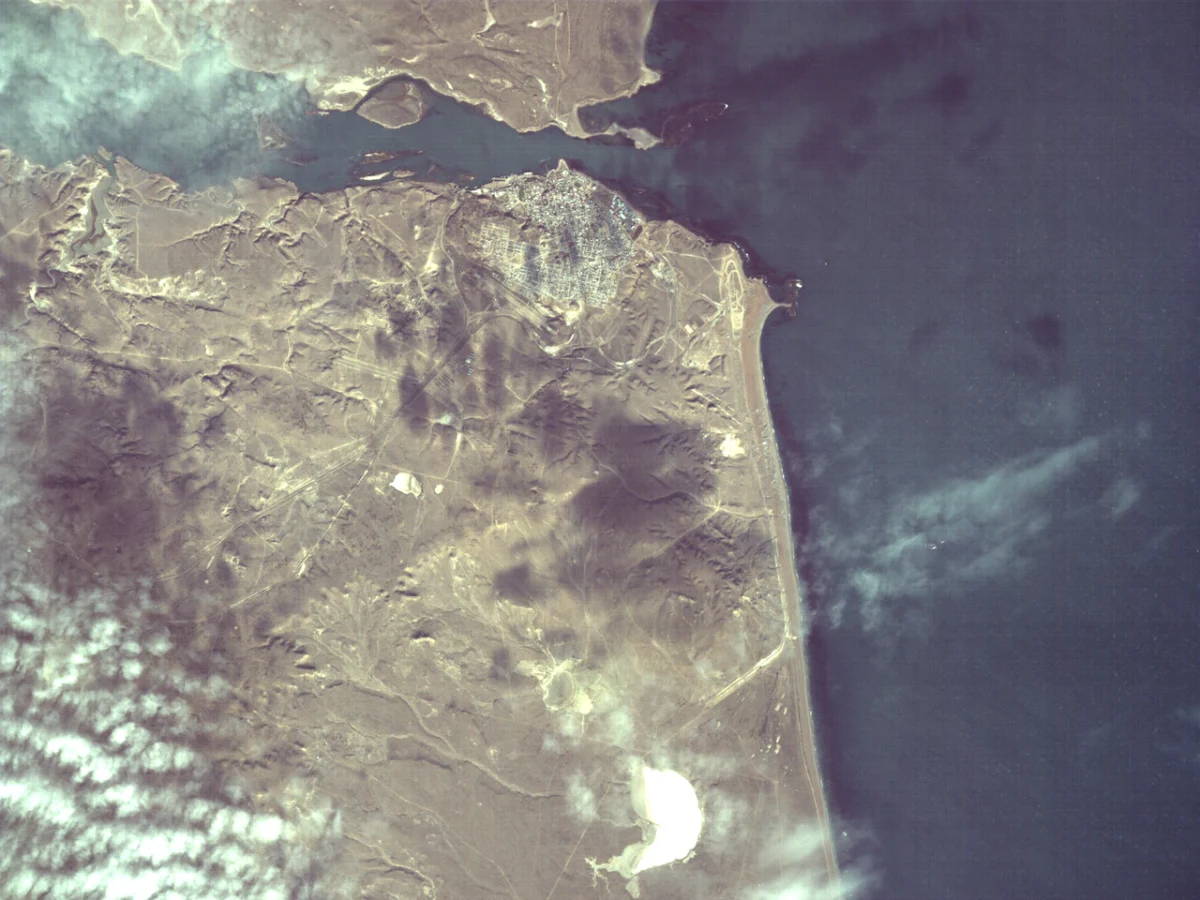
In a milestone that signals the dawn of a new era in space exploration, an Earth observation satellite has successfully achieved a feat previously relegated to science fiction: it identified, analyzed, and categorized specific features on the Earth’s surface entirely on its own.
In April, the Yam-9 spacecraft—a satellite operated by the space infrastructure company Loft Orbital—demonstrated the first reported use of a vision-language model (VLM) in orbit. By bypassing the traditional, sluggish process of downloading raw data to terrestrial analysts, the satellite functioned with a level of autonomy that promises to fundamentally transform the economics and utility of space-based sensors. This experiment, powered by a software package developed by NASA’s Jet Propulsion Laboratory (JPL), represents a critical turning point in how humanity interacts with the machines we place in the stars.
The Traditional Bottleneck: Why "Edge AI" in Space Matters
For decades, the architecture of Earth observation has been inherently inefficient. Satellites act as passive, "dumb" cameras, capturing terabytes of imagery and beaming them back to Earth. Once the data reaches the ground, human analysts or conventional machine learning algorithms must sift through the "noise" to find the "signal"—the specific infrastructure, weather patterns, or environmental changes that actually matter.
This process is plagued by latency, high bandwidth costs, and the sheer volume of data, which often outpaces the capacity of human review. The deployment of Google DeepMind’s Gemma 3 model on the Yam-9 satellite changes the game by bringing the intelligence to the data source, a concept known as "edge computing." By running sophisticated AI directly on the satellite’s hardware—specifically, an Nvidia Jetson Orin AGX GPU—the spacecraft can perform real-time triage, effectively deciding what information is worth transmitting back to Earth.
A Chronology of the Milestone
The success of the Yam-9 mission is the result of years of hardware and software integration.
- Pre-2025 Development: NASA JPL researchers, led by technical lead Juan Delfa Victoria, began exploring ways to make orbital AI more interactive. The conceptual framework, dubbed NAVI-Space, was originally intended to assist astronauts on lunar or Martian surfaces, providing a voice-controlled, intelligent interface to reduce the cognitive load of deep-space missions.
- Fall 2025: Loft Orbital launched the Yam-9 spacecraft. Positioned as a pathfinder for the company’s orbital AI ambitions, the satellite was equipped with high-end edge-compute hardware designed to host third-party software.
- April 2026: The definitive test occurred. Researchers fed the Gemma 3 model natural language queries. Instead of relying on pre-programmed scripts, the model interpreted commands like "identify areas where natural environment meets human development" or "locate infrastructure surrounding railway hubs." The satellite processed the raw sensor data, performed the classification, and confirmed the target—all while orbiting thousands of miles above the planet.
Bridging the Gap: The Technical Challenge
Adapting a model as complex as Gemma 3 for the harsh, resource-constrained environment of space was a Herculean engineering feat. Gemma 3 is a VLM—a model capable of both "seeing" imagery and "understanding" the linguistic context of a query.
"Software engineers had to streamline the software package to drastically reduce the amount of libraries and memory it would require," explains the project documentation. Space-hardened hardware, while powerful, cannot compete with the massive cooling and power infrastructure of a terrestrial data center. The team had to optimize the VLM to run within the strict power budgets of a satellite, ensuring that the AI’s hunger for computation didn’t compromise the satellite’s primary orbital functions.
Official Responses and Industry Implications
The success of this mission has sent ripples through the commercial space sector. Loft Orbital, which operates as an "infrastructure-as-a-service" provider rather than a traditional manufacturer, sees this as a proof-of-concept for a new business model.
"It opens the door to always-on, patrol layers in space," said Paul Lasserre, Loft’s head of AI, in an interview with TechCrunch. "If you have a VLM, you can have logic—like ‘monitor this border for me, and let me know when something is suspicious’—and interact back and forth with the satellites."
Other industry players are watching closely. Planet Labs, a giant in the Earth observation field, is already experimenting with similar applications. While their current orbital compute efforts remain focused on simpler object detection, a spokesperson confirmed that research into VLMs is currently underway. Similarly, Kepler Communications, which manages a significant cluster of orbital GPUs, noted that while they cannot disclose specific partner experiments due to non-disclosure agreements, they have facilitated "several undisclosed use cases" since their compute environment launched earlier this year.
Implications for the Future: From Surveillance to Science
The implications of this breakthrough extend far beyond commercial surveillance.
1. Real-Time Emergency Response
Currently, by the time a disaster—such as a forest fire, a flood, or an oil spill—is detected, verified, and reported, hours or even days may have passed. An "always-on" AI patrol layer could detect a wildfire in its nascent stages and alert ground crews within minutes, drastically reducing response times.
2. The "Digital Assistant" for Astronauts
The origins of the NAVI project reveal a secondary, equally vital application: the human-machine interface. As NASA and private entities push toward a sustained human presence on the Moon and Mars, the reliance on mission control will be hindered by the speed of light. Astronauts will need autonomous, intelligent systems that can answer complex questions about geology or equipment maintenance without needing to consult Earth. As Juan Delfa Victoria noted, the vision is akin to the interactive, helpful AIs seen in science fiction films—a far cry from the cold, unfeeling "HAL 9000."
3. Scaling the Constellation
Loft Orbital’s goal is ambitious: they estimate that a constellation of 50 to 100 satellites similar to Yam-9 would be sufficient to provide true real-time, global coverage. This would move the industry away from "snapshot" data collection toward a continuous, sentient monitoring system.
The Challenges Ahead: Memory, Power, and Ethics
Despite the excitement, the path forward is not without hurdles. The "prosaic-but-vital" challenges of power and memory management remain the primary constraints for orbital compute. Every watt used by a GPU is a watt that cannot be used for propulsion or communication.
Furthermore, the integration of autonomous AI into space infrastructure raises inevitable ethical and security questions. If a satellite is programmed to identify "suspicious" activities on its own, who defines what is suspicious? As these systems become more autonomous, the governance of orbital AI will likely become a major topic of international policy.
Conclusion: The New Frontier of Compute
The demonstration of the Gemma 3 model on Yam-9 is more than just a successful software update; it is a fundamental shift in the definition of a satellite. We have moved from an era of "remote sensing" to an era of "orbital intelligence."
As companies continue to refine these systems, the next decade will likely see the deployment of increasingly large-scale AI infrastructure in space. By solving the challenges of power management and software efficiency today, engineers are building the foundation for a future where space-based sensors act as active, intelligent participants in our global ecosystem.
The satellites of tomorrow will not just watch the Earth; they will understand it. And in that understanding, they will provide us with the foresight to better manage our planet—and the tools to successfully inhabit the ones beyond.