In an era defined by ubiquitous, high-speed connectivity and the rapid integration of artificial intelligence, it is easy to forget that the internet was once a vast, unmapped wilderness. For many, the transition from analog life to a world of "always-on" connectivity was not a sudden shift, but a decades-long transformation that fundamentally altered human behavior, professional productivity, and the social fabric of society.
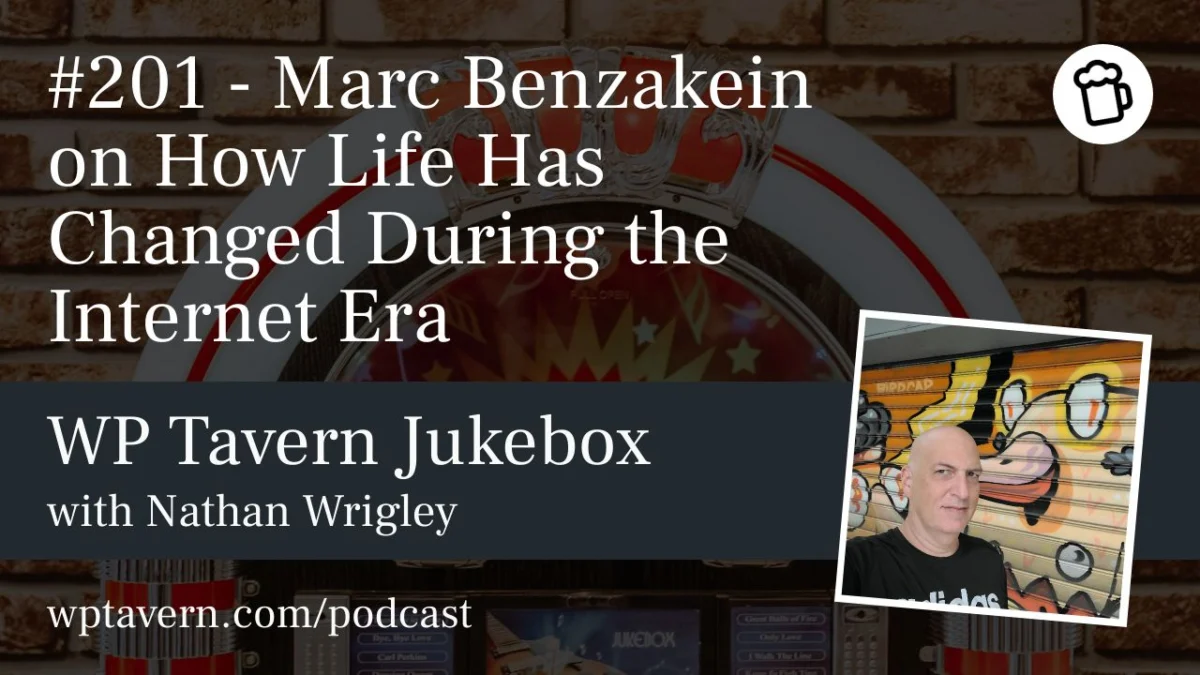
Recently, on the WP Tavern Jukebox podcast, host Nathan Wrigley sat down with industry veteran Marc Benzakein to discuss this profound journey. Moving away from the typical technical discourse on WordPress plugins and themes, the conversation served as a reflective walk through the history of the web—examining how a niche hobby for tech enthusiasts became the invisible utility that powers our modern existence.
The Dawn of Connectivity: From Bulletin Boards to Browsers
To understand the current state of the internet, one must look back to the mid-1990s. For Marc Benzakein, this era was characterized by curiosity and the pioneering spirit of early adopters. Before the graphical user interface of the World Wide Web became standard, the internet was a text-based landscape requiring significant technical aptitude.
Chronology of Early Digital Growth
- The BBS Era (Early 90s): Before the commercial internet, local Bulletin Board Systems (BBS) allowed individuals to connect via modem to a single host computer. These systems were the precursors to social media, offering file sharing and text-based communication. Benzakein recalls running a BBS in California, where a one-gigabyte SCSI hard drive was a "badge of honor" that attracted users from across the region.
- The ISP Boom (Mid-90s): As the internet moved toward commercialization, the role of the Internet Service Provider (ISP) emerged. Benzakein’s early professional experiences involved the daunting task of wiring schools for internet access using technologies like ISDN and early dial-up modems (14.4K and 28.8K baud rates).
- The Standardization Shift: The late 90s saw the transition from proprietary network protocols to the dominance of TCP/IP. This shift allowed disparate networks to communicate, creating the "inter-network" that would eventually become the global web.
The Double-Edged Sword of Productivity
One of the most compelling aspects of the discussion is the contrast between the promise of technology and its real-world impact. When the internet first entered the professional sphere, the prevailing narrative was that digital tools would liberate workers, compressing an eight-hour workday into two.
Instead, the opposite occurred. As mobile connectivity and email permeated the home, the boundary between professional and personal life began to erode. Benzakein notes that rather than reducing labor, technology enabled a 14-to-16-hour workday, as the ability to work from anywhere essentially meant that one was expected to work everywhere.
The Economics of Time
This phenomenon reflects a broader economic reality: time, much like a budget, is often filled to its maximum capacity. Efficiency gains in one area are rarely used to reclaim leisure time; instead, they are consumed by the "extra tasks" that technology makes possible. As the barrier to communication dropped, the volume of communication rose, leading to a state of perpetual availability that remains a defining, if exhausting, feature of the modern workforce.
Cultural Implications: The Erosion of "Slow"
The conversation highlights a subtle but alarming trend: the loss of the human capacity for "slow" thought. Modern entertainment and communication are designed for high-velocity consumption. From watching podcasts at 2x speed to the rapid-fire nature of social media, our cognitive habits are being rewired to favor speed over contemplation.
Benzakein shares a poignant observation regarding his own experience with Attention Deficit Hyperactivity Disorder (ADHD). He suggests that modern digital environments often demand a constant, 100% saturation of mental bandwidth. When we aren’t fully engaged in a high-intensity task, the brain seeks out additional stimuli—hence the multi-monitor setups and the urge to fill every quiet moment with digital noise.
This creates a societal challenge: the need to reclaim "downtime" as a productive act. Meditation, reading, and unplugging are no longer just hobbies; they are essential mental health interventions in an age of constant notification.
The Rise of Digital Minimalism
Perhaps the most optimistic implication discussed is the emerging pushback from younger generations. Despite growing up in a world where the internet is as common as electricity, many Gen Z and younger individuals are showing a marked interest in "analog" experiences.
The "Analog" Pendulum
- Reclaiming Offline Space: We are seeing a resurgence in physical formats, such as vinyl records and print books, which prioritize a tactile, singular focus over the fragmented nature of digital streaming.
- Intentional Disconnection: Many young people are opting for "dumb phones" or implementing strict boundaries regarding their online presence. This is not necessarily a rejection of technology, but a maturation of it. As the internet becomes an invisible utility, the novelty has worn off, and younger users are treating it as a tool rather than an identity.
- The Shift in Perspective: As Benzakein observed with his own children, the generation that has never known a world without the internet often treats it with a level of indifference that allows them to "put it down" more easily than the generations who witnessed its birth.
The Future: Open Standards vs. Walled Gardens
The podcast also touches on the philosophical battle between the open web and the walled gardens of modern tech giants. In the early days, there was a collective assumption that open standards (like RSS) would form the bedrock of the future. While those protocols still exist, the user experience has largely been captured by platforms that prioritize closed ecosystems for the sake of monetization and user retention.
The Role of Regulation and Responsibility
Benzakein raises an important question regarding the limits of regulation. While the "Wild West" nature of the early internet allowed for unprecedented innovation and freedom, it also created massive societal blind spots. As governments attempt to legislate the internet, they often struggle with a fundamental lack of understanding of the underlying technology.
However, the core mission remains: to keep the playing field level. The internet was meant to democratize access to information, allowing a small business to look as substantial as a multinational corporation. While the dominance of search engines and social giants has tilted this playing field, the potential for individual agency remains higher than in any other period in human history.
Conclusion: A Breathtaking Time to Live
As we look toward the next horizon—dominated by AI and machine learning—the lessons of the past thirty years become increasingly vital. The internet has not been a static invention, but a living, breathing, and sometimes unruly reflection of humanity itself.
The trajectory of the web confirms one thing: the technology will continue to accelerate, but the human response to it is within our control. By fostering an awareness of our own attention spans, prioritizing intentional connection, and supporting open ecosystems, we can ensure that the internet remains a tool for human flourishing rather than a source of constant, low-grade anxiety.
For those looking to navigate the future, the advice from veterans like Benzakein is clear: remain curious, be selective about what you allow into your bandwidth, and never forget the value of occasionally stepping away from the screen to simply experience the world as it is.