In the evolving landscape of web development, the WordPress block editor—Gutenberg—has stood as the most significant, and at times controversial, shift in the platform’s 22-year history. While the transition from the classic editor to a block-based architecture promised a future of intuitive, modular design, many professional agencies have found themselves grappling with a "feature gap."
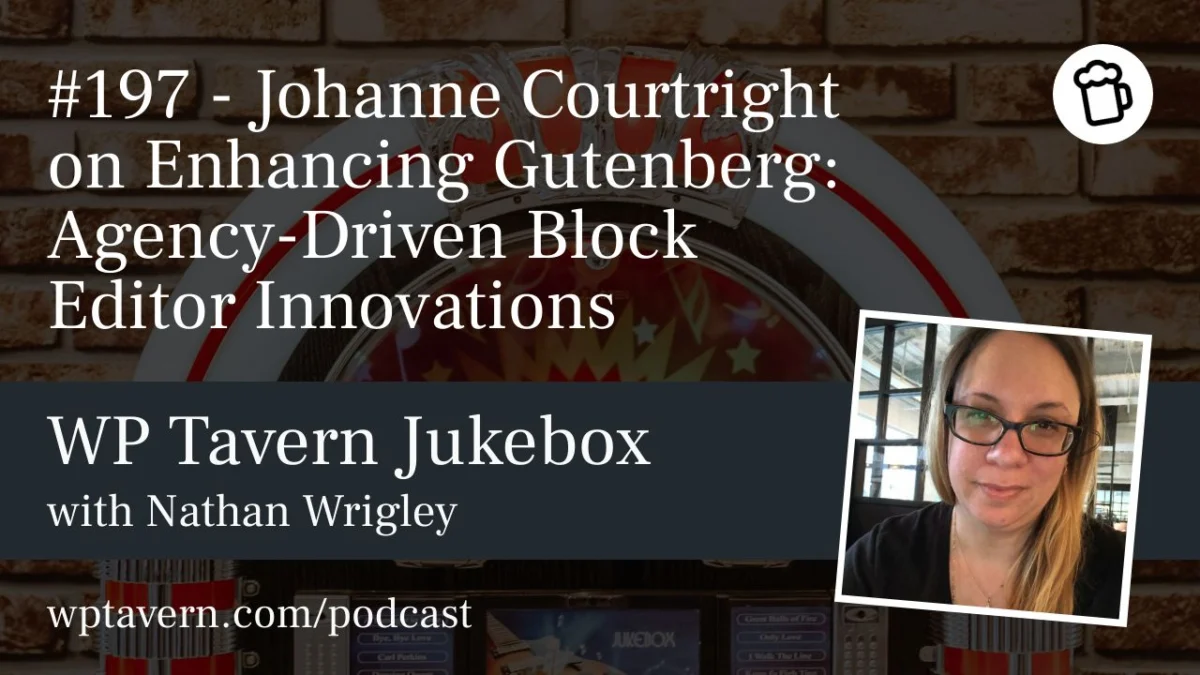
Johanne Courtright, a veteran developer with a background spanning static HTML and agency-level marketing, has emerged as a key figure in addressing these limitations. Through her open-source project, Groundworx, she is not merely creating a suite of blocks; she is architecting a foundation that allows agencies to treat the block editor as a high-performance, enterprise-ready tool.
The Evolution: From Static HTML to the React Revolution
Johanne Courtright’s journey into the WordPress ecosystem began in 2011. Like many developers of that era, she transitioned from the manual labor of Dreamweaver and static HTML sites into the dynamic world of CMS development. For years, she honed her skills by extending WordPress through custom post types, Advanced Custom Fields (ACF), and complex API integrations.
When Gutenberg arrived, Courtright, like many of her peers, faced a steep learning curve. The shift to a React-based architecture necessitated a fundamental change in how developers approached site building. "I didn’t want to be left behind," Courtright notes. "I took a course to accelerate my learning. It was a struggle, but I knew that to stay relevant, I had to embrace it 100%."
Her decision to move away from legacy tools like jQuery and embrace the Interactivity API marks a turning point in her professional philosophy. Rather than "fighting" Gutenberg by layering heavy third-party page builders on top of it, Courtright chose to build within the grain of the WordPress Core vision, creating lightweight, performant solutions that respect the underlying architecture of the platform.
Groundworx: Plugging the Agency Gap
The core motivation behind the Groundworx project is the observation that while WordPress is excellent for the "80% of users" who require basic publishing functionality, it often falls short for the "20%"—the agencies and high-end designers who require pixel-perfect control and complex responsive behavior.
Addressing the Missing Features
Agencies operating in the modern web landscape require tools that the default WordPress editor does not currently provide. Courtright’s suite targets these specific pain points:
- Breakpoint Control: Providing granular control over layout shifts across different screen sizes.
- Responsive Stacking: Enabling designers to reverse the order of elements—such as images and text—based on the device, ensuring the layout remains logical on mobile.
- Advanced UI Components: Creating sophisticated elements like dynamic Tabs that collapse into Accordions based on user-defined breakpoints, maintaining design consistency across devices.
- Theme Foundation: Offering a
theme.jsonconfiguration that allows for rapid, consistent styling without the bloat of traditional CSS frameworks like Tailwind.
By extending existing Core blocks rather than replacing them entirely, Groundworx ensures that sites remain compatible with future WordPress updates. "My goal is to provide enough blocks and a flexible theme.json foundation so that anyone can start a project without feeling locked into a proprietary system," says Courtright.
The Philosophical Divide: Classic vs. Block-Based Themes
As of late 2025, the WordPress ecosystem remains in a state of flux. While there was a long-held expectation that "Full Site Editing" (FSE) would render Classic Themes obsolete, the reality is more nuanced. Many users and agencies remain hesitant to make the full leap to block-based themes, often citing the complexity of the user interface as a primary barrier.
Courtright acknowledges this friction but argues that the issue is often one of education and approach. "No normal user wants to touch bloated page builders," she explains. "When you present them with a well-configured Gutenberg environment, with an hour of training, they are in love with it. They feel empowered to make edits themselves without breaking the site."
Her approach minimizes the use of custom CSS, instead leveraging the native capabilities of theme.json. This allows for a modular system where a brand’s color palette, typography, and spacing are handled globally, making it possible for a user to "swap" a theme for a seasonal change without losing content integrity.
The "Plugin Search" Crisis: A Plea for Better Discovery
A significant portion of Courtright’s critique of the current WordPress ecosystem is directed at the discovery process. For independent developers and small shops, the official WordPress Plugin Directory has become increasingly difficult to navigate.
"The search is awful," Courtright asserts. "It’s all keyword-stuffed. If you are a new developer, there is no way to rank for anything." She draws a parallel to the Apple App Store, suggesting that WordPress needs a more curated, community-driven approach to highlight high-quality, modern, and performant tools.
She proposes a more granular filtering system for the repository, allowing users to search by specific criteria:
- Gutenberg Support: Does the plugin utilize the block editor natively?
- Performance Metrics: Does it avoid legacy dependencies like jQuery?
- Design Philosophy: Does it adhere to modern web standards or rely on "div-soup" bloat?
Without these improvements, Courtright argues, the ecosystem risks burying innovation under a mountain of outdated or poorly optimized plugins.
Future Implications for Block-Based Business
The question of whether one can build a successful, sustainable business on blocks alone remains a hot topic in the WordPress community. While established products like Gravity Forms have paved the way for traditional plugin revenue models, the "block economy" is still finding its footing.
Courtright remains optimistic but realistic. She views her work on Groundworx as a tool for herself and her clients first, with commercial success being a secondary, welcome outcome. "I don’t expect it to be a fountain of cash," she says. "I love what I do. I do it for myself first, and if other people enjoy it, that’s great."
However, she recognizes that we may be on the cusp of a major shift. With WordPress 6.9 and 7.0 introducing advanced AI capabilities and further refinements to the block editor, the barrier to entry is lowering. The potential for "mini-applications"—blocks that perform complex tasks without the need for an entire plugin suite—is vast.
Conclusion
Johanne Courtright’s work represents a vital bridge between the foundational vision of WordPress Core and the high-demand requirements of modern digital agencies. By focusing on performance, interoperability, and the "human" side of the interface, she is helping to prove that Gutenberg is not just a replacement for the classic editor, but a robust application development platform.
As the WordPress community continues to navigate the complexities of 2026 and beyond, the success of the block editor will likely depend on developers like Courtright—those who are willing to look at the gaps in the platform, build the necessary solutions, and advocate for a more accessible, discoverable, and professional ecosystem. Whether the Core project eventually integrates these "agency-focused" features remains to be seen, but until then, projects like Groundworx ensure that the WordPress professional can continue to push the boundaries of what is possible on the web.