In an era dominated by corporate silos, closed algorithms, and the persistent, creeping "loneliness epidemic," the WordPress community stands as an unlikely, yet robust, beacon of human connection. What began as a piece of open-source blogging software in the early 2000s has metastasized into a global ecosystem that transcends mere code. It is a network of millions—designers, developers, business owners, and hobbyists—who have found that the true value of WordPress lies not in its dashboard, but in its people.
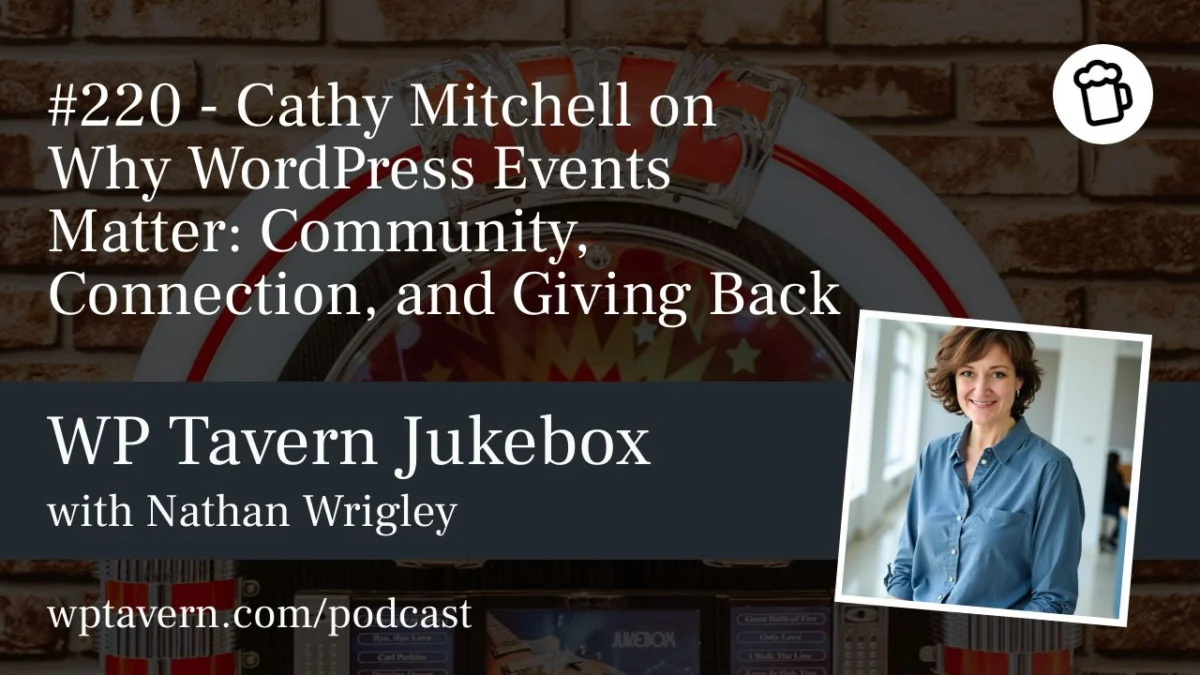
Recently, on the Jukebox Podcast from WP Tavern, host Nathan Wrigley sat down with Cathy Mitchell, a long-time WordPress practitioner and the lead organizer for the upcoming 2026 WordCamp Canada. Their conversation peeled back the layers of the WordPress ecosystem, revealing a culture built on the radical concepts of altruism, open access, and shared purpose.
The Evolution of an Ecosystem: From Personal Project to Professional Hub
Cathy Mitchell’s journey with WordPress mirrors the trajectory of thousands of others. She began using the platform in 2007, initially as a creative outlet during her maternity leave. "It was just something fun that I did," she recalls. By 2008, that personal curiosity had formalized into WPBarista, a professional business.
However, Mitchell’s path to becoming a pillar of the community was not linear. For years, she functioned as a business owner, viewing her involvement through the pragmatic lens of Return on Investment (ROI). It was only as her children grew older—reaching the life stage known as "empty nesting"—that she began to look beyond the balance sheet.
"I was looking for something to do," Mitchell explained. A nudge from a contact in the Canada Slack channel led her to volunteer for a local WordCamp. To her surprise, she wasn’t relegated to menial labor or kept behind a wall of corporate red tape. Instead, she was immediately trusted with significant responsibility. This experience was a revelation: in the WordPress world, if you show up, you are invited to lead.
The Anatomy of the "WordPress Culture"
The defining characteristic of the WordPress community is its persistent accessibility. Unlike the corporate world, where advancement is often gated by tenure and hierarchy, the WordPress community operates on a "default to yes" philosophy.
A Low Barrier to Entry
When a new volunteer arrives at a WordCamp, they aren’t asked for a decade of resume-padding experience. They are given a task, a team, and a support network. As Mitchell and Wrigley discussed, this creates a unique psychological environment. Participants often feel a sense of "imposter syndrome" when they first get involved, but they quickly discover that the community is designed to catch them if they stumble.
The Role of Altruism
Perhaps the most striking aspect of this community is the prevalence of altruism. Whether it is senior developers answering "noob" questions in support forums or organizers spending hundreds of unpaid hours planning massive, professional-grade conferences, the motivation is rarely purely financial.
Wrigley noted that this aligns with psychological research regarding human happiness. Studies suggest that two of the primary drivers of long-term well-being are social interaction and the act of giving away time or resources without the expectation of a return. By providing a space where these two drivers intersect, the WordPress community acts as an antidote to the isolation often fostered by modern technology.
Data and Societal Implications: The Loneliness Epidemic
The conversation between Mitchell and Wrigley took a profound turn when addressing the "loneliness epidemic." In 2023, U.S. Surgeon General Vivek Murthy officially declared loneliness a public health crisis, equating its physiological impact to smoking 15 cigarettes a day.
Statistics of Isolation
The data is stark: roughly 79% of young adults (aged 18–24) report feeling significant loneliness. While technology has enabled global connectivity, it has simultaneously eroded the frequency of face-to-face, high-quality human interactions.
Mitchell and Wrigley posited that the WordPress community serves as a vital counterbalance. By creating physical spaces like WordCamps, the community encourages people to step away from their screens and into shared, high-stakes, collaborative environments. These events are not just about software; they are about the shared experience of pulling together toward a common goal.
The Shifting Landscape of Sponsorship and Business
While the community’s social fabric remains strong, the economic environment is undeniably shifting. The "stratospheric growth" that defined the 2010s—where WordPress market share consistently trended upward—has entered a period of stabilization.
The Perfect Storm
Mitchell highlighted the challenges facing organizers today:
- Economic Uncertainty: With tighter budgets, businesses are more discerning about where they allocate sponsorship dollars.
- Increased Competition: The marketplace for plugins, themes, and agency services is more crowded than ever, forcing businesses to justify their community involvement through clearer, more tangible metrics.
- The Rise of AI: The advent of artificial intelligence is changing how we interact with the web, creating uncertainty about the future of traditional web development and content management.
Despite these challenges, Mitchell remains optimistic. She argues that sponsoring open-source projects is not just a marketing expense; it is an investment in the ecosystem. Businesses that contribute to the community find it easier to hire, easier to vet talent, and ultimately, more secure, because a healthy ecosystem supports a healthy business.
Building the Future: Engaging the Next Generation
A central theme of the discussion was the necessity of passing the torch. Both Mitchell and Wrigley emphasized that for WordPress to thrive, it must successfully engage the next generation of contributors.
Campus Connect and Educational Integration
The community is increasingly focusing on outreach to universities and technical schools. Programs like Campus Connect are designed to integrate WordPress into the classroom, allowing students to earn credit for contributing to open-source projects.
Mitchell is particularly focused on this for the 2026 WordCamp Canada. By creating pathways for young people to gain real-world experience, the community isn’t just training future developers; it is instilling the values of the open web—collaboration, transparency, and service—in the next generation of digital leaders.
Conclusion: A "Nice" Thing to Do
Ultimately, both Mitchell and Wrigley struggled to find a single, technical word to describe why the WordPress community works. They arrived at a simple, yet profound conclusion: it just feels nice.
In a world that is increasingly fractured and behind paywalls, the WordPress community offers a rare, tangible sense of belonging. It is a place where a single person’s contribution can change the direction of an event, where a stranger in a hallway becomes a colleague, and where the act of helping others serves as the bedrock of individual and collective fulfillment.
As Mitchell prepares for WordCamp Canada, her message to the community is one of resilience and invitation. The challenges of the future—be they economic, technological, or social—are significant, but they are easier to face when you are part of a team that is, quite literally, helping to build the infrastructure of the internet.
For those interested in finding their place within this ecosystem, the doors remain open. Whether through coding, organizing, or simply showing up at a local event, the WordPress community continues to offer something that is increasingly rare in the digital age: a genuine, human home.