By Editorial Staff
June 26, 2026
In a move that underscores the tightening convergence between space-based infrastructure and terrestrial artificial intelligence compute, Elon Musk is set to acquire Mesh Optical Technologies, a high-growth startup founded by three former SpaceX engineers. The acquisition, confirmed by a Federal Trade Commission (FTC) filing released earlier today, marks a significant consolidation of talent and intellectual property as SpaceX transitions into its new life as a public company.
The FTC, in an unusual display of regulatory efficiency, has already granted early termination of its antitrust review, clearing the path for the deal to close. This acquisition is not merely a talent grab; it is a calculated effort by Musk to vertically integrate the hardware necessary to power the next generation of AI-driven data centers.
The Core of the Deal: Bringing Space-Grade Tech Down to Earth
Mesh Optical Technologies, which emerged from stealth mode just four months ago, has been developing cutting-edge optical transceiver hardware designed to revolutionize data center communications. The startup’s founders—Travis Brashears, Cameron Ramos, and Serena Grown-Haeberli—bring a pedigree forged in the crucible of SpaceX’s Starlink program.
At SpaceX, the trio was instrumental in engineering the laser-based optical communication links that allow Starlink satellites to communicate with one another in orbit at high speeds. By replacing traditional electrical cabling with light-based transmission, Mesh Optical aims to solve the "bottleneck" problem currently plaguing terrestrial data centers: the inability to move massive datasets between servers fast enough to satisfy the hunger of large language models (LLMs).
"We aren’t just building faster hardware," a source close to the Mesh founding team noted earlier this year. "We are adapting the physics of orbital communication to the constraints of the data center, where energy efficiency and low-latency are the primary currencies."
A Chronology of the Rise of Mesh Optical
The trajectory of Mesh Optical from a SpaceX-alumni passion project to a multi-million dollar acquisition target has been nothing short of meteoric:
- 2025: Travis Brashears, Cameron Ramos, and Serena Grown-Haeberli depart SpaceX with the intention of commercializing laser-communication technology for terrestrial use.
- January 2026: Mesh Optical Technologies secures seed funding, quietly building out a prototype facility in California.
- February 17, 2026: The startup officially exits stealth mode, announcing a $50 million Series A funding round led by Thrive Capital. The valuation is not disclosed, but industry analysts estimate it reached "unicorn" status early due to the scarcity of talent in optical engineering.
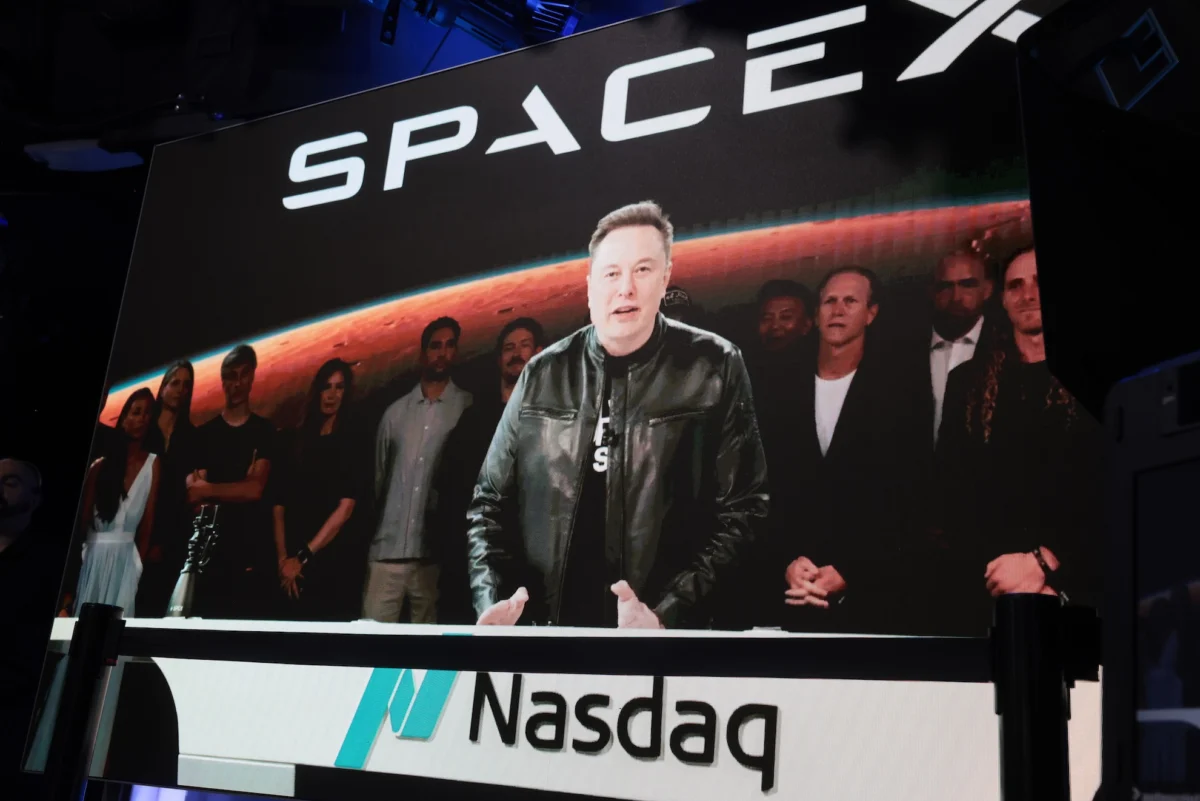
- June 12, 2026: SpaceX officially rings the opening bell at the Nasdaq, marking its high-profile entry into the public markets. The stock sees immediate volatility as investors weigh the company’s dual focus on aerospace and terrestrial compute.
- June 26, 2026: The FTC issues an early termination notice for the acquisition of Mesh Optical by Musk, signaling that the deal is approved and pending final closure.
Supporting Data: Why Optical is the Future of Compute
The demand for Mesh Optical’s technology is driven by the massive power requirements of modern AI. Traditional data centers rely on copper cabling, which suffers from signal degradation over distance and generates significant heat, requiring massive cooling infrastructure.
According to industry metrics, optical interconnects offer a three-fold advantage:
- Bandwidth Density: Optical transceivers can move terabits of data per second per fiber pair, far exceeding the throughput of electrical systems.
- Energy Efficiency: By removing the need for constant signal boosting and heat management associated with electrical resistance, light-based communication reduces total data center power consumption by approximately 20–30%.
- Latency: The speed of light in fiber is the theoretical limit, and the Mesh team’s proprietary modulation techniques further reduce the "hop" time between server clusters.
As SpaceX expands its presence in the data center market—having recently inked partnerships with Anthropic, Google, and Reflection AI—the ability to provide "compute-as-a-service" becomes a core revenue pillar. Integrating Mesh Optical hardware allows SpaceX to operate these data centers at a lower cost and higher performance tier than competitors who remain tethered to legacy networking architectures.

Official Responses and Regulatory Clarity
The speed at which the FTC processed this application has raised eyebrows in Washington. Typically, antitrust reviews for high-tech acquisitions can drag on for months, particularly for companies under the scrutiny of the current administration.
However, the FTC’s filing noted that the transaction did not pose a competitive threat to the broader telecommunications or semiconductor markets, as Mesh Optical’s technology remains in a nascent, niche stage.
"The FTC’s rapid clearance suggests that regulators view this acquisition as an ‘efficiency-enhancing’ integration rather than a monopolistic move," says legal analyst Marcus Thorne. "Because Mesh is a startup and SpaceX is a service provider, the vertical integration is seen as a way to improve consumer-facing AI products, which is a net positive in the current pro-innovation regulatory climate."
Neither Elon Musk nor the co-founders of Mesh Optical have issued a formal statement, though sources indicate the deal was structured as a cash-and-stock merger, ensuring the engineering team remains incentivized to integrate their tech into the broader SpaceX ecosystem.
Implications: A New Era for SpaceX
The implications of this acquisition extend far beyond the immediate fiscal quarter. For SpaceX, the "SpaceX-as-a-Compute-Provider" narrative is now the primary driver of its public market valuation. By controlling the entire stack—from the satellite hardware (Starlink) to the ground-based compute (SpaceX Data Centers) and now the internal interconnects (Mesh Optical)—Musk is building a closed-loop infrastructure system.
1. The Data Center of the Future
SpaceX is not merely hosting servers; they are creating a new category of "edge compute." By utilizing Mesh technology, these centers could eventually be modularized and deployed in locations previously thought impossible, such as near remote renewable energy sites or, eventually, in off-world lunar habitats.
2. Market Pressure on Competitors
Companies like NVIDIA and Arista Networks, which provide the backbone for modern AI hardware, may find themselves in a complex dance with SpaceX. While SpaceX is currently a customer of high-end GPUs, the acquisition of Mesh suggests that Musk is looking to bypass the networking bottlenecks currently controlled by traditional switch and transceiver providers.
3. The "Alumni Ecosystem"
The acquisition serves as a testament to the "SpaceX Mafia"—a growing network of former employees who are founding startups specifically to solve problems they encountered while working under Musk. This deal sets a precedent for how SpaceX might continue to acquire its own spinoffs to maintain its competitive edge.
Conclusion
As the dust settles on the FTC’s announcement, the market is already recalibrating. The acquisition of Mesh Optical Technologies is a quintessential Musk move: it is bold, it is vertically integrated, and it solves a hard engineering problem that the rest of the industry is still struggling to define.
For the investors who bought into the SpaceX IPO earlier this month, the message is clear: the company is no longer just a rocket builder. It is an infrastructure colossus, determined to control the flow of data from the edge of space to the heart of the world’s most powerful artificial intelligence models. Whether this gamble pays off will depend on the speed with which the Mesh team can scale their technology from a lab prototype to a global deployment—a challenge that, given their background, they are uniquely equipped to handle.