In the volatile world of digital media, where algorithms dictate visibility and ad revenue often feels like a roller coaster, Taegan Goddard has built an oasis of stability. As the founder of Political Wire, Goddard has successfully navigated two decades of shifting media landscapes by prioritizing a direct relationship with his audience. In the latest episode of the Niche Pursuits podcast, Goddard joins host Spencer Haws to dissect the strategy behind Political Wire’s highly successful paid subscription model—a framework that proves content creators can thrive by monetizing loyalty rather than just pageviews.
The Genesis: A Modern Take on a Legacy Concept
Political Wire did not begin as a grand venture-backed startup; it started as a focused editorial experiment. Drawing inspiration from the Wall Street Journal’s legendary "Washington Wire" column—a curated digest of high-level political intelligence—Goddard sought to bring that same level of rigor to the digital age.
The editorial philosophy was simple but demanding: ignore the noise and focus on the signal. Goddard treats Political Wire as a habit-forming destination. Rather than attempting to cover everything, he curates content that is timely, useful, and insightful for the "political junkie." By publishing 30 to 50 posts daily—a rhythm maintained regardless of weekends or holidays—Goddard has cultivated a site where users return as many as eight times a day. This consistency is the bedrock of his business, transforming a casual news source into a daily necessity.
Chronology of Growth: From Election Cycles to Subscription Stability
The growth trajectory of Political Wire is inextricably linked to the cyclical nature of American politics. With a baseline of 4 to 5 million monthly visitors, the site experiences dramatic traffic surges during election years. These periods serve as massive discovery engines; new visitors flood the site during the heat of a campaign, and a percentage of those visitors are converted into long-term, loyal readers.
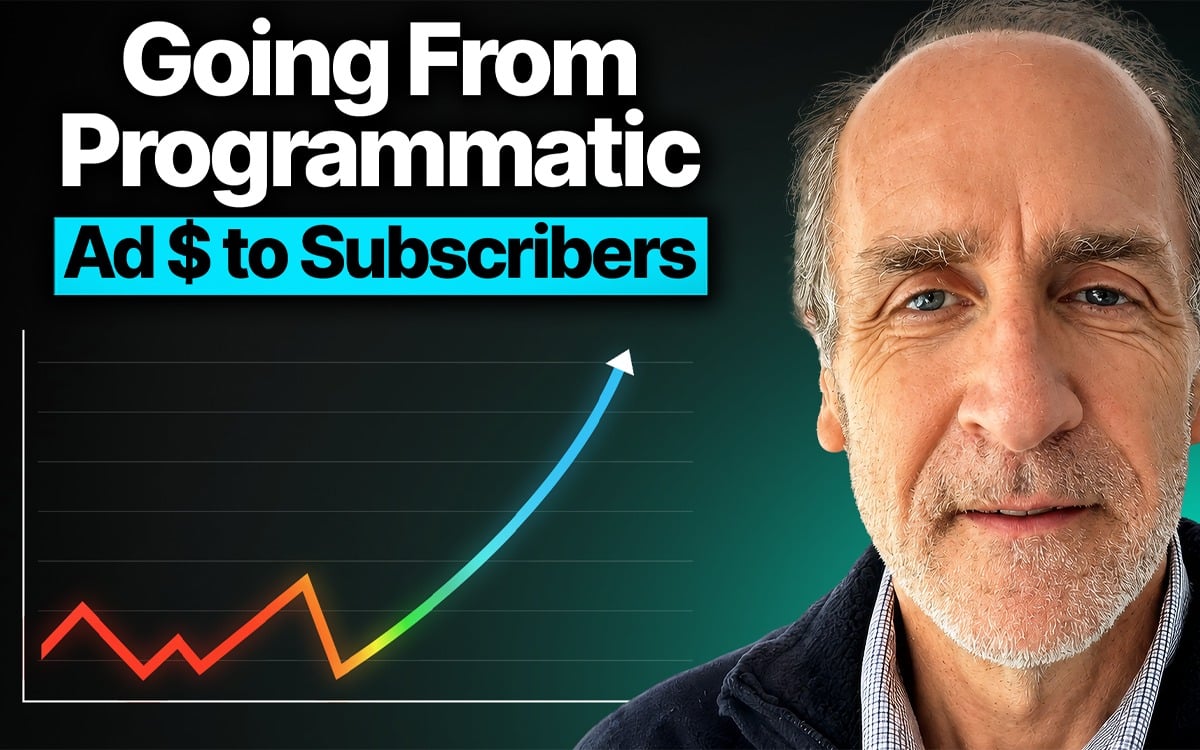
Goddard’s business model matured in stages. Initially, the site relied on standard programmatic advertising, a model that remains a part of his ecosystem today through platforms like Mediavine. However, Goddard recognized early on that ad-supported revenue is inherently unpredictable. It fluctuates based on seasonal ad rates, shifts in search engine algorithms, and the broader economic climate.
To mitigate this volatility, Goddard introduced a paid subscription layer. By moving toward a hybrid model—where the free site acts as a top-of-funnel discovery tool and the paid subscription serves as a high-value, predictable revenue engine—he effectively "smoothed out" the revenue curves that plague traditional publishers.
The Power of the "Bundle"
A core tenet of Goddard’s strategy is the "bundle." He posits that a single-feature subscription is vulnerable to churn. If a user only subscribes for one thing, the moment they lose interest in that specific feature, they cancel.
By building a comprehensive bundle, Goddard has made Political Wire a "sticky" product. The membership package includes:
- Exclusive Analysis: Deep-dive commentary that isn’t available on the free feed.
- Ad-Free Browsing: A cleaner, faster user experience that rewards the most frequent visitors.
- The "Trial Balloon" Podcast: A private, member-only audio show that deepens the personal connection.
- Community Features: Including interactive quizzes that turn news consumption into a repeatable, gamified habit.
This multi-faceted approach ensures that even if a member loses interest in one aspect of the site, they are likely to stay for another. The bundle isn’t just a collection of features; it is a defensive strategy against churn.
Supporting Data: The Case for Higher Pricing
One of the most revealing segments of the discussion centers on pricing psychology. Many publishers operate under the assumption that their audience is price-sensitive. Goddard’s experience suggests the opposite: publishers often underprice their most loyal assets.
Political Wire offers a standard annual membership at $80, with a monthly option at $8. Notably, Goddard has implemented price increases over the years, and across thousands of subscribers, he has received only one complaint. This is a powerful signal that the audience perceives high value in his work and is willing to pay for it.
Furthermore, Goddard emphasizes the "Friends and Family" tier, which allows users to add extra accounts. This creates a "community of users," which makes cancellation a collective decision rather than an individual one, significantly increasing the lifetime value of each subscription.
Official Perspectives: The Role of AI and Personal Connection
Despite the high-tech nature of modern publishing, Goddard maintains a remarkably "human" touch. He personally handles much of the site’s management, emphasizing that his audience is paying for his judgment, his analysis, and his years of expertise.
Interestingly, Goddard is an early adopter of AI tools for business optimization. He frequently uploads screenshots of his site to Large Language Models (LLMs) like ChatGPT and Claude, treating these AI tools as low-cost consultants. He asks for critiques on layout, conversion messaging, and user experience, applying the feedback to iterate on his site design. This blend of traditional editorial expertise with modern AI-driven optimization is what keeps Political Wire ahead of the curve.
Implications for the Publishing Industry
The success of Political Wire offers a blueprint for independent content creators and mid-sized publishers. The implications for the industry are significant:
- Revenue Predictability: By shifting the focus from pageviews to recurring subscriptions, publishers can forecast revenue months in advance. This allows for long-term planning, investment in better content, and reduced reliance on the whims of social media algorithms.
- The "Freemium" Synergy: Free content is not a loss-leader; it is a vital discovery engine. By providing high-quality, free content, publishers build the trust necessary to upsell a premium experience.
- Audience Retention through Variety: As demonstrated by the bundle strategy, adding variety—podcasts, newsletters, quizzes, and ad-free interfaces—creates a "walled garden" that is difficult for a user to walk away from.
- Confidence in Value: The most important lesson is that publishers are likely leaving money on the table. If a creator provides genuine, irreplaceable value, their audience is usually more willing to support them financially than the creator anticipates.
Conclusion: The Future of Niche Media
Taegan Goddard’s journey with Political Wire is a testament to the fact that content remains king, but only when it is supported by a robust, audience-first business model. The era of relying solely on programmatic ads is giving way to a more sustainable, direct-to-consumer approach.
For publishers looking to replicate this success, the path forward is clear: define your unique value, build a habit-forming product, offer a diverse bundle of benefits, and never underestimate the willingness of a loyal audience to pay for quality. As Goddard has proven, when you build a business around human connection and editorial integrity, you create something far more resilient than just a website—you create a community that sustains itself.