As WordPress continues to underpin more than 40% of the web, the tension between its grassroots, philanthropic origins and the commercial realities of the modern internet has never been more apparent. For nearly two decades, the project relied on the passion of volunteers. However, as the software evolved into critical infrastructure for global commerce, the question of sustainability has moved from a quiet concern to an urgent industry-wide mandate.
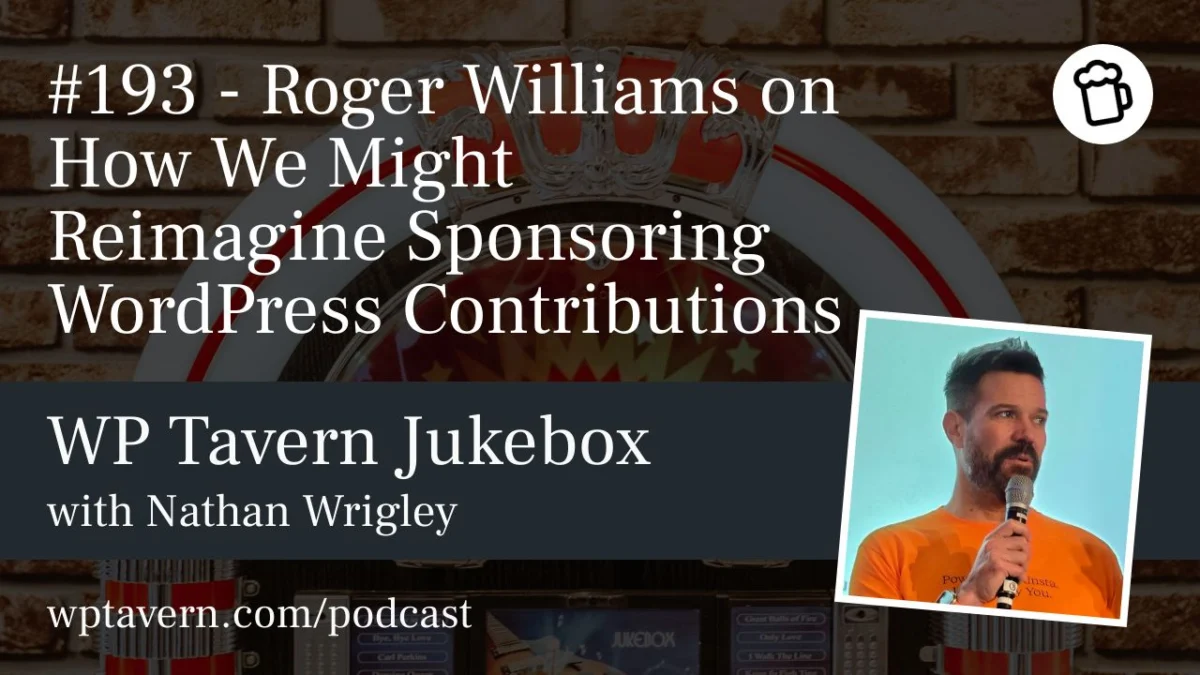
Roger Williams, Partnership and Community Manager for North America at Kinsta, recently sat down with the WP Tavern Jukebox podcast to discuss how organizations can navigate this transition. His insights, drawn from his recent WordCamp US presentation, "Figuring Out Sponsored Contribution," offer a roadmap for companies seeking to move beyond mere patronage and toward a strategic, sustainable model of open-source stewardship.
The Evolution of Open Source Stewardship
In the early days of WordPress, the project functioned largely as a hobbyist endeavor. Contributors were driven by the "spirit of philanthropy," donating their time and expertise without expectation of financial return. But as the platform scaled, the demands on those contributors grew exponentially.
"Open source software runs on passion, but passion doesn’t pay the bills," Williams noted. As the software matured, it became clear that the project could no longer rely solely on volunteer hours. Companies like Kinsta, which rely on WordPress to drive their business, face a unique set of challenges: how to balance the need for revenue and return on investment (ROI) with the community’s deeply held values of open-source equality.
Williams argues that the community is currently at an inflection point. There are those who advocate for a return to the "pure" volunteer model, and there are those who believe that commercial interests must become more formalized. His goal is to find a middle ground that acknowledges the business necessity of the project while preserving the collaborative culture that made it successful in the first place.
Chronology: From Concept to Implementation
The transition to a formal sponsored contribution program at Kinsta did not happen overnight. Williams outlined a timeline that demonstrates the necessity of patience and internal advocacy.
- Late 2023: The initial seeds of the idea were planted. Williams began navigating the internal politics of Kinsta, attempting to frame the need for contributions in a language that executives could understand: ROI, technical debt, and long-term stability.
- January 2025: After a year of persistent advocacy, Kinsta officially implemented its sponsored contributions program. This was the result of sustained dialogue between the community team and executive leadership.
- Post-Implementation: With a dedicated budget secured, Williams and his colleagues—Marcel Bootsman (Europe) and Alex Michaelson (APAC)—began the work of identifying contributors, establishing internal processes, and building a framework for long-term engagement.
Williams emphasizes that this was not a top-down mandate, but a year-long process of education. By the time the budget was approved, the team had already done the "pre-work," meaning they were ready to deploy resources immediately rather than spending months deciding how to begin.
Supporting Data and Strategic Rationale
One of the most compelling aspects of Williams’ approach is the breakdown of why companies should contribute. He divides the justification into three distinct categories:
1. Strategic Benefits
For a managed hosting provider, the health of WordPress is synonymous with the health of the business. If the core software is secure, fast, and stable, Kinsta’s operational costs decrease, and customer satisfaction increases. This is the most straightforward argument for stakeholders: supporting WordPress is essentially a form of product development.
2. Operational Benefits
Williams suggests that CTOs should view contribution as a way to manage "technical debt." By contributing to core development, companies help influence the trajectory of the software they rely on, ensuring it aligns with industry standards and reducing the likelihood of breaking changes or security vulnerabilities.
3. Second-Order Benefits
This category encompasses the "nebulous" but vital aspects of networking and brand reputation. When a company sponsors a contributor, it fosters a relationship that can lead to deeper insights into the project, better internal understanding of WordPress, and increased visibility within the developer community.
Navigating the "Marketing Kryptonite"
A recurring theme in the discussion was the danger of appearing overly commercial. In the WordPress community, aggressive marketing is often viewed as "kryptonite." Williams advises companies to step lightly.
"We’re not trying to ask people to get a tattoo of the logo on their forehead," Williams joked, emphasizing that marketing should be a byproduct, not the primary goal. He suggests that instead of demanding brand visibility, companies should provide platforms for contributors to share their work—such as inviting them onto podcasts or highlighting their contributions through organic social media interactions.
When a company sponsors a developer to work on a specific ticket, the goal should be the successful resolution of that ticket, not a press release. The community notices this sincerity. "As soon as you start sponsoring people, it gets noticed inside of the community right away, whether you immediately see it or not," Williams said.
Implications for the Future: A "Menu" of Contributions
One of the most practical takeaways from the conversation is the need for a more transparent, "a la carte" system for sponsorship. Currently, individual contributors often feel as though they must navigate an opaque system of "begging bowls" to find funding.
Williams envisions a future where the process is standardized:
- Standardized Intake: Companies should provide clear, accessible forms for contributors to apply for sponsorship, outlining what they are working on and how it benefits the ecosystem.
- Clear Expectations: Both parties should have a transparent understanding of the scope of work and the expected outcomes, reducing the friction that often arises from mismatched expectations.
- Beyond the Code: Williams emphasizes that sponsorship should not be limited to "Core" contributors. Documentation teams, the Polyglots (translation) team, and even event organizers are all vital to the ecosystem and equally deserving of support.
Conclusion: Don’t Wait, Start Now
The central message Williams leaves for other organizations is one of immediate action. "My biggest piece of advice is don’t wait. Just get started," he urged.
While the community may fear a "two-tier" system where commercial interests overshadow philanthropic ones, Williams maintains that the inverse is the greater danger. If the business side of the community is excluded from the conversation, the ecosystem risks stagnation. By bringing more companies into the fold and teaching them to speak the language of "business impact," the community can actually expand the total resources available to all contributors.
The future of WordPress depends on its ability to evolve from a volunteer-led project into a sustainable, multi-stakeholder ecosystem. Through the work of advocates like Roger Williams and the institutional support of companies like Kinsta, that transition is no longer just a hypothetical concept—it is an active, ongoing, and essential evolution of the world’s most popular web platform.
For those interested in exploring this further, the conversation serves as an open invitation to reach out. As Williams noted, the goal is not to have all the answers, but to keep the conversation moving forward, one contribution at a time.