In the evolving landscape of WordPress, the tension between the "Classic" era of development and the modern, block-based future has become the defining narrative for agencies worldwide. As the platform matures, a critical question remains: Is the WordPress Block Editor (Gutenberg) truly ready for the demands of high-end, professional web development, or does it still require significant external scaffolding to be viable?
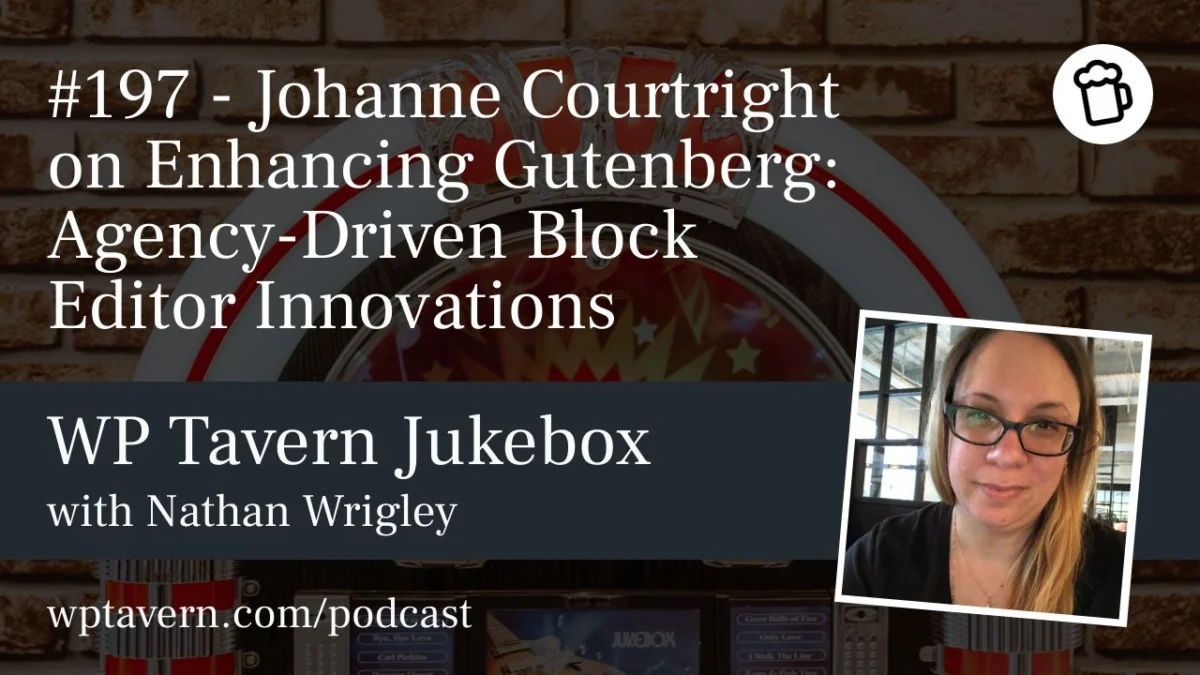
Johanne Courtright, a seasoned developer and the force behind the open-source project Groundworx, is at the forefront of this debate. In a recent episode of the WP Tavern Jukebox podcast, Courtright explored the challenges of modernizing agency workflows, the persistent gaps in Gutenberg’s core functionality, and the philosophy of building modular, performant solutions in a post-jQuery world.
The Evolution of a WordPress Developer
Courtright’s journey into the WordPress ecosystem began in 2011, a period when the CMS was primarily a savior for developers transitioning away from static HTML and Dreamweaver. For agencies, WordPress represented a massive leap in efficiency, allowing for the rapid deployment of sites with custom post types and the burgeoning power of Advanced Custom Fields (ACF).
"It solved a big problem at the time," Courtright notes. Her background in marketing agencies fostered a specialized skill set: building custom queries, integrating complex CRM APIs, and managing the intricate needs of home-builder clients who required both design precision and functional complexity.
However, as the web moved toward more dynamic, modular interfaces, Courtright—like many developers—found herself at a crossroads. The industry shift toward React-based development and the block editor required a fundamental re-learning of the craft. While some developers chose to stick with the "known quantities" of legacy tools, Courtright committed to the Gutenberg roadmap, viewing it as the necessary evolution of the platform.
The "Agency Gap": Why Core Isn’t Always Enough
The central thesis of Courtright’s current work is that while WordPress Core is sufficient for the casual blogger or the "80% of users" who require basic publishing tools, it remains underserviced for the professional agency environment.
Pixel-Perfect Requirements
Agencies demand "pixel-perfect" precision, a requirement that often clashes with the default settings of the block editor. In professional design, responsiveness isn’t just about stacking elements; it involves complex breakpoints, container management, and precise color palette controls that are not yet natively robust in the core editor.
Efficiency and UX
For an agency, time is the primary currency. Providing clients with predetermined color palettes and modular design templates is essential. Courtright argues that the current block editor often forces users to "fight" the system to achieve basic brand consistency, whereas a well-structured theme should offer flexibility without overwhelming the user with excessive, unnecessary configuration options.
Groundworx: An Open-Source Foundation
To address these perceived deficiencies, Courtright developed Groundworx, a project aimed at enhancing the block editor rather than replacing it. The philosophy behind Groundworx is strategic: enhance existing core blocks and provide necessary, missing functionality while maintaining compatibility with the core vision of WordPress.
Key Enhancements and Additions
The project includes a suite of custom blocks and extensions to existing ones:
- Breakpoint Control: Bringing tablet and desktop-specific breakpoints to paragraphs, headings, and lists.
- Navigation Innovations: A custom navigation system that leverages the Interactivity API, allowing for vertical menus, full-height sticky headers, and accordion-style sub-menus that feel native to the modern web.
- Layout Flexibility: Adding the ability to reverse stack orders, providing designers with the fine-tuned control needed to create complex grid layouts without resorting to bloated, non-performant plugins.
- Accordion and Tabs: A unified system where tabs can gracefully transform into accordions on smaller screens, maintaining visual consistency across devices.
The Challenge of Discovery in the Plugin Ecosystem
Beyond the technical hurdles, Courtright highlighted a systemic issue that threatens the growth of innovative block-based businesses: the current WordPress plugin and theme directory.
"It’s not usable at the moment," Courtright notes. "It doesn’t leave room for new development to be seen."
She posits that the directory lacks the curation and discovery mechanisms found in modern app stores. For a developer releasing high-quality, block-focused solutions, the current search functionality—which is often dominated by "keyword-stuffed" legacy plugins—makes it nearly impossible to gain visibility. Her proposed solution is a more community-driven, curated approach where plugins are highlighted based on their modern architecture (e.g., whether they utilize the Interactivity API or avoid legacy dependencies like jQuery).
Implications for the Future of WordPress
The transition to block-based themes has been slower than many expected. In 2025, while the core of WordPress has embraced Full Site Editing, many agencies remain hesitant to fully adopt the "block-first" approach for their clients.
The 80/20 Rule
Courtright offers a pragmatic view of the "80/20 rule" in WordPress. She believes that core functionality should cater to the majority, while specialized, high-end requirements—like those of an agency—are best handled by high-quality plugins or theme configurations. This separation of concerns allows WordPress to remain lightweight for the average user while providing developers the freedom to extend the platform to its limits.
Overcoming the "Fear of the New"
One of the greatest barriers to Gutenberg adoption is the learning curve. Developers who have spent a decade mastering PHP and classic theme structures often find the shift to React and block architecture overwhelming. Courtright’s experience suggests that once developers take the time to "reverse engineer" the block editor, the friction disappears.
"Once people fully decide to embrace it and take the time to understand it, they’re like, ‘Oh, wow. All the cool stuff I can do,’" she explains.
Looking Ahead: The 2026 Outlook
As we move into 2026, the WordPress project is expected to continue its integration of AI-assisted tools and more advanced administrative UI updates. For developers like Courtright, the path forward is clear: move away from CSS frameworks like Tailwind that "fight" the block editor, and move toward native, performant solutions that respect the WordPress theme.json foundation.
The future of block-based businesses depends on this shift. If the ecosystem can move toward standardized, modular, and performant blocks, the "agency gap" will inevitably close. The goal is not to reinvent the wheel, but to refine the tools so that agencies can build, scale, and iterate faster than ever before.
For those interested in exploring these innovations, projects like Groundworx serve as a blueprint for what is possible when developers stop viewing Gutenberg as a constraint and start viewing it as a canvas. The tools are available; the challenge for the next year is whether the community and the platform’s infrastructure can rise to meet the standard of excellence that high-end digital agencies require.
To learn more about the technical details of these innovations, you can find the full discussion on the WP Tavern Jukebox podcast or visit groundworx.dev.