By TechCrunch Staff
June 27, 2026
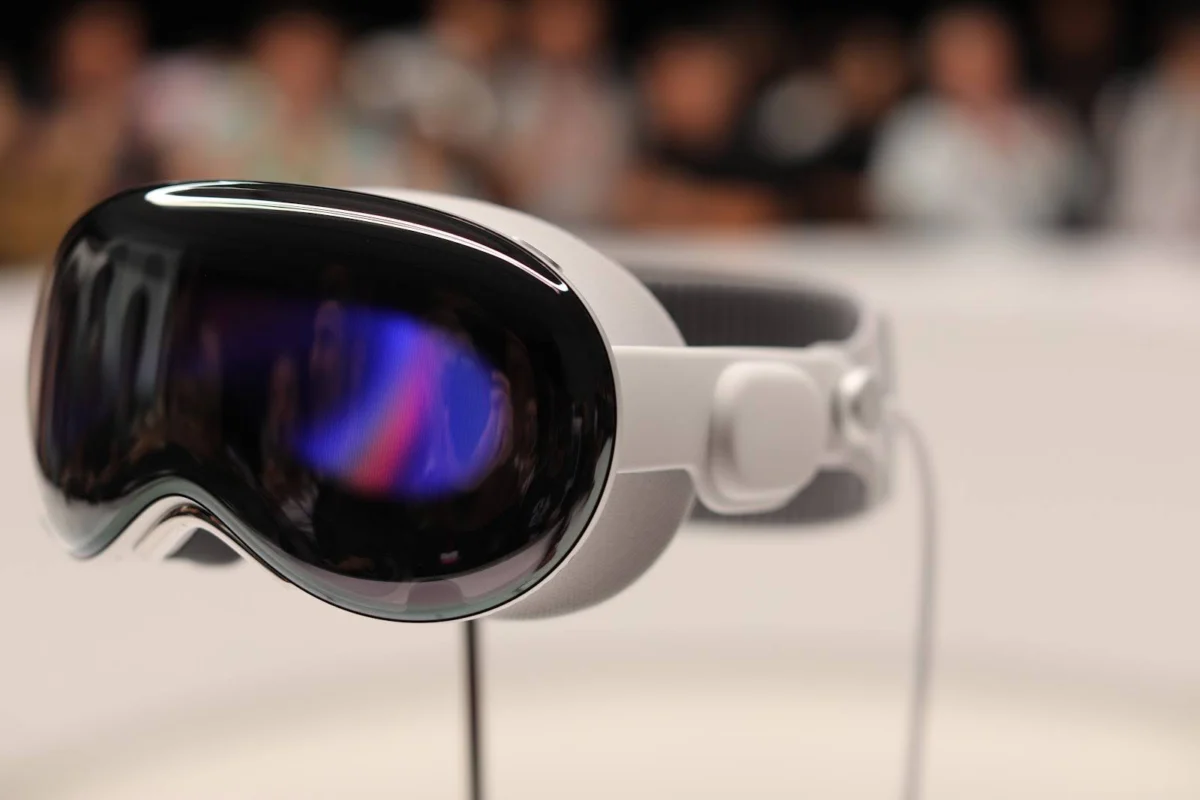
In a significant shakeup of the Silicon Valley executive landscape, Paul Meade, the Apple vice president who spearheaded the development of the Vision Pro headset, has announced his departure from the Cupertino giant. According to reports from Bloomberg’s Mark Gurman, Meade is transitioning to OpenAI, where he will join the company’s burgeoning hardware division. This move signals a major strategic pivot for both organizations as they race to define the next generation of personal computing.
Meade’s exit comes at a precarious moment for Apple’s hardware roadmap. Having served as a central figure in the company’s spatial computing initiative, he was also the primary architect behind Apple’s highly anticipated AI-powered smart glasses, slated for a 2027 launch. His transition to OpenAI places him in the heart of the AI firm’s effort to move beyond software and into physical, consumer-facing devices.
The Strategic Shift: From Vision Pro to AI Hardware
The departure of a key executive like Meade is rarely an isolated incident, particularly within the walls of Apple. For years, the Vision Pro was positioned as the "next big thing," a revolutionary piece of technology designed to usher in the era of spatial computing. However, the headset struggled to gain mass-market traction due to its prohibitive price point, complex user interface, and the isolation inherent in its design.
Following the lukewarm reception of the Vision Pro, Apple’s internal focus shifted. Reports from late 2025 indicated that Apple had effectively shelved plans for a major hardware overhaul of the Vision Pro to redirect resources toward AI-powered smart glasses. The goal is to create a product that competes directly with Meta’s aggressive push into the wearables market, which has seen success with its Ray-Ban smart glasses collaboration.
Meade’s departure suggests that the internal friction regarding this pivot may be significant. By moving to OpenAI, he joins a company that is actively attempting to redefine the relationship between humans and machines, moving away from the "always-on" screens of smartphones toward more ambient, AI-driven experiences.
Chronology of a Leadership Transition
To understand the gravity of this move, one must look at the recent timeline of Apple’s leadership and product development:
- June 2023: Apple officially unveils the Vision Pro, with Paul Meade leading the hardware engineering team responsible for its sophisticated sensor array and display architecture.
- October 2025: Facing slowing sales and a lack of clear consumer use cases, Apple leadership reportedly decides to pause further development of a high-end Vision Pro successor to focus on lighter, more affordable AI-integrated smart glasses.
- April 2026: Reports surface that Apple is testing at least four different designs for its upcoming smart glasses, hoping to capture the "everyday user" market that the Vision Pro failed to reach.
- April 2026: John Ternus is identified as the successor to Tim Cook, triggering a reorganization of the hardware engineering department.
- June 2026: Paul Meade resigns from Apple, citing frustration with the restructuring under the incoming CEO, and confirms his move to the OpenAI hardware team.
The "Ternus Effect": Internal Reorganization at Apple
Industry analysts have framed Meade’s exit as a direct consequence of the imminent leadership transition at Apple. As John Ternus prepares to take the mantle as Apple’s CEO, he has begun to consolidate power and redefine the company’s engineering hierarchy.
Sources within Apple suggest that the reorganization has left several veteran vice presidents feeling marginalized. By shuffling responsibilities and flattening certain reporting structures, Ternus has sought to streamline operations, but the cost has been the alienation of key engineering talent. Meade, who held a high-profile, high-pressure position, appears to be one of the most prominent victims—or perhaps beneficiaries—of this shift.
For Apple, the challenge now lies in ensuring that the loss of a lead hardware architect does not delay the timeline for its smart glasses launch. The company has spent years cultivating talent in optics, sensor integration, and battery efficiency; replacing an executive of Meade’s caliber requires not just technical skill, but an intimate understanding of Apple’s design philosophy.
OpenAI’s Hardware Ambitions and the Jony Ive Factor
OpenAI’s decision to hire Meade is a clear signal that the company is serious about its hardware play. While OpenAI has built its reputation on large language models (LLMs) like GPT-4 and its successors, Sam Altman has long hinted that the company’s ultimate impact would be felt through physical hardware.

The company is currently collaborating with Jony Ive, the legendary former Apple chief design officer, on a mystery device. Altman has described the project as "more peaceful and calm than the iPhone," a sentiment that suggests a departure from the notifications-heavy, attention-grabbing design of modern smartphones.
However, reports from late 2025 indicated that the partnership between OpenAI and Ive was experiencing "growing pains," with both parties struggling to find a cohesive vision for the hardware. By bringing in a veteran like Meade—someone who understands the realities of shipping complex consumer hardware at scale—OpenAI is likely attempting to bridge the gap between Ive’s high-concept design and the functional reality of modern AI processing.
Implications for the Tech Landscape
The move carries profound implications for three distinct segments of the industry:
1. The Smart Glasses War
The race to replace the smartphone with smart glasses is heating up. Meta has secured an early lead with its integration of AI into eyewear. Apple is playing catch-up, and the loss of the lead on its smart glasses project creates a window of opportunity for competitors. If Apple’s development timeline slips, it could lose the chance to define the "next big thing" in consumer electronics.
2. OpenAI’s Evolution
OpenAI is transitioning from a research lab into a vertically integrated hardware-software company. This is a difficult transition that has claimed many casualties in Silicon Valley history. Meade’s arrival will be a litmus test: Can a software-first organization build a piece of hardware that is as reliable and "Apple-like" as the industry expects?
3. The Future of AI Integration
The industry is moving toward "ambient AI"—systems that are aware of their surroundings and assist users in real-time without requiring a screen. Both Apple and OpenAI are betting that the future is not in a pocket-sized rectangle, but in wearable devices. The competition for the best engineering talent in this niche is now officially a high-stakes, multi-billion-dollar game of musical chairs.
Official Responses and Next Steps
As of this morning, neither Apple nor OpenAI has provided a detailed statement regarding the scope of Meade’s new role. TechCrunch reached out to both organizations for comment, but both declined to elaborate on the internal dynamics of the move.
For Apple, the immediate priority will be damage control. The company will likely look to promote from within, relying on its deep bench of engineering talent to keep the smart glasses project on track. Investors will be watching closely to see if the departure of Meade leads to further attrition within the hardware division.
For OpenAI, the hire of Meade is a clear statement of intent. They are not merely interested in building chatbots; they are building a hardware ecosystem that could eventually challenge the very foundation of the device-centric world Apple built.
As we look toward 2027, the battle between these tech titans will not just be fought on the basis of who has the smartest model, but on who can deliver the most seamless, integrated hardware experience. With Paul Meade now wearing an OpenAI badge, the lines between the two companies have never been more blurred.