In the competitive landscape of B2B social media, the difference between a LinkedIn profile that gathers digital dust and one that generates millions in revenue often boils down to a single factor: intentionality.
According to LinkedIn strategist Will McTighe, most professionals fail on the platform not because they lack expertise, but because they treat the platform as a hobby rather than a rigorous business function. By implementing a disciplined, three-part content funnel—Awareness, Trust, and Lead Generation—McTighe has seen his ventures scale to over $2 million in annual revenue. This guide explores the mechanics of that framework, the specific post ratios that drive results, and the psychological principles that convert passive readers into loyal clients.
1. The Foundation: Why a Funnel Strategy is Non-Negotiable
The primary barrier to entry for most LinkedIn users is the paralyzing fear of public failure. However, the platform’s algorithm provides a safety net: low-quality content simply receives lower distribution. Consequently, the "risk of embarrassment" is significantly lower than the perceived reality.
The shift from hobbyist to professional creator requires treating content creation with the same rigor as product development. Success on LinkedIn is not an accident of virality; it is the result of identifying patterns, iterating based on data, and applying those lessons with clinical consistency.
The Three-Part Funnel Framework
- Awareness: Capturing the attention of strangers to build your follower base.
- Trust: Demonstrating your unique value proposition to prove you can deliver on your promises.
- Lead Generation: De-risking the purchase by showing that you have successfully solved specific problems for others.
Pro Tip: Before drafting a single word, conduct a deep-dive audit of your target audience. Map their specific pain points, their professional aspirations, and the language they use to describe their challenges. Your content should be an echo of these internal dialogues.
2. Awareness: Scaling Your Reach and Audience
Growth is the first objective. To turn strangers into followers, you must deploy two distinct types of content: educational and broadly relatable.

Educational Content: The Conversion Engine
Educational content is the most effective tool for gaining followers. When a user consumes actionable intelligence, they follow the creator to ensure they don’t miss future insights.
- The Strategy: React to industry news by providing a unique perspective. If an AI company releases a roadmap for startups, don’t just share the link; provide a tactical breakdown of which opportunities are most viable for your specific niche.
- The Niche Filter: Specificity is key. A generic AI tip will be ignored by a Chief Information Security Officer (CISO), but framing the same AI tool through the lens of threat detection creates immediate relevance.
Broadly Relatable Content: The Engagement Hook
Broadly relatable content—such as posts about professional burnout or general productivity—generates high engagement (likes and impressions). However, it often fails to convert followers because it lacks a signal of specific expertise. To make this work, anchor your relatability in the lived experience of your target persona. Instead of "burnout," discuss the "specific stress of managing a multi-million dollar breach."
Format and Ratios
- The 4-2-1 Ratio: For optimal growth, dedicate four out of seven weekly posts to Awareness.
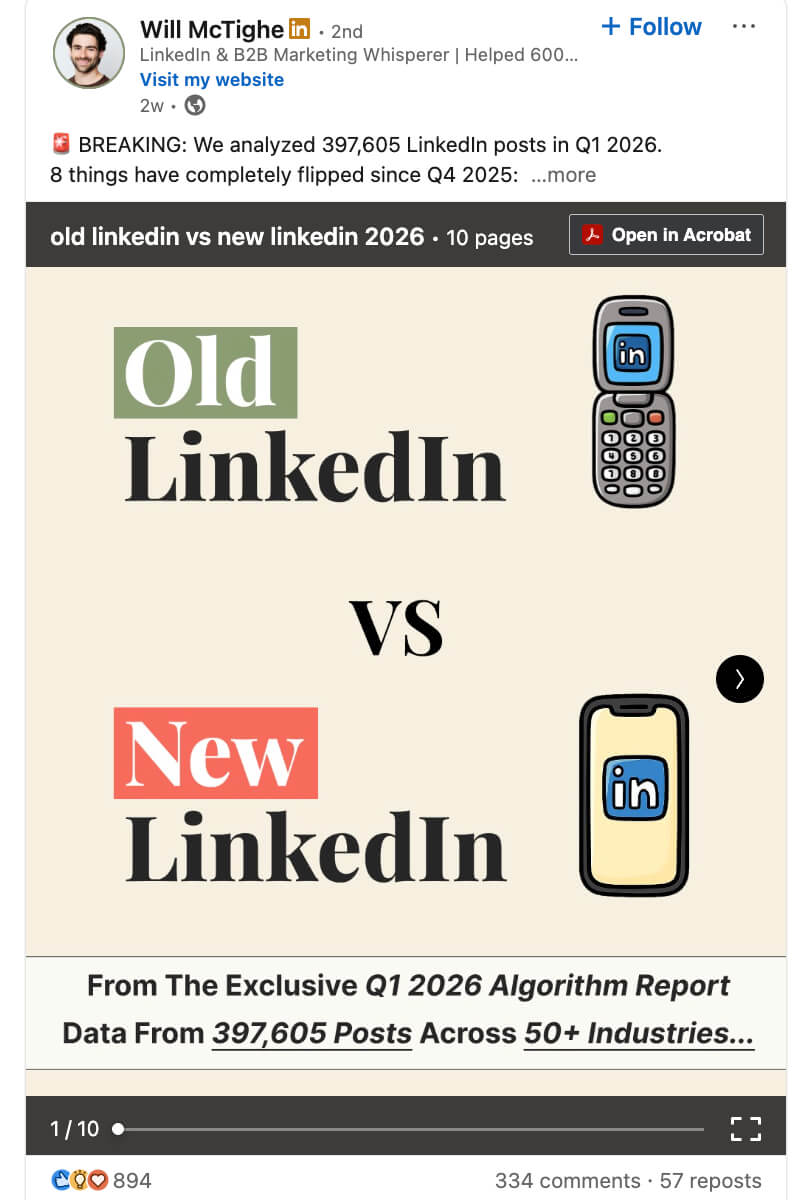
- Visual Dominance: Research indicates that infographics and carousels significantly outperform other formats. While pure text posts have the lowest median performance, adding a single, relevant image can double engagement.
- The "First Two Lines" Rule: Users decide to read based on the hook and the image. If your image doesn’t align with the first two lines of your post, you create cognitive dissonance, leading the user to scroll past.
3. Trust: Converting Followers into Prospects
Awareness brings people to your profile; trust brings them to your sales pipeline. Building trust is fundamentally different from building awareness; it requires a move away from mere information and toward narrative-driven authority.
The Story-Lesson-Application Framework
A common pitfall is the "confessional" post—sharing a painful or difficult moment without a clear, takeaway lesson. This leaves the reader empathetic, but not converted.
- The Arc: Every story should follow a classic narrative structure: adversity leading to a turning point, followed by a clear, actionable lesson for the reader.
- The Hooks:
- Authoritative: "20 years of experience in 60 seconds." This signals that the reader’s time is a worthy investment.
- Emotive: Using personal stories (such as the flexibility to visit family) to signal the benefits of the lifestyle your business provides, thereby attracting like-minded entrepreneurs.
The Role of Video
While video often yields lower reach than text-based posts, it is superior for building familiarity. A potential client who has seen you speak on video will often feel a sense of rapport before the first discovery call even begins.
Pro Tip: Use AI tools to mine your own past call transcripts. Often, the most compelling stories and "aha!" moments happen during client meetings. By feeding these transcripts into a model like Claude or ChatGPT, you can extract a goldmine of content ideas that you previously forgot you ever shared.

4. Lead Generation: Closing the Gap
The final stage of the funnel is the conversion. By this point, your audience knows you and trusts you. The only remaining barrier is the fear of risk. Your goal here is to prove that you can replicate results for them.
Transformation Case Studies
Generic testimonials are largely ineffective. To drive action, use the Transformation Case Study format:
- The Hook: State a significant outcome achieved in a specific, short timeframe (e.g., "How Client X gained 10,000 followers in seven days").
- The Problem: Establish the baseline struggle. This allows the reader to identify with the client’s "before" state.
- The Process: Detail how you worked together, ensuring the client remains the hero of the story. You are the guide; they are the protagonist who put in the work.
- The Call to Action: Use authentic urgency. If you have a limited-seat workshop or a time-bound project, highlight that scarcity.
The Link Controversy
Data suggests that posts containing links can actually outperform those without, provided the linked content is of high value. The quality of the resource encourages saves and shares, which compensates for any algorithmic "penalty" for linking off-platform.
5. Strategic Implications and Summary
The implementation of the 4-2-1 ratio—four awareness posts, two trust-building posts, and one lead-generation post per week—provides a sustainable, long-term strategy for any professional brand.
Chronology of Implementation
- Month 1: Focus exclusively on consistency and mapping the target audience.
- Month 2: Introduce the 4-2-1 cadence and begin testing different visual formats (carousels vs. images).
- Month 3: Analyze the data. Which stories resonated? Which educational posts converted? Pivot your strategy based on the top 10% of your performance.
Final Takeaway
LinkedIn is not a place for random thoughts; it is a laboratory. By treating your content as an extension of your sales process, you stop chasing "vanity metrics" like random likes and start building an asset that produces predictable, measurable business outcomes. Whether you are a solo consultant or a brand leader, the path to $2 million—and beyond—is paved with the stories you tell and the trust you build, one post at a time.