The rapid ascent of generative Artificial Intelligence—tools capable of writing prose, drafting code, and rendering high-fidelity imagery in seconds—has sent a tremor through the global creative community. Designers, illustrators, and UX professionals are increasingly confronting a haunting question: Has the machine finally outpaced the maker? As AI systems demonstrate proficiency in technical execution, the fear of professional obsolescence has moved from speculative fiction to a palpable concern in boardrooms and design studios alike.
However, a deeper analysis of the design process reveals a critical distinction between technical output and creative problem-solving. While AI excels at pattern recognition and data synthesis, it fundamentally lacks the "designerly" behaviors—the complex, human-centric skills that transform abstract ideas into impactful solutions. This article examines why the future of design lies not in human replacement, but in a symbiotic collaboration where AI serves as a powerful, yet limited, assistant to the uniquely human capacity for empathy, advocacy, and intuitive observation.
The Evolution of the Designerly Mindset
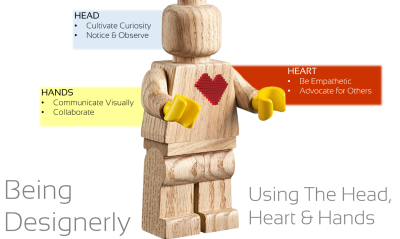
The term "designerly"—popularized by design researcher Nigel Cross—refers to the underlying patterns of how designers think and act. It encompasses a holistic integration of cognitive, emotional, and physical approaches to problem-solving. To understand the limits of AI, we must categorize these skills into the "Head, Heart, and Hands" framework:

- Head (Thinking): Curiosity and intentional observation.
- Heart (Feeling): Deep empathy and user advocacy.
- Hands (Doing): Visual communication and cross-disciplinary collaboration.
These are not merely soft skills; they are the bedrock of innovation. When we strip away the technical tools—the software and the pixels—what remains is a human capacity to navigate ambiguity, understand cultural context, and make ethical judgments that AI simply cannot replicate.
A Chronology of the Human-AI Divide
The current anxiety surrounding AI is rooted in the assumption that human intelligence and artificial intelligence operate on the same plane. Historically, this has been a progression of automation:
- Early Automation (1990s–2010s): Technology was used to automate mundane, repetitive tasks, such as digital asset management or basic layout generation.
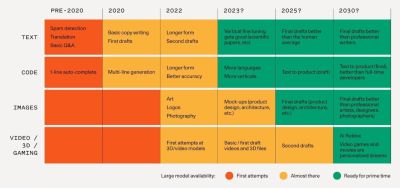
- Generative Breakthrough (2020–2023): The emergence of Large Language Models (LLMs) and diffusion models allowed machines to produce "creative" content based on vast training datasets—amounting, in some cases, to the equivalent of the entire Library of Congress.
- The Current Inflection Point: The industry is moving from "AI as a tool" to "AI as a competitor." While the software grows more sophisticated, the gap between mimicking creativity and possessing it remains as wide as ever.
The fundamental flaw in the "AI-replaces-designer" narrative is the belief that because an AI can generate an image or a wireframe, it understands the why behind that image. A design is not merely a visual artifact; it is a solution to a specific human struggle.
Supporting Data: The Case for Human Intuition
During the height of the COVID-19 pandemic, a redesign project for a global food and beverage company illustrated the limitations of data-driven, remote-only design. While digital interviews provided baseline data, it was only through field ethnography—physically observing sales representatives in low-lit walk-in freezers and navigating the chaotic aisles of a retail store—that the team discovered the true pain points.
The designers realized that the sales representatives were juggling multiple physical printouts and devices while trying to avoid obstructing shoppers. An AI analyzing server logs or user clicks might have optimized the app’s navigation, but it would have failed to capture the environmental constraints of a freezing, high-traffic retail environment. This insight required empathy—a skill that relies on shared human experience and context.
AI’s strength lies in its ability to process massive datasets, providing accuracy and consistency. However, AI is fundamentally reactive; it operates within the boundaries of its training data. Humans, by contrast, possess the capacity for "divergent thinking," where they can synthesize unrelated experiences, cultural nuances, and subconscious emotional cues to innovate in ways that are not merely iterative, but transformative.
Implications for the Creative Workforce
The professional implication is clear: The "lone wolf" designer who relies solely on technical execution is at risk. Conversely, the "designerly" professional who leverages AI to automate the mundane is poised for a new era of productivity.
The Head: Cultivating Strategic Curiosity
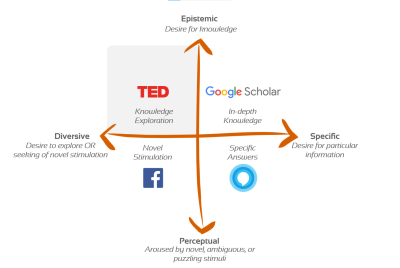
Curiosity is not just an interest in new things; it is the desire to explore the unknown. AI is programmed to find answers. Designers are trained to ask the right questions. By setting aside 15–20 minutes daily for "epistemic exploration"—learning about fields outside of design—professionals can build a cognitive database that machines cannot replicate.
The Heart: The Ethical Imperative
User advocacy is the act of representing the user when they are not in the room. As AI becomes more integrated into the design stack, the risk of "black box" design increases. Who is responsible when an AI makes a biased decision? The human designer remains the ethical arbiter, the one who must look at the data and decide if the solution is fair, accessible, and inclusive.
The Hands: Communicating with Vision
Visual communication is about more than just rendering an image; it is about storytelling. A sketch on a whiteboard can communicate a complex vision to a cross-functional team faster than a paragraph of text. AI can generate the image, but the human designer must interpret the stakeholders’ needs, "read the room," and negotiate the compromise that leads to a consensus.
Official Industry Perspectives
Leading voices in design education and tech ethics suggest that we are entering an era of "Augmented Creativity." Rather than being replaced, the role of the designer is shifting toward that of a curator and strategist.
Much like the culinary world, where robots may assist in prep work, the "chef" (the designer) is still required to plan the menu, supervise the quality, and apply the final, intuitive touches that elevate a meal. The tools change, but the leadership, the taste, and the strategic direction remain human domains.

Conclusion: Thriving in the Age of AI
The fear that AI will render creative professionals redundant is based on a misunderstanding of what design actually is. Design is not the production of an object; it is the deliberate process of improving human experience through empathy, observation, and collaboration.
AI can process the data, but it cannot feel the frustration of a user in a walk-in freezer. It can generate a layout, but it cannot advocate for an ethical choice in the face of corporate pressure. It can output code, but it cannot navigate the complex social dynamics of a multi-disciplinary team.
For the designer of tomorrow, the path forward is to double down on these human-centric skills. By integrating AI into the workflow as a high-speed assistant, designers can reclaim time previously lost to manual labor, allowing them to focus on the strategic, emotional, and social complexities of their work. The machines are getting smarter, but they are not becoming more human. As long as design serves human beings, the human designer remains the most critical component of the process.
Summary of Key Designerly Skills
- Curiosity: The drive to explore questions rather than just seeking answers.
- Observation: The ability to notice what others overlook, informed by context.
- Empathy: The capacity to step into the user’s shoes and act on their behalf.
- Advocacy: Protecting the user’s interest in a landscape of competing demands.
- Visual Communication: Using sketches and imagery to align teams and bridge understanding.
- Collaboration: Navigating human dynamics to build solutions that transcend individual capacity.