
We live in an era defined by a paradox: we possess unprecedented access to the sum of human knowledge, yet we find ourselves increasingly lost in a sea of digital noise. Every day, the world generates approximately 328.77 million terabytes of data. This explosion of information—ranging from vital public health updates to the ephemeral chatter of social media—has fundamentally altered the human experience. In this environment, Information Architecture (IA) is not merely a technical discipline for web designers; it is a critical cognitive infrastructure that allows us to find meaning, relevance, and truth.

Defining Information Architecture: The Art of Structure
At its core, Information Architecture is the practice of deciding how to arrange the parts of a system to make them understandable. As defined by the Information Architecture Institute, it is the bridge between content and user intent.

From a User Experience (UX) perspective, IA is the art of anticipating the user’s mental model. When a user interacts with a website, an application, or a digital service, they are usually looking to solve a specific problem. If the information is presented in a way that aligns with their logical flow, the user experiences clarity. If the structure is haphazard, the user experiences "information anxiety"—a state of paralysis caused by an inability to locate or synthesize necessary data.

Chronology: The Evolution of Digital Navigation
The history of digital information management has evolved through three distinct phases:
- The Directory Era (1990s): Following the inception of the World Wide Web, information was scarce. Early search engines like Yahoo! operated as human-curated directories, organizing the internet like a physical library card catalog.
- The Search Dominance Era (2000–2010): As the volume of web pages exploded, manual curation became impossible. The rise of algorithmic search, spearheaded by Google, shifted the user behavior from "browsing" to "querying."
- The Integrated Experience Era (2010–Present): Today, we recognize that search and navigation are not mutually exclusive. Modern IA requires a hybrid approach. Users demand the precision of a search bar for specific items, but they also require a structured taxonomy (navigation) to understand the scope and context of a platform.
Supporting Data: The Search vs. Navigation Debate
For years, designers have debated whether to prioritize search functions or navigation menus. Research provides a nuanced answer.
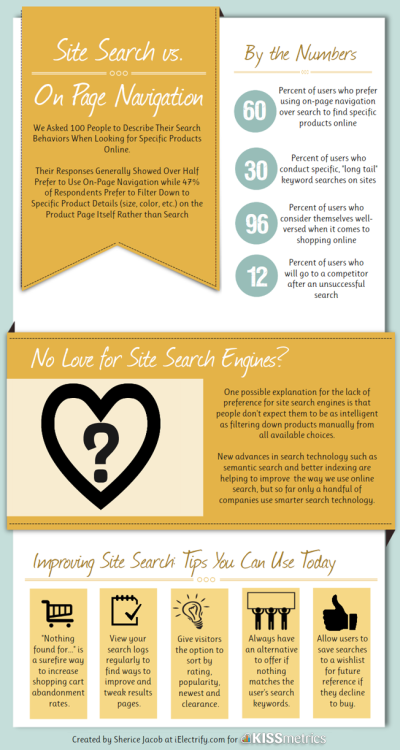
In 1997, Jakob Nielsen’s landmark study suggested that over 50% of users favored search. More recently, studies by eConsultancy and Kissmetrics have consistently shown that while users gravitate toward search for specific tasks (like finding a particular SKU on an e-commerce site), they rely on navigation to "browse" and discover.

The data suggests a critical threshold: on content-heavy websites, users view the navigation as the "map" and the search bar as the "compass." A site that lacks a clear taxonomy will force users to rely solely on search, which often fails if the user does not know the exact terminology for the product or service they seek. This is why "metatagging"—the practice of hidden indexing—is essential. By tagging "antibacterial hand wash" with synonyms like "hygienic soap" or "sanitizing gel," architects ensure that even if the navigation hierarchy is bypassed, the search function remains effective.

The Business Case for IA
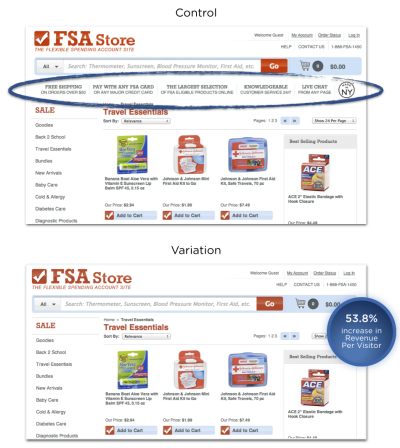
Good architecture is not just about aesthetics; it is a direct driver of conversion. A case study from the Optimizely blog highlights a retail site that saw a 53.8% increase in revenue simply by removing superfluous navigation elements. By stripping away visual clutter and bringing the primary product categories closer to the user’s point of focus, the company reduced the "cognitive load," allowing customers to move through the sales funnel with less friction.
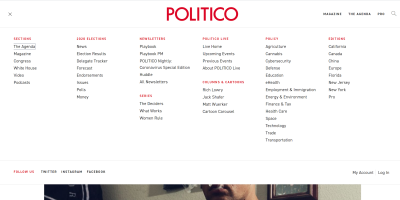
Conversely, poor IA—characterized by "cramped" layouts, excessive menu options, and lack of visual hierarchy—functions as a barrier. When a user is presented with too many choices (the "paradox of choice"), they often choose nothing at all, abandoning the site entirely.

Implications: The Power and Peril of Information
As we move beyond the technical aspects of web design, we must address the broader "Information Age." In this context, IA is a matter of societal health. We exist in a world where information is simultaneously a source of empowerment and a weapon of mass confusion.

The "Information is Power" Manifesto
Aaron Swartz, a visionary of the digital age, famously argued that information should be liberated. He recognized that when information is locked behind paywalls or complex, inaccessible systems, it creates a knowledge divide. However, the flip side of this "liberation" is the rise of misinformation.

When we look at the COVID-19 pandemic, we see the real-world consequences of poor information flow. The rapid pivot of government policy—such as the confusion regarding elective surgery schedules in Australia—demonstrates how quickly the public can lose trust when information is poorly communicated or updated without clear context.
The Dangers of Misinformation
We are currently battling an "infodemic." The prevalence of "fake news" and the rise of unfounded conspiracy theories are not just social issues; they are architectural failures. When platforms fail to categorize, verify, and contextualize information, they allow malicious actors to exploit human psychology. By linking unrelated data points, these actors create false narratives that thrive in the absence of a logical, evidence-based structure.

Information Security and Privacy
The breach of 147 million records at Equifax in 2017 serves as a grim reminder that information is also a liability. As we aggregate data to build better experiences, we must prioritize the security of that data. The global rise of legislation—with 132 countries now enforcing data protection laws—shows that the world is finally waking up to the reality that personal data is a human right, not just a product for sale.

Toward a Better Architecture
To build a more resilient digital world, we must adopt a more rigorous approach to how we handle data. Whether you are a UX designer mapping a sitemap or a consumer navigating a news feed, the following principles apply:

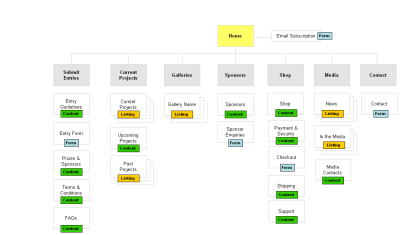
- Prioritize Clarity: In design, use "card sorting" to understand how users naturally group concepts. Do not impose your internal company hierarchy on them; build to match their mental model.
- Validate Sources: As an information consumer, practice "lateral reading." Before trusting a piece of information, check the source’s history and seek corroboration from neutral, established entities.
- Human-Centricity: On mobile devices, icons must be paired with text labels. We cannot assume universal knowledge; we must provide the cues that allow users to navigate safely.
- Breadcrumbs: Implement breadcrumb navigation. Users need to know where they are, where they have been, and how to return to the beginning.
Conclusion
The volume of information we produce will continue to grow exponentially. We cannot stop the flow, but we can design the vessels that hold it. By prioritizing sound information architecture—in our websites, our software, and our public discourse—we can mitigate the effects of information overload.

Information architecture is, at its heart, an act of empathy. It is the acknowledgement that the user, the citizen, and the consumer are all trying to make sense of a complex world. By building structures that prioritize clarity, accessibility, and truth, we do more than just improve click-through rates; we empower individuals to navigate the Information Age with confidence and purpose. In a world of infinite data, the architect’s greatest responsibility is to help us find exactly what we need, when we need it, and to ensure that the information we find is both reliable and meaningful.