Google has officially transitioned into a new era of search architecture, and the latest update to Google Search Console (GSC) reflects this seismic shift. As AI Overviews (AIO) and generative search experiences become fixtures of the user journey, Google has rolled out a dedicated “Generative AI” reporting section within Search Console.
While this update provides long-awaited visibility into how websites are being consumed by generative models, it has also sparked a debate regarding data transparency and the definition of engagement in an AI-first world.
Main Facts: What is the Generative AI Report?
Located under the Performance > Search Results > Generative AI tab, this new report is designed to track a website’s visibility within Google’s AI-powered interfaces. These interfaces include:
- AI Overviews: The summaries generated by Google’s LLMs at the top of search results.
- AI Mode: The specialized search environment for complex queries.
- Discover: GenAI-driven content surfacing within the Discover feed.
The reporting suite aims to help SEO professionals and site owners understand if their content is being synthesized, cited, or surfaced by Google’s generative agents. However, the report is currently limited in scope. It focuses exclusively on impressions, leaving a significant void in the data regarding click-through rates (CTR), conversion attribution, or specific feature-level breakdowns.
Chronology of the Rollout
The integration of generative AI into Google Search has been a gradual, multi-phase project.
- Initial Testing (2023–2024): Google introduced "Search Generative Experience" (SGE) as an opt-in experiment. During this time, publishers were largely in the dark, with no formal way to track if their content was being used to train or inform AI summaries.
- The Transition to AI Overviews (Early 2025): SGE moved from an experimental lab to a core search component, rebranded as "AI Overviews."
- GSC Integration Announcement (Mid-2026): Google Search Central formally announced the availability of the Generative AI report, signaling that the era of "hidden" AI traffic was coming to an end.
- Global Availability (Present): The tool is now available to all verified Search Console properties, allowing site owners to view historical data on how their URLs appear within AI-generated responses.
Defining the "Impression": A Controversial Metric
The most contentious aspect of this release is Google’s definition of an "impression." In traditional organic search, an impression is generally defined as a URL appearing in the user’s viewport. In the context of the Generative AI report, the definition is far more abstract.
According to Google’s John Mueller, an impression occurs when a URL is included in an AI answer, regardless of whether the user actually sees it. This is a crucial distinction that has led many SEO analysts to question the validity of the data.
The "Click-to-Reveal" Problem
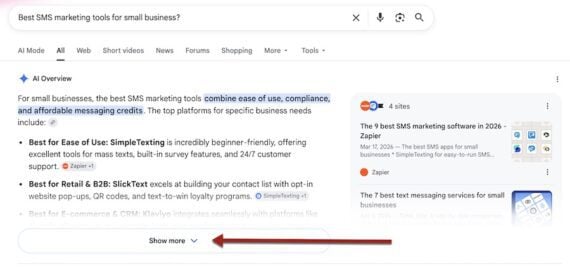
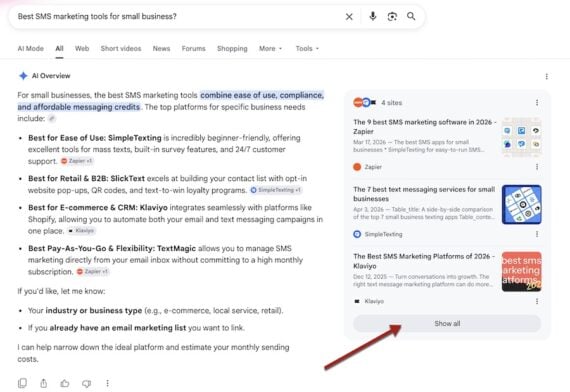
Modern AI Overviews are often collapsed by default. To see the full scope of citations, a user must typically interact with interface elements such as:
- "Show more": Expands the core AI summary.
- "Show all": Expands the list of cited sources.
Because an impression is counted the moment the URL is part of the AI answer, a site can accrue thousands of "impressions" that were never technically visible to the user—they were hidden behind a "Show more" button that the user may never have clicked.
Implications for "People Also Ask"
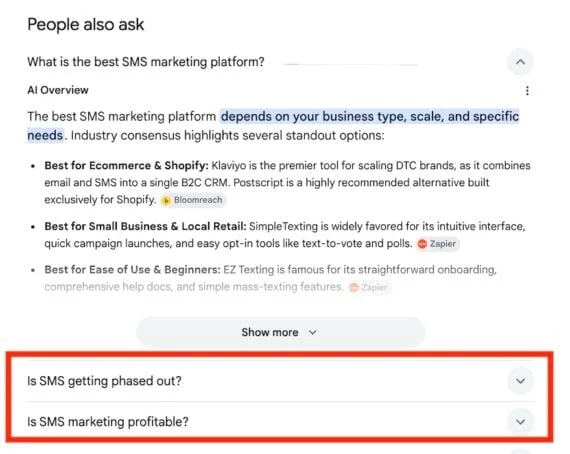
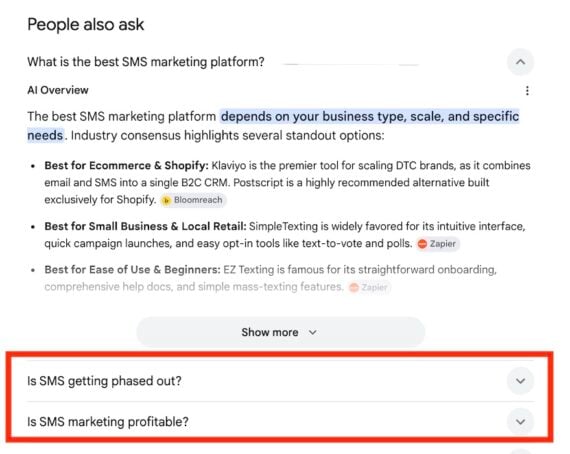
The ambiguity extends to the "People also ask" (PAA) boxes. These sections do not produce an AI answer or count as an impression until the user manually expands the question. Once expanded, if an AI overview is triggered, the cited URLs are counted as impressions. This suggests that the data in the new GSC report is a measure of "potential inclusion" rather than "actual user exposure."
Supporting Data: How to Make the Report Actionable
Given the lack of native filters for specific AI features (e.g., separating "AI Overview" impressions from "AI Mode" impressions), site owners must take a proactive approach to data management.
Recommended Workflow:
- Export to Excel/Sheets: Since the interface is limited, exporting the raw data for a specific date range is the only way to perform meaningful trend analysis.
- Comparative Analysis: Compare your "Generative AI" impression growth against your "Organic Search" impression growth. If AI impressions are cannibalizing traditional organic clicks, you may need to adjust your content strategy.
- Identify High-Intent Queries: Filter your exported data by specific keywords. If a page with high commercial intent is appearing in AI Overviews but failing to generate clicks, your "citation snippet" (the text Google is pulling) may be insufficient or uncompelling.
By cross-referencing this export with your internal conversion data, you can begin to estimate the "AI Value" of your content, even if Google isn’t providing the click-through data directly.
Official Responses and Strategic Shifts
Google’s communication regarding this update emphasizes "transparency" and "control." By providing the Generative AI report, Google is essentially telling publishers, "We acknowledge that your content is fueling our AI, and here is a window into that process."
However, the lack of click-through data remains a sore point. Google argues that because generative AI is a conversational, multi-turn experience, tracking a linear "click" is no longer the most accurate way to measure value. Industry experts, however, suspect that Google is hesitant to provide granular click data because it would reveal the extent to which AI Overviews reduce traffic to third-party sites.
Implications for E-commerce and Publishers
The introduction of this reporting tool has profound implications for digital strategy.
1. The "Zero-Click" Reality
The biggest implication is the normalization of the "zero-click" search. If users can get their answer from an AI summary without ever leaving the Google ecosystem, the value of an "impression" drops significantly. Businesses must now prioritize brand awareness within the AI summary—ensuring their name, product, and unique value proposition appear in the cited text—rather than relying solely on click-through traffic.
2. Strategic Blocking of AI
Concurrent with the report, Google has introduced granular controls in Settings > AI controls > Search generative AI. Site owners can now explicitly block their content from being used in AI summaries.
Is this recommended? For most e-commerce businesses, the answer is a firm "no." Being excluded from AI answers essentially means disappearing from the modern version of Google Search. Even if the traffic is lower than traditional organic search, being a cited source provides a level of authority and brand presence that is difficult to replicate elsewhere. Blocking should be reserved for proprietary data, private content, or sensitive information that should not be indexed by LLMs.
3. The Need for "Answer-Engine" Optimization (AEO)
With this report, we have officially moved from Search Engine Optimization (SEO) to Answer Engine Optimization (AEO). The goal is no longer just to rank; it is to provide the most concise, accurate, and structured information that an LLM would choose to cite.
- Focus on Structured Data: Ensure your product descriptions, pricing, and FAQs are marked up with schema.
- Conciseness: AI models favor short, punchy, and fact-dense paragraphs.
- Authority Building: AI models are trained to prioritize high-authority sources. Building topical authority remains the best hedge against being excluded from AI Overviews.
Conclusion: Looking Ahead
The new Generative AI report in Google Search Console is a "Version 1.0" product. It is imperfect, lacks granular filtering, and relies on a definition of "impression" that many publishers find misleading. However, it is an essential tool for understanding the new search landscape.
As AI continues to iterate, we can expect Google to refine these metrics. In the future, we may see "AI-Driven Conversions" or "AI-Clickthrough Rate" as standard metrics. Until then, publishers must treat this report as a compass rather than a map: it points in the right direction, but it is up to the individual business to navigate the terrain of the AI-powered web.
By analyzing the trends, identifying which pages are being surfaced by AI, and optimizing for the "snippet-first" future, businesses can ensure they remain visible, relevant, and authoritative—no matter how much the search interface changes.