Robert Griffin III, known to millions simply as “RGIII,” occupies a unique space in the pantheon of modern American sports figures. His career serves as a masterclass in the volatility of professional athletics—a meteoric rise followed by a sobering, injury-plagued reality, and finally, a sophisticated, intentional reinvention.
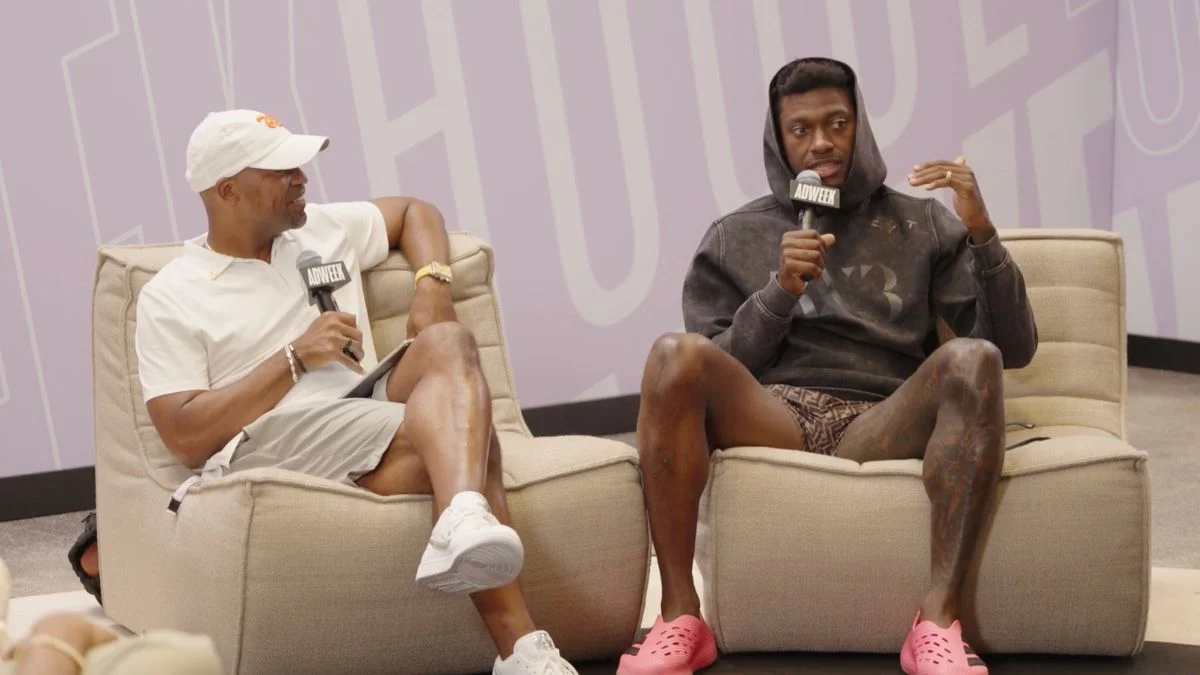
Speaking recently at the ADWEEK House during the Cannes Lions festival, the former Heisman Trophy winner and NFL Offensive Rookie of the Year pulled back the curtain on the pressures of early stardom, the complexities of navigating locker room politics at 22, and his current mission to build a legacy that transcends the football field.
The Meteoric Rise: A Record-Breaking Debut
The trajectory of Robert Griffin III’s early career remains one of the most compelling narratives in NFL history. Selected second overall by the Washington Redskins in the 2012 NFL Draft, Griffin arrived in the league with the weight of an entire franchise on his shoulders.
He didn’t just meet expectations; he shattered them. During his rookie season, Griffin’s electrifying playstyle made him a household name. He was more than a quarterback; he was a cultural phenomenon. Perhaps the most staggering metric of his early fame was his commercial appeal: in 2012, Griffin outsold global soccer icon Lionel Messi in jersey sales—a statistic that continues to surprise even the man himself.
“One thing I didn’t know until a few years ago was that in 2012, I sold more jerseys than [Lionel] Messi,” Griffin told the audience at Cannes. “That stat was mind-blowing to me.”
Chronology of a Career in Flux
Griffin’s professional journey can be broken down into three distinct phases: the "Washington Era," the "Veteran Pivot," and the "Post-Playing Reinvention."
2012–2015: The Washington Years
After his spectacular rookie campaign, which culminated in a playoff berth and a Rookie of the Year title, injuries began to erode his physical capabilities. The high-octane offense that defined his debut became harder to sustain as physical wear and tear mounted. By 2015, the synergy between player and organization had dissolved, leading to his eventual departure.
2016–2020: The Veteran Pivot
Following his exit from Washington, Griffin spent time with the Cleveland Browns and the Baltimore Ravens. This period was marked by a shift in perspective. No longer the "golden boy" of a franchise, he transitioned into a mentor role. Most notably, he served as a backup to Lamar Jackson in Baltimore from 2018 to 2020. During these years, Griffin utilized his own experiences—both successes and failures—to help groom the future two-time MVP.
2021–Present: The Media and Investment Mogul
Today, Griffin has successfully transitioned into a multi-faceted media personality and venture capitalist. His investment portfolio is meticulously curated, focusing on businesses that provide tangible societal value. From the high-end dining scene (including the 1587 lounge, a collaboration with Patrick Mahomes, Travis Kelce, and Taylor Swift) to cutting-edge holographic technology via the company Proto, Griffin is building a business empire that prioritizes substance over celebrity association.
Overcoming Internal and External Adversity
A recurring theme in Griffin’s career is the necessity of overcoming skepticism, even from those in his own camp. During his collegiate days at Baylor, he famously dealt with teammates who questioned his standing among elite peers.
“We were in the locker room during summer workouts, and they’re like: ‘Who would you take, Cam Newton or Andrew Luck?’ I’m not going to lie, I got offended,” Griffin recalled. “I said, ‘You should take me,’ and they were like, ‘You know, we just excluded you from the conversation.’ I wasn’t mad at them, but I wanted to show them that you can trust me to be that guy.”
This struggle for validation followed him to the NFL, where he faced a different kind of bias. He encountered a narrative that categorized him as a runner who couldn’t read defenses, a stereotype he felt hindered his development and limited his role. "I was having to face those same discriminations again that I had already dispelled all the way through college," he noted.
The Reality of the Professional Locker Room
Transitioning to the NFL at 22 is a daunting task, particularly when your teammates are seasoned veterans with families to support. Griffin learned quickly that the glitz of being a top draft pick meant nothing in the cold calculus of the locker room.
“I had Santana Moss on my right, I had Chris Cooley on my left. I’m 22, and they’ve got mouths to feed,” Griffin explained. “They don’t care about the commercials, they don’t care about the cool swag… They want to know when you get on the field, can you help me feed my family?”
Griffin credited players like London Fletcher, the NFL ironman who set records for consecutive games played, for teaching him the true meaning of professional leadership. Fletcher’s ability to play through injury and focus solely on the collective success of the team became a blueprint for how Griffin conducted himself for the remainder of his career.
Supporting Roles: The Sacrifice of Grete Griffin
Behind the headlines, Griffin acknowledges that his survival in the league was a collaborative effort, specifically highlighting the sacrifices made by his wife, track and field star Grete Griffin.
During training camps where veteran players were often denied repetitions to make room for younger talent, Grete stepped in to act as his practice partner. “She decided to not compete in the summer so she could be there for me in training camp to snap after practice and catch passes for me,” Griffin said. “The only reason I made the roster was because of how I performed. She was a big part of that.”
Implications: A Legacy of Mentorship
Perhaps the most significant takeaway from Griffin’s post-playing career is his dedication to preventing others from repeating his mistakes. By mentoring Lamar Jackson, Griffin actively contributed to the evolution of the modern Black quarterback. He emphasizes the importance of knowing when to protect oneself and when to push forward—a nuance that he admits he didn’t fully master until later in his own career.
“I don’t ever take credit for anything that anyone else does,” Griffin stated, “but I think being able to show [Lamar] the mistakes that I made along the way allowed him to become a two-time MVP.”
Building for the Future
Griffin’s current business philosophy is rooted in "improving people’s lives." He remains deeply involved in youth development, personally coaching a 300-kid, 20-team 7-on-7 football organization. This dedication to the next generation, combined with his strategic investments in tech and hospitality, suggests that Griffin is not merely looking for a second act—he is building a multifaceted platform designed for longevity.
While the world may remember him as one of the great "what-if" stories of the NFL, Griffin has rejected that label. By picking up the pen and controlling his own narrative, he has successfully transitioned from a player defined by the fragility of his health to an entrepreneur defined by the strength of his vision.
In conversation with 72andSunny global chief growth officer Damaune Journey, Griffin appeared at ease, wearing pink shoes and casual attire, radiating the confidence of a man who has navigated the highest peaks and lowest valleys of professional fame and emerged entirely on his own terms. For Robert Griffin III, the game has changed, but the drive to be "the guy" remains as sharp as ever.