Would you sell your soul to the devil to secure front-row seats for your favorite artist? Would you summon an internet witch to cast a spell for a presale code? For the casual listener, these scenarios sound like the fever dreams of a hyperbolic mind. But for the "diehard"—that specific subset of the population whose identity is inextricably linked to their streaming habits—these are not just metaphors; they are lived realities.
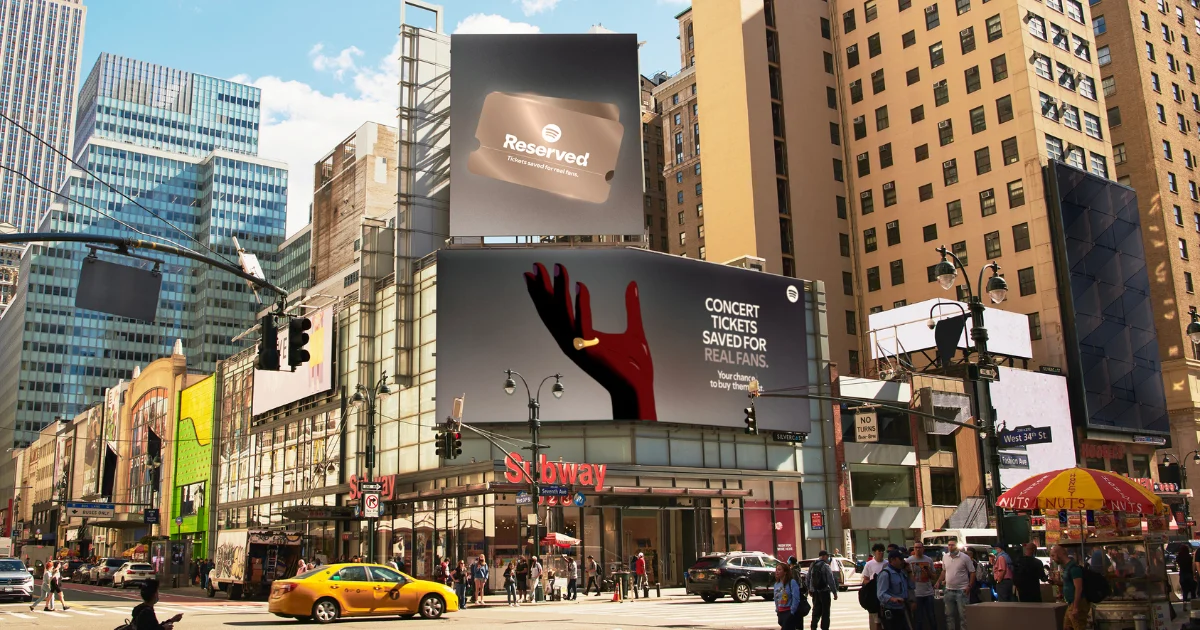
Spotify has officially leaned into this hyper-fixation with its latest campaign, "Great Lengths," a vivid, animated exploration of the lengths to which fans will go to secure their place in the crowd. The campaign serves as a high-octane promotional vehicle for "Reserved," a new Spotify experience designed to reward the platform’s most dedicated listeners with exclusive, early access to concert tickets.
The Genesis of “Reserved” and the “Great Lengths” Campaign
The "Reserved" feature is Spotify’s answer to the chaotic, often soul-crushing landscape of modern concert ticketing. By leveraging data-driven insights, the platform identifies an artist’s most frequent listeners and grants them a priority window to purchase up to two tickets before the general public is even granted entry to the queue.
To introduce this feature, Spotify tapped into the surreal. Directed by Jocelyn Charles through the Paris-based production powerhouse Remembers, the "Great Lengths" campaign utilizes a unique aesthetic that blends traditional craft with modern animation. The result is a series of hyper-real, vibrantly intense vignettes that depict fans braving impossible circumstances—waiting in an infinite line stretching across a scorched desert, parting with their own hair for cash, or choosing a concert date over a family funeral—all to see their musical icons live.
The artistic process behind the film was as labor-intensive as the fan rituals it depicts. The team at Remembers hand-drew the backgrounds using markers, providing a tactile, organic texture, before animating the characters frame-by-frame on a computer. Accompanied by an original, rhythmic score by the sound studio Citizen, the film is a masterclass in visual storytelling that captures the frantic, desperate energy of modern "standom."
Chronology: A History of Spotify’s Fan-Centric Marketing
Spotify’s obsession with its users’ obsession is not a new development. The company has spent years cultivating a brand identity that positions itself as the ultimate observer of the listener’s soul.
The “Fan Life” Precedent
In 2023, Spotify launched its "Fan Life" campaign, a love letter to the visual motifs and idiosyncratic behaviors that define specific fandoms. The campaign was highly granular, highlighting specific imagery like the pink cowboy hats associated with Chappell Roan’s "Pink Pony Club" or the surrealist touch of an albino alligator for Doechii’s Alligator Bites Never Heal.
Expanding the Scope
Following the success of "Fan Life," Spotify expanded its approach into film, capturing the specific, often bizarre rituals of devotees of artists ranging from the reggaeton titan Bad Bunny to the industrial-electronic enigma Rezz. Whether it was the cult-like following of Sleep Token or the high-energy loyalty of Lil Uzi Vert fans, the campaign solidified the idea that Spotify doesn’t just host music; it hosts the communities that form around it.
The Grammys and Hometown Roots
Before the launch of "Reserved," Spotify demonstrated its commitment to contextual marketing ahead of the 2024 Grammy Awards. The brand honored Best New Artist nominees—including Katseye, Addison Rae, Olivia Dean, and Leon Thomas—by plastering their hometowns with billboards featuring childhood photos. These ads served as a reminder that before the fandom, there was a dream, grounding the mega-star back in the human context of their origins.

Supporting Data: Why Fandom Matters to the Bottom Line
The push toward "Reserved" isn’t merely an act of goodwill; it is a calculated business move driven by the economics of the live music industry. In an era where ticket prices are volatile and the secondary market is often predatory, loyalty programs have become a necessary evolution for platforms that control the data.
Spotify’s internal metrics suggest that the most "dedicated" listeners—those who contribute significantly to an artist’s monthly listener count and stream-time—are the most likely to convert into ticket buyers. By creating a closed-loop system where streaming data directly translates to real-world access, Spotify is effectively turning its platform into a utility for the touring industry.
The campaign’s reach is broad, utilizing a multi-channel strategy. Beyond the primary animated film, the "Great Lengths" campaign includes:
- Contextual Out-of-Home (OOH): Animated visuals by Hornet (utilizing Remembers’ original illustrations) are currently appearing in transit hubs and near major concert venues.
- Geographic Focus: The physical footprint of the campaign is concentrated in major music hubs: New York, Los Angeles, Miami, Chicago, and Atlanta.
- Digital Integration: The effort is supported by a heavy spend in Connected TV (CTV), Online Video (OLV), and targeted social media placements.
Official Responses and Strategic Implications
Spotify’s internal team has characterized the "Reserved" feature as a way to "bridge the gap between digital discovery and physical experience." By offering a "Reserved" window, the platform mitigates the stress of the general sale, essentially acting as a gatekeeper of value for the artist’s core demographic.
The rollout began in June, featuring a select slate of artists including Role Model and Rod Wave. Industry analysts have noted that this approach addresses a significant pain point: the feeling that "true" fans are being priced out or beaten by bots during the general sale.
Implications for the Music Industry
- The Weaponization of Data: Spotify is moving further away from being a passive library and toward being an active participant in the live entertainment ecosystem. By holding the keys to the presale, they become a vital partner for touring artists.
- The Aesthetic of Intensity: The "Great Lengths" campaign suggests that "extreme fandom" is now the default marketing language for music brands. The more a fan is seen to be "suffering" for their artist, the more that fan is validated by the brand.
- Hyper-Localization: By placing ads on transit and train wraps in key cities, Spotify is ensuring that the campaign is visible to fans who are already commuting to venues or living in the cultural centers where these artists perform.
Conclusion: The Future of the "Reserved" Experience
As Spotify continues to refine its "Reserved" offering, the "Great Lengths" campaign serves as a cultural signpost. It acknowledges that in the digital age, music is no longer just something you listen to; it is a lifestyle that demands participation.
Whether the campaign is perceived as a helpful tool for the disenfranchised fan or a cynical exploitation of parasocial relationships, the result remains the same: it keeps the user within the Spotify ecosystem. As the platform looks to expand the artists included in the "Reserved" program, it is clear that they are betting on the idea that if they can capture the fan’s obsession, they can own the entire concert-going experience.
For the listener who is willing to wait in that infinite desert line, Spotify is promising a shortcut. For the music industry, it is a new frontier of ticket distribution, built on the back of the most valuable currency in the business: the diehard fan.