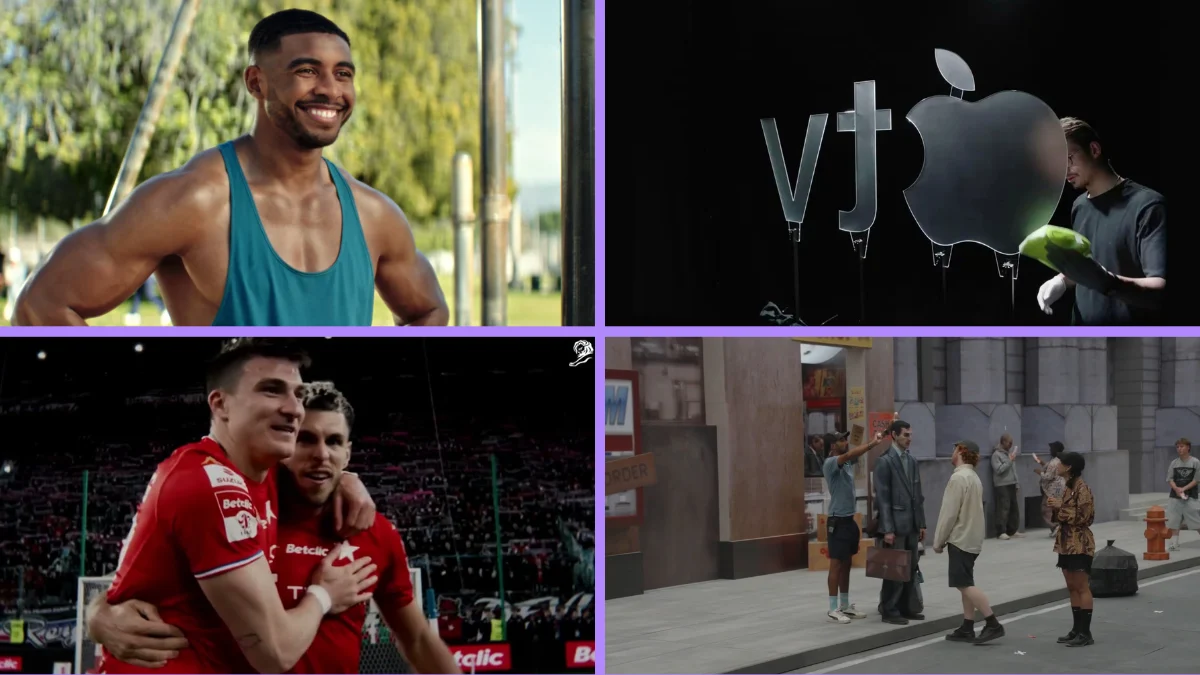
Main Facts: The Great Pivot at the Palais
The 2024 Cannes Lions International Festival of Creativity was widely expected to be the "Year of the Machine." As the advertising industry grapples with the existential and operational shifts prompted by generative AI, many industry analysts predicted a landslide of machine-generated entries dominating the winners’ circle. Instead, the festival served as a corrective to the industry’s initial gold-rush mentality.
While the organizers officially acknowledged the transformation by introducing a dedicated "AI Craft" subcategory, the actual outcome was a marked departure from the dystopian fears of "replacement" that dominated the discourse in 2023. The festival showcased a reality where artificial intelligence has transitioned from a headline-grabbing gimmick to a quiet, sophisticated utility. The prevailing sentiment among jurors and creative directors alike was clear: AI is no longer the star of the show; it is the stagehand, the lighting technician, and the production assistant, but the human remains the director.
Chronology: The Arc of a Year
The journey to this year’s festival was marked by three distinct phases of institutional and creative reaction to the rise of generative models.
The Anticipation (Q3–Q4 2023)
Following the explosive public release of ChatGPT and Midjourney, the industry entered a state of frantic experimentation. By late 2023, agencies were establishing "AI Labs," and holding companies were announcing multi-billion-dollar investments in proprietary tools. The industry narrative was one of rapid displacement: if a prompt could generate a storyboard, a copy deck, or a film script in seconds, what role remained for the traditional creative?
The Institutional Response (Q1 2024)
Recognizing the seismic shift, the Cannes Lions organization formally adjusted its rulebook. The introduction of the "AI Craft" category was a strategic move to codify how the industry should evaluate machine-augmented work. It was an attempt to provide a framework for transparency and attribution, ensuring that entries utilizing generative tools were categorized appropriately rather than masquerading as purely human-led creative endeavors.
The Festival Reflection (June 2024)
When the Palais des Festivals opened its doors in June, the atmosphere was markedly different from the speculative fervor of previous years. The heavy presence of tech giants—including OpenAI and Google DeepMind—suggested a focus on infrastructure rather than art. However, as the Grand Prix winners were announced, it became evident that the highest honors were still reserved for work that prioritized emotional resonance, cultural insight, and raw human storytelling—attributes that remain fundamentally beyond the reach of current Large Language Models (LLMs).
Supporting Data: Behind the Numbers
While the "AI Craft" subcategory saw a high volume of submissions, the conversion rate to top-tier awards was telling. According to preliminary analysis of the shortlist data:
- The Utility Shift: Over 70% of winning campaigns that utilized AI cited it as a "productivity or efficiency layer" rather than the creative engine itself.
- The "Human-in-the-Loop" Premium: Projects that featured transparent human-machine collaboration outperformed "pure" AI work by a factor of three in the Brand Experience and Activation categories.
- Tech Presence: Google DeepMind and OpenAI’s activations drew record attendance, yet the sessions that prioritized "the future of craft" and "the ethics of creative labor" saw the highest audience retention rates, signaling that the industry is more interested in the philosophy of the work than the novelty of the tools.
Official Responses: Voices from the Palais
The sentiment among the leadership of the world’s most prestigious agencies suggests a newfound maturity.
"We stopped looking for AI to do the work for us," said one Global Chief Creative Officer during a panel session. "Instead, we started looking for AI to help us do the work better. It’s the difference between using a calculator and having the calculator solve the math problem you don’t understand."
Representatives from Google DeepMind echoed this sentiment, emphasizing that their objective is to augment human capability. "The goal of these models is not to be the creator; the goal is to be the ultimate creative companion," a spokesperson noted during an official stage presentation. "When we see a campaign that wins at Cannes, it’s rarely because the AI did something cool. It’s because a human used the AI to reach a depth of execution that was previously cost-prohibitive or physically impossible."
Jurors were equally vocal. In the press debriefs, the consensus was that AI-generated work often suffered from "uncanny valley fatigue"—a sameness in visual style and tonal delivery that, while technically impressive, failed to strike the emotional chord required for a Grand Prix.
Implications: The Nuanced Future of Creativity
The shift witnessed at Cannes has profound implications for the future of the advertising industry.
1. The Death of "AI as a Hook"
Brands that attempted to win by simply being "the first to use AI" found little success. The novelty factor has worn off. Moving forward, the industry will stop treating AI as a unique selling point in marketing campaigns. If a campaign’s primary claim to fame is that it was made by a computer, it is likely to be viewed as a technical stunt rather than a piece of high-value advertising.
2. The Resurgence of the "Master Craftsman"
As the barrier to entry for basic content creation drops to near zero, the premium on human creative direction will skyrocket. The ability to curate, edit, and imbue work with specific, localized cultural nuance will become the primary differentiator for agencies. We are entering an era where "taste" is the most valuable currency in the industry.
3. Ethical Governance and Transparency
The Cannes festival served as a testing ground for industry ethics. The discussion shifted from "can we use this?" to "should we use this?" and "how do we disclose it?" The Cannes Lions organizers have signaled that future years will likely see even stricter requirements for disclosure, potentially moving toward a standard "Creative Provenance" audit for all entries.
4. The Integration of Data and Storytelling
The most successful work this year didn’t just use AI to create assets; it used AI to analyze consumer data to identify deeper, more human truths. By using machine learning to parse thousands of hours of consumer interactions, creatives were able to uncover insights that informed human-written, human-directed, and human-acted campaigns. This is the synthesis that the industry has been waiting for: the machine as an analyst, the human as the storyteller.
Conclusion: A More Human Industry
The 2024 Cannes Lions festival will be remembered not for the AI work that won, but for the realization that AI is simply another tool in a very long history of creative evolution. Much like the printing press, the camera, or the personal computer, generative AI is forcing the industry to redefine the boundaries of craft.
The "hype cycle" has effectively bottomed out, leaving behind a more grounded, realistic, and frankly, more human landscape. The message from the Palais is clear: the machines are here to stay, but they aren’t the ones in charge. The future of advertising belongs to those who can harness the speed of the algorithm while maintaining the soul of the artisan. As we look toward 2025, the focus will undoubtedly move away from the "magic" of the technology and toward the rigor of the creative process. The industry has survived its encounter with the machine, and in doing so, it has rediscovered the immense, irreplaceable value of the human spirit.