In the high-velocity world of Software-as-a-Service (SaaS), a common point of friction for founders and VPs of Sales is the "Attribution Gap." As companies scale, they often implement hybrid models—a blend of self-serve, product-led growth (PLG) and high-touch, sales-assisted motions. This leads to an age-old question that keeps revenue leaders awake at night: Should an Account Executive (AE) be paid full commission when a customer effectively closes themselves?
The answer, according to industry veterans and veteran SaaS operators like Jason Lemkin of SaaStr, is rarely as simple as an "all or nothing" binary. It is a nuanced challenge of incentives, administrative simplicity, and the long-term culture of a sales organization.
Main Facts: The Anatomy of the Sales Attribution Conflict
The central tension in hybrid SaaS sales lies in the discrepancy between "effort" and "revenue." In a traditional model, a salesperson earns their keep through cold calling, complex discovery, and intense negotiation. In a PLG-heavy model, a user might sign up for a trial, read the documentation, integrate the API, and input their credit card without ever speaking to a human.
When an AE is assigned to a territory that includes both high-touch enterprise prospects and self-serve trialists, the waters muddy. Does the AE deserve a commission check when a trial user upgrades to a paid plan, even if that user never responded to the AE’s outreach emails?
The consensus among successful SaaS firms—including unicorns like Twilio and Stripe—is counterintuitive: Pay the rep on the deal regardless of the level of touch.
The Core Philosophies
- Avoid Micro-Management: Debating individual attribution ("Did the rep really influence this sale?") creates an adversarial relationship between management and sales. It turns managers into investigators rather than coaches.
- Operational Simplicity: Routing leads, territories, and segments becomes a nightmare if you have to filter for "sales-influenced" vs. "organic" deals.
- The "Portfolio" Theory: Sales is a game of averages. Some deals are "layups" that close in one call; others are "marathons" that take 18 months. By paying on all, the easy wins subsidize the difficult, long-term investments.
Chronology: The Evolution of Sales Compensation
The Early Stage: The "All Hands" Era
In the early days of a startup, founders often handle sales. There is no commission structure because there is no sales team. Everything is organic, and everything is manual.
The Growth Phase: The Introduction of SDRs and AEs
As the company hits $1M–$5M in ARR, the need for a dedicated sales team arises. This is when the conflict begins. The company introduces automated onboarding emails sent "from" an AE. Suddenly, the AE’s inbox is flooded with trial signups. Some are leads; some are just noise.
The Scaling Phase: The "Twilio/Stripe" Model
As companies cross the $50M+ ARR threshold, they stop tracking individual lead-attribution. Instead, they treat sales reps as "account owners." If a customer falls within an AE’s assigned segment, that AE is credited for all revenue from that account—including organic expansion—at least for the first 12 to 24 months.
Supporting Data: Why Complexity Kills Performance
SaaS leaders often fear "overpaying" their reps for easy wins. However, internal data analysis from top-performing companies suggests that the cost of calculating precise attribution is higher than the cost of "over-commissioning."
- Administrative Overhead: Tracking attribution requires robust CRM integration and constant manual oversight. If a company spends 10 hours a week debating if a lead was "organic" or "sales-driven," they are wasting valuable management time that could be spent on pipeline generation.
- Rep Behavior: When commissions are tied to "influence" rather than "ownership," reps become risk-averse. They may stop pursuing smaller, self-serve-leaning accounts to focus exclusively on prospects that require heavy sales intervention, potentially leaving money on the table.
- The "Adjustment" Strategy: Instead of paying based on the nature of the sale, successful firms set the rate based on the average yield. If the blended commission (including easy organic sales) results in a payout that is too high for the company’s unit economics, the solution is not to track attribution; it is to lower the overall commission percentage for the entire segment.
Official Perspectives: Lessons from the Field
In his ongoing analysis of SaaS operations, Jason Lemkin emphasizes the "KISS" (Keep It Simple, Stupid) principle. During his tenure as an operator and later as a venture capitalist, he has observed that the most successful SaaS companies are those that prioritize clear, transparent, and immutable compensation plans.
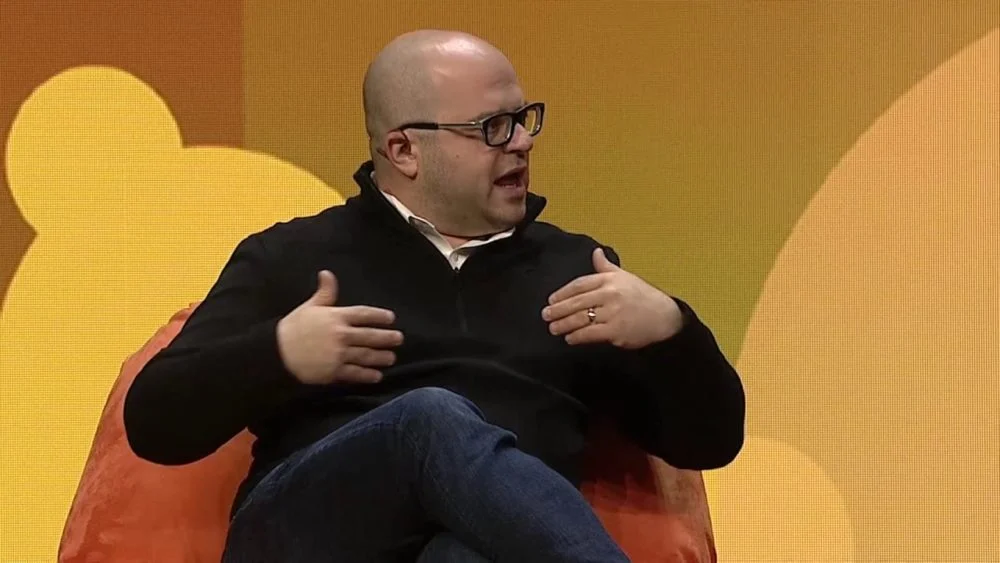
In an interview with Jeff Lawson, the CEO of Twilio, the topic of "Organic Growth vs. Sales-Led Growth" was dissected. Lawson noted that at Twilio, even when accounts grew organically—thanks to the developer-centric nature of the product—the account owners were rewarded. This aligns the interests of the sales team with the interests of the company: Growth is growth.
By treating the sales rep as the "owner" of the territory, the company ensures that there is always someone responsible for the health of that account. If a rep isn’t paid on organic growth, they are incentivized to ignore the account, potentially leading to churn if that customer eventually hits a roadblock that a human could have resolved.
Implications: Building a Sustainable Sales Culture
What does this mean for a startup currently wrestling with their commission structure? The implications are three-fold:
1. Shift from Attribution to Ownership
Stop asking, "Did the rep close this?" and start asking, "Is this rep responsible for this territory?" When a rep "owns" a segment, they are responsible for everything that happens within it—the good, the bad, and the automatic. This creates accountability.
2. The "Blended Rate" Strategy
If your fear is that reps are making too much money on "free" deals, adjust your commission percentage down. If a rep would normally make 10% on a complex deal, but they are getting 50% of their revenue from self-serve organic signups, consider a blended rate (e.g., 7%) that accounts for the ease of some deals. This is mathematically cleaner and prevents the "commission debate" culture from taking root.
3. Culture of Partnership
When you create a system where the company and the rep are fighting over "who gets credit," you destroy the culture of partnership. Sales reps should be focused on how to make the customer successful, not how to prove to the finance department that they sent an email to a trialist three weeks ago.
The Final Verdict
In the end, the most sophisticated sales organizations are the ones that have mastered the art of simplicity. If you are a founder or a VP of Sales, recognize that "organic" sales are not a bug—they are a feature of your product-market fit. If your product is so good that it sells itself, you should be happy to pay your sales team to support that growth, rather than trying to claw back commissions.
By standardizing your compensation, removing the ambiguity of attribution, and setting rates that reflect the overall reality of your business model, you foster a high-performance environment. Focus on the total output of the territory, keep your comp plans simple, and let your sales team do what they were hired to do: build relationships and grow revenue.