In the high-stakes environment of Software-as-a-Service (SaaS), the transition from a scrappy startup to a scaled enterprise is fraught with organizational pitfalls. Among the most dangerous of these is the hiring and integration of the first Chief Marketing Officer (CMO). According to recent insights from SaaS industry veteran and SaaStr founder Jason Lemkin, the failure of many newly appointed marketing chiefs stems not from a lack of technical expertise, but from a fundamental misalignment with the CEO’s vision.
As companies cross the $10 million to $20 million Annual Recurring Revenue (ARR) threshold, the demand for a "marketing quarterback" becomes undeniable. However, the path to success for a CMO is often littered with "career-limiting moves," primarily centered on the temptation to import a rigid playbook from a previous employer rather than evolving the one that currently exists.
The Evolution of the Marketing Function: Timing the CMO Hire
For early-stage startups—those hovering around $2 million in ARR—the concept of a CMO is often premature, even counterproductive. At this stage, the business requires a "VP of Demand Generation" or a tactical lead capable of managing SDRs, BDRs, and initial customer acquisition channels. The focus here is raw execution.
However, the organizational requirements shift as the company matures. A CMO becomes essential only when three conditions are met:
- Established Brand: The company has moved beyond mere existence and has a recognizable footprint in the market.
- Proven Engine: The marketing machinery—demand gen, content, and conversion—is not just functional, but routine.
- Complexity: The sheer volume of marketing sub-disciplines (field, product, brand, analyst relations, and PR) requires a singular orchestrator.
Lemkin suggests that the "sweet spot" for a CMO hire typically arrives around the $20 million ARR mark, or roughly 12 to 24 months after the core marketing functions have been fully stabilized. Bringing in a senior executive before this infrastructure exists often results in a "fancy title" holder who lacks the hands-on environment required to succeed.
The "Playbook Trap": A Chronology of Failure
The common narrative of a failed CMO hire often follows a predictable trajectory.
Phase 1: The Honeymoon Period
The new CMO is brought in with a mandate to "scale." They arrive with a pedigree from a previous company, eager to implement the strategies that yielded success in their past life.
Phase 2: The Strategic Divergence
The CMO begins to execute their own vision. In a SaaS environment, this is where the friction begins. Most SaaS CEOs, by the time they reach $10 million in ARR, have spent years in the trenches. They have traveled to conferences, met with hundreds of prospects, and acted as the primary brand ambassador. Consequently, they possess a deeply ingrained, battle-tested philosophy on how the market perceives their product.
Phase 3: The Collision of Vision
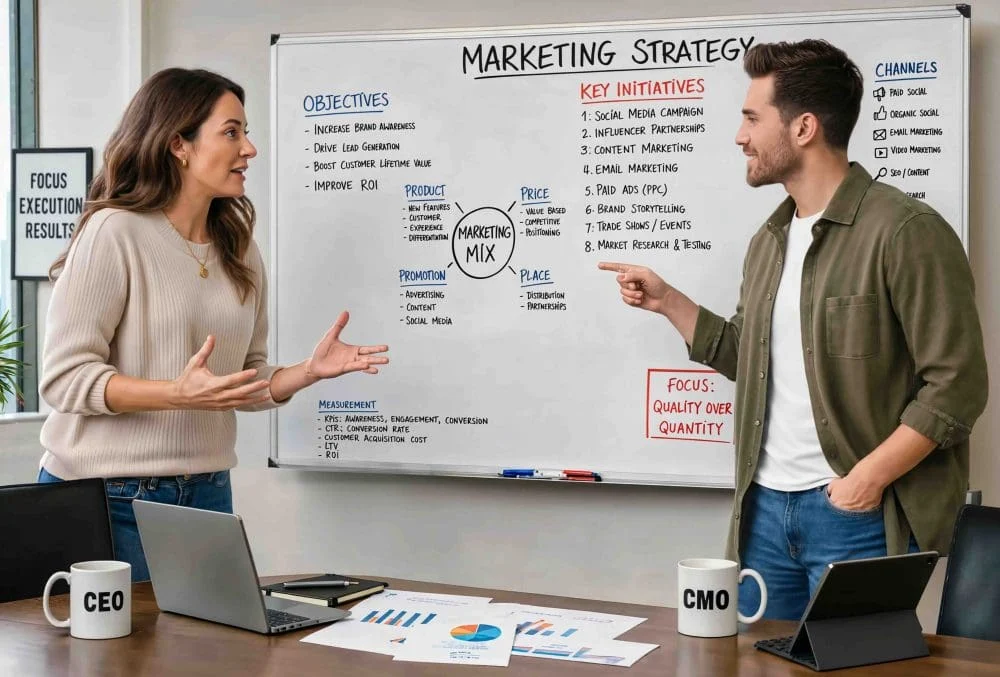
The misalignment occurs when the CMO attempts to steer the company’s marketing strategy in a direction that contradicts the CEO’s intuition. If the CEO values high-touch events and press outreach, but the CMO insists on shifting budget toward aggressive growth hacking and digital automation, the stage is set for a collapse.
Phase 4: The Burnout
The CMO, sensing resistance, doubles down on their own strategy, often citing "best practices" from their previous role. If the revenue results don’t follow almost instantaneously, the lack of alignment becomes untenable, leading to a swift exit.
Data-Driven Realities and CEO Intuition
Why do so many CMOs feel compelled to challenge the CEO’s marketing strategy? The answer lies in the unique nature of SaaS leadership. Many of the most successful CEOs—figures such as Marc Benioff, Elon Musk, and Stewart Butterfield—are, by definition, great marketers. They have developed an intimate, intuitive understanding of their market that is difficult for an incoming executive to override.
Data shows that in high-growth companies, the most successful marketing initiatives are those that build upon existing momentum. When a CMO attempts to pivot the strategy entirely, they ignore the "current playbook" that is already generating revenue.
Supporting observations from industry leadership suggest that the most effective CMOs are those who treat their first 12 months as a period of integration rather than disruption. The primary directive for a new CMO should be:
- Audit the current machine: Understand why the current, functioning model is working.
- Align with the CEO’s narrative: Ensure that every campaign, press release, and event supports the CEO’s long-term vision.
- Incremental Experimentation: Introduce new tactics only if they can be funded without jeopardizing the existing revenue-generating core.
The Cost of Dissent: Professional Implications
The professional risk for a CMO or a VP of Sales who chooses to engage in a public or aggressive strategic battle with the CEO is severe. Lemkin notes that "challenging the CEO on marketing strategy" is perhaps the most significant career-limiting move an executive can make.
While it is a professional responsibility to voice objections, the manner in which this is done determines the executive’s longevity. The protocol for success is:
- Express Concerns Respectfully: Bring objections to the table in private, one-on-one sessions.
- Execute the Mandate: Once the conversation has concluded, the executive must align with the decision.
- The "Quiet Way": If an executive feels a certain approach is flawed, they may attempt to steer the ship in their preferred direction subtly, provided it does not directly sabotage the overarching strategy.
Ultimately, however, there comes a point where the executive must "fall into line." In the hierarchy of a growing SaaS firm, the CEO’s vision is the anchor. If a CMO cannot reconcile their own strategic preferences with that vision, they are fundamentally mismatched for the role.
Implications for the Future of SaaS Marketing
What does this mean for the future of the CMO role? We are likely to see a shift toward "Generalist CMOs"—leaders who are comfortable managing a broad team of specialists but who do not feel the need to impose a rigid, prescriptive marketing dogma on the organization.
For CEOs, the implication is clear: stop expecting magic. A CMO is not a sorcerer who will suddenly conjure hyper-growth from an unproven product. Instead, the CMO’s value lies in their ability to take what has been built, refine it, and scale it through the next phase of growth.
Key Takeaways for CMOs and CEOs:
- For the CMO: Your goal is to improve the current playbook, not replace it. If you spend your first 90 days trying to rebrand the company or change the core messaging without the CEO’s full buy-in, you are likely to be replaced within the year.
- For the CEO: Do not hire a CMO to be the sole "voice" of the company if you are still the one who best understands the customer. Hire a CMO to manage the infrastructure and the team that allows your vision to reach a wider audience.
- The Golden Rule of Alignment: Strategic debates should happen behind closed doors. Once the path is set, the team must move as a single unit.
In conclusion, the failure of the CMO role is rarely a failure of marketing talent. It is a failure of integration. When both the CEO and the CMO recognize that their roles are complementary—the CEO as the visionary and the CMO as the operational architect—the organization is capable of scaling at an exponential rate. When they compete for the soul of the marketing strategy, the growth trajectory inevitably stalls. Success in SaaS is not about who has the better marketing playbook; it is about who has the better alignment.