In the high-stakes world of Software-as-a-Service (SaaS), the difference between a soaring valuation and a missed growth milestone often rests on a single, critical foundation: the sales quota. For CEOs and Sales VPs, the pressure to set targets that are both ambitious enough to drive growth and realistic enough to retain top talent is a constant balancing act.
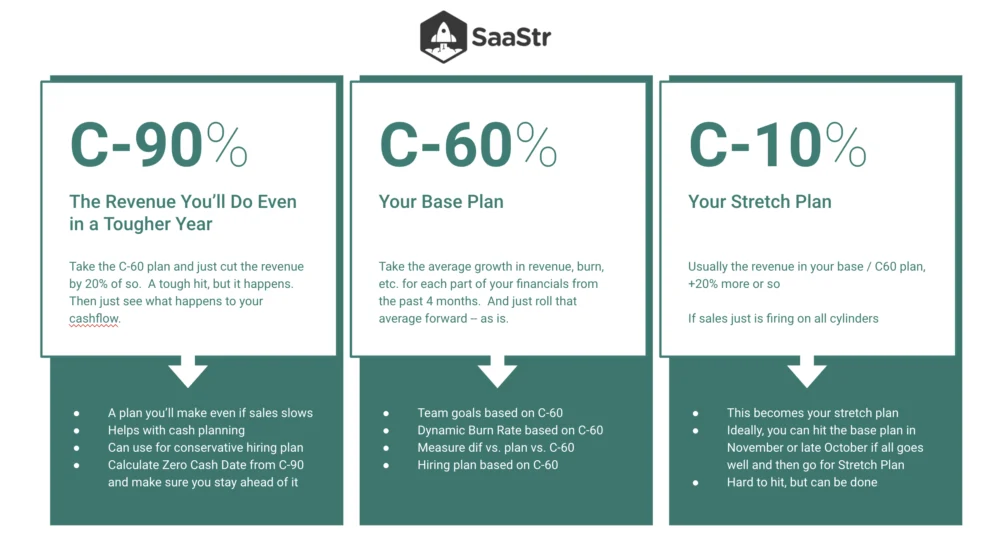
Drawing from years of operational experience, the industry standard—championed by platforms like SaaStr—has shifted away from arbitrary "stretch goals" toward a more nuanced, probabilistic approach known as the "C-Confidence" model. By categorizing company-wide financial plans into C-90, C-60, and C-10 tiers, leaders can navigate the volatility of the market with mathematical rigor.
Main Facts: Defining the C-Confidence Model
At its core, the C-Confidence model is a framework for strategic planning that categorizes business objectives based on the probability of attainment. The "C" stands for "Confidence," representing the CEO’s subjective assessment of the likelihood of hitting a specific revenue target.
- C-90 (The Conservative Floor): This is the baseline plan—the "must-hit" number. It is the target that the organization has a 90% confidence level in achieving. It is designed to ensure the lights stay on, the payroll is covered, and the business remains solvent regardless of market turbulence.
- C-60 (The Operating Target): This serves as the "north star" for the organization. It is the plan upon which internal budgets, hiring trajectories, and—crucially—sales compensation plans are built. It represents the realistic expectation for a healthy, growing company.
- C-10 (The Stretch Goal): This is the "moonshot." With only a 10% likelihood of achievement, this target is reserved for high-performance scenarios, such as unexpected market tailwinds or a blockbuster product launch. It serves to incentivize outperformance and identify top-tier talent.
Chronology of Strategic Planning
Effective quota setting is not a year-end event; it is a continuous, iterative cycle. To implement the C-Confidence model effectively, organizations typically follow this chronological workflow:
Phase 1: Pre-Fiscal Year Assessment (Months 10–11)
Leadership begins by modeling the three scenarios. This requires a deep dive into historical data, lead generation velocity, and current market sentiment. The CEO and VP of Sales must reconcile the bottom-up capacity of the sales team with the top-down growth expectations of the board.
Phase 2: Calibration and Alignment (Month 12)
Once the models are finalized, the company pivots to alignment. The C-60 plan is socialized with department heads to ensure that product, marketing, and customer success are scaled to support the bookings target. During this period, individual sales quotas are derived from the aggregate C-60 bookings goal.
Phase 3: Execution and Mid-Year Pivot (Months 1–6)
As the fiscal year begins, the sales organization tracks progress against the C-60 plan. If performance consistently trends toward the C-10, leadership may choose to reinvest in growth. Conversely, if results struggle to hit the C-90 floor, the organization must be prepared to enact "Plan B" austerity measures.
Phase 4: The Performance Review and Upside Calculation (Months 7–12)
As the year draws to a close, the focus shifts to the C-10 upside. High-performing sales representatives who exceed their C-60-derived quotas are rewarded, often through accelerated commission tiers, bridging the gap between standard targets and the stretch goals defined at the start of the year.
Supporting Data: Why C-60 is the "Sweet Spot"
Why do experts advocate for basing compensation on the C-60 plan rather than the C-90 or the C-10? The logic is rooted in the psychology of high-performance sales.
- Retention and Morale: If quotas are set at the C-10 (the stretch) level, 90% of the sales team will inevitably fail to hit their targets. This leads to burnout, high turnover, and the demoralization of the sales force. By contrast, C-60 targets are achievable with consistent, high-quality effort.
- The VP Sales Incentive: The Vice President of Sales, in particular, should have their On-Target Earnings (OTE) tied to the C-60 plan. This aligns the leadership’s compensation with the company’s realistic operating target, ensuring that the sales org is not incentivized to "sandbag" (under-promise) or to promise unreachable figures to the board.
- Financial Predictability: For CFOs and investors, the C-60 plan offers the most reliable forecast. It accounts for the inevitable "unknown unknowns" while maintaining an ambitious enough growth trajectory to satisfy equity holders.
Official Responses and Industry Best Practices
Industry leaders emphasize that the C-Confidence model is not a rigid template but a flexible tool. In a recent discourse on sales operations, successful SaaS founders noted that the primary failure point in quota setting is "misaligned ambition."
When asked about the integration of these plans, proponents of the model suggest the following:
- Transparency: Employees should understand that there are different plans. When the CEO speaks to the board, they may present the C-10, but when they speak to the sales team, the C-60 is the focus.
- The "Upside" Mechanism: To keep top performers engaged, companies should implement "accelerators" that trigger once a rep clears their C-60 quota. This effectively allows the rep to participate in the company’s C-10 "stretch" upside, ensuring that the most talented individuals are financially rewarded for their contribution to the company’s best-case scenarios.
Implications: The Long-Term Impact on Company Culture
Implementing the C-Confidence model has profound implications for a company’s culture and long-term viability.
1. From Fear-Based Management to Data-Driven Growth
By acknowledging the existence of a C-90 floor, leadership removes the existential dread that often plagues startups. Everyone knows that even in a worst-case scenario, the business has a plan to remain viable. This psychological safety allows the sales team to focus on growth rather than survival.
2. Eliminating the "Quota Gap"
Many companies struggle with a disconnect between what is sold to investors and what is asked of the sales team. The C-Confidence model forces the CEO to acknowledge that these are two different numbers. By formalizing this distinction, the company avoids the common pitfall of "impossible quotas," which are the leading cause of talent drain in the tech sector.
3. Scaling Through Predictability
For companies in the "growth stage," predictability is the most valuable currency. When an organization can consistently hit its C-60 target, it builds credibility with investors. This, in turn, makes it easier to raise subsequent rounds of funding, which provides the capital necessary to reach for the C-10 goals in the following fiscal year.
4. The Role of the VP of Sales
Under this model, the VP of Sales evolves from a "quota-enforcer" into a "strategic architect." They become responsible for mapping the gap between the current state and the C-60/C-10 targets, identifying exactly where the organization needs more leads, more pipeline, or better conversion rates to hit the next tier of growth.
Conclusion
Setting sales targets is as much an art as it is a science. While no model can perfectly predict the future, the C-90/C-60/C-10 framework provides a structured approach to managing uncertainty. By anchoring compensation and organizational goals to the C-60 plan, companies can foster a high-performance culture that is sustainable, transparent, and—above all—aligned with the realities of the modern SaaS market.
For the CEO, the path forward is clear: define the floor, operate at the realistic center, and incentivize the moonshot. In doing so, you move from merely hoping for growth to systematically engineering it.