The landscape of managed WordPress hosting is undergoing a tectonic shift. As the web evolves, the traditional model of "files and databases on a server" is being replaced by sophisticated, AI-driven infrastructures. At the heart of this transformation is Pressable, a managed hosting provider that is increasingly blending high-level technical account management with cutting-edge artificial intelligence.
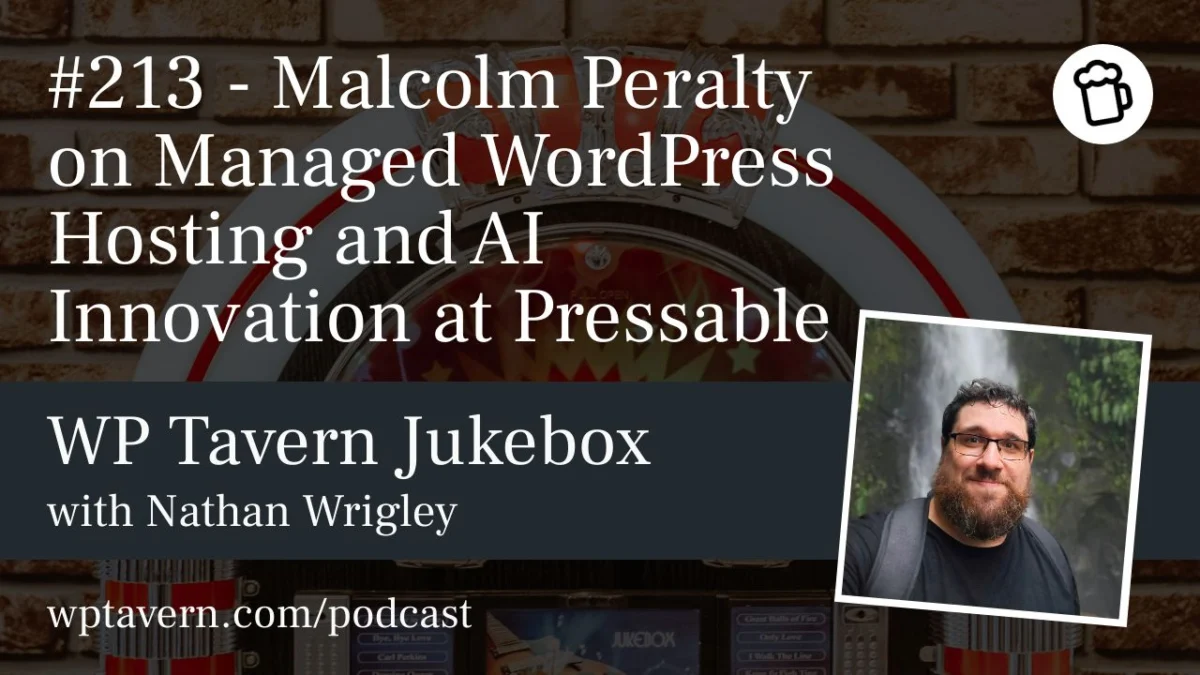
In a recent deep-dive discussion on the WP Tavern Jukebox Podcast, Malcolm Peralty, a technical account manager at Pressable with two decades of experience in the WordPress ecosystem, provided a rare glimpse into the "black box" of modern hosting. From the nuances of hardware infrastructure to the promise of natural-language site management, the industry is moving toward a future where the line between the user and the server is becoming increasingly blurred.
A Legacy of Evolution: From Blogging to Infrastructure
Malcolm Peralty’s journey offers a roadmap of the WordPress ecosystem itself. Starting in the early 2000s—long before the platform reached its 1.0 release—Peralty transitioned from a full-time blogger to a project manager and technologist. His career has taken him through various CMS environments, including a notable stint at Acquia, the enterprise "mothership" of the Drupal world.
Peralty’s return to the WordPress fold via Pressable is emblematic of a broader trend: the maturation of WordPress as a true enterprise-grade platform. His role as a Technical Account Manager (TAM) is not about "support" in the traditional sense of troubleshooting broken passwords. Instead, it is a strategic consultancy role. TAMs at Pressable focus on long-term scalability, performance optimization, and bridging the gap between a client’s business goals and the underlying WP Cloud infrastructure.
The Invisible Architecture: What Happens Behind the Curtain
The average user perceives hosting as a utility—you pay your monthly fee, and your site stays online. However, the reality is a complex, high-stakes environment. Pressable, for instance, operates on "WP Cloud," a proprietary infrastructure separate from standard public cloud providers like AWS or Google Cloud.
Hardware and Resource Management
One of the most critical aspects of hosting at scale is resource allocation. Peralty explains that many hosts "hide" performance issues behind heavy caching or by overselling server workers. At Pressable, the approach is different: focusing on a "one worker per one VCPU" model.
"Imagine 40 cars on a one-lane highway versus five cars on a five-lane highway," Peralty notes. By providing dedicated resources, the host ensures that sites remain performant not just during idle times, but during the "burst" traffic typical of e-commerce sales or viral content spikes. This is where the role of the TAM becomes essential: educating clients on why their site might be slow, identifying plugin "bloat," and determining when a client actually needs to downgrade their plan due to better optimization—a rare example of a host prioritizing client efficiency over raw subscription revenue.
The Dawn of the AI-Driven Control Panel
Perhaps the most significant development on the horizon is the introduction of MCP—Pressable’s AI-powered control panel. This interface represents a fundamental change in how developers and site owners will interact with their digital real estate.
The Power of Natural Language
The goal of the MCP is to allow users to deploy, manage, and optimize WordPress sites using natural language commands. Rather than clicking through dozens of menus, a user could theoretically ask the system to spin up a sandbox environment, clone code from a repository, pull production assets, and notify them when the staging site is ready for testing.
"Anything that you could do or click on as a user in the control panel, an AI could also act on and do as well," Peralty explains. This isn’t just about convenience; it is about speed to market. For agencies managing hundreds of sites, the ability to automate routine tasks—such as updating specific plugins across a fleet of sites—is a game-changer.
Implications for the Future: The "Human-in-the-Loop" Challenge
While the efficiency gains are clear, the integration of AI into infrastructure management raises significant questions regarding safety, security, and the nature of the human-host relationship.
The Risk of Automation
The primary concern, as with all AI-driven workflows, is the potential for "hallucination" or catastrophic error. If an AI is given the authority to modify databases or delete files, guardrails are non-negotiable. Pressable’s approach involves keeping the human in the loop, requiring approval for destructive actions, and relying on robust backup systems.
"We keep hourly backups of the database and daily backups of the file system," says Peralty. This "belt and braces" approach is what allows the company to experiment with automation while maintaining the high level of reliability their clients expect.
The "Luddite" Dilemma and Infrastructure Costs
There is a looming economic question: who pays for the massive increase in server traffic generated by AI bots? As AI agents constantly crawl, index, and interact with sites to "learn" or perform tasks, they generate significant server load.
"As an industry, we don’t know how to pass these costs on to customers," admits Peralty. While some users may embrace the AI revolution, others may prefer a "Luddite" approach—a toggle to block AI crawlers and stick to manual, human-controlled site management. The future of hosting will likely require a tiered pricing model that accounts for the computational cost of AI-assisted infrastructure.
Conclusion: A New Paradigm of Web Management
The collaboration between technical account managers and AI is not replacing the human element of hosting; it is augmenting it. By offloading the "mind-numbing" work of log analysis, script writing, and routine maintenance to AI, human experts like Peralty are freed to focus on the high-level strategy that helps businesses grow.
We are moving toward a future where the WordPress UI might be relegated to the background. In this new era, the "browser-based" life will be replaced by an "AI-assisted" life, where the hosting platform itself acts as an intelligent partner in the development and maintenance of the site.
For the average site owner, this means less time spent wrestling with server configurations and more time spent on content and growth. For the industry at large, it marks the end of the "static" hosting era and the beginning of a dynamic, conversational relationship with our digital infrastructure. As Malcolm Peralty suggests, the most exciting part is that we are only at the beginning of this transition. Whether we are ready for it or not, the AI-first hosting future is already being written in the code of platforms like Pressable.