As generative AI (GenAI) reshapes the digital landscape, businesses are scrambling to measure their "visibility" within AI-driven search results. New specialized tools like Profound and Peec AI have emerged to monitor how often a brand appears in responses to specific prompts, assigning visibility scores to quantify success. However, beneath the surface of these high-percentage scores lies a growing crisis of metrics: many of these measurements are essentially vanity metrics, easily manipulated and disconnected from actual consumer behavior.
For modern marketers, the race to "rank" in AI responses—much like the SEO wars of the early 2000s—is proving to be a flawed pursuit. To win in an AI-native web, brands must pivot away from artificial visibility scores and toward actionable, user-centric data.
The Illusion of AI Visibility Scores
The current methodology used by many AI-tracking platforms relies on a "prompt-response" loop that is inherently susceptible to manipulation. If an agency or internal marketing team builds a strategy around optimizing for specific, static prompts, they can easily inflate their visibility scores to 100%. By including a brand name directly within the input prompt, the AI is essentially "coached" to mention that brand, resulting in a score that reflects prompt engineering rather than organic brand authority.
This practice masks a deeper reality: the dynamic nature of AI citations. Citations in generative models are not static like traditional search engine rankings. Two users asking the exact same question at different times—or even the same user asking twice—may receive drastically different responses. When marketers focus on "forcing" their brand into every possible response, they miss the nuance of how AI platforms actually synthesize information for the end user.
Chronology of the Shift: From Keywords to Concepts
- The SEO Era (2000–2020): Success was defined by keyword density, backlink profiles, and position zero (featured snippets).
- The Emergence of GenAI (2022–2023): As ChatGPT, Claude, and Perplexity entered the mainstream, the "Answer Engine" replaced the "Search Engine."
- The Tracking Gold Rush (2024–Present): Companies launched AI-tracking tools to mirror legacy SEO rank trackers, attempting to apply a linear measurement system to a non-linear, probabilistic technology.
- The Current Correction: Industry leaders are beginning to realize that "visibility" is a symptom, not a strategy. The focus is shifting toward "Retrieval Optimization"—ensuring the AI platform retrieves the right information from the right site at the right time.
Supporting Data: Moving Toward Actionable Metrics
Instead of chasing generic visibility, high-performing marketers are turning their attention to multi-platform analysis. The goal is to identify which domains are being consistently retrieved across platforms like Google’s AI Overviews, OpenAI’s SearchGPT, and Perplexity.

The Anatomy of an AI-Friendly Site
Effective AI tracking should focus on three core pillars:
- Retrieval Frequency: How often does the AI system pull data from a specific page to answer a relevant query?
- Content Relevance: Does the page type (e.g., a "How-To" guide versus a "Comparison" page) align with the intent of the prompt?
- Contextual Authority: Does the AI cite the brand name, or is it merely "borrowing" data in an invisible citation?
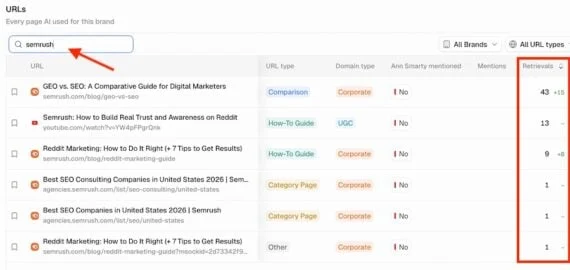
The data provided by platforms like Peec AI suggests that "Retrievals" are a far more reliable metric than "Visibility." For instance, a brand might see a steady increase in retrievals for a specific comparison guide as it gains authority in the eyes of the LLM. This is a lagging indicator of high-quality, on-site content that answers prospect concerns effectively.
Competitive Intelligence: Beyond the Keyword Gap
AI-tracking tools are uniquely positioned to expose content gaps that traditional SEO tools miss. In the past, "keyword gaps" were identified by finding terms a competitor ranked for that you did not. Today, the "content gap" is found by analyzing where your competitors excel at informing the shopper.
If a competitor’s page consistently appears in AI responses for a specific product category, it is not necessarily because they have more backlinks. It is often because their on-site content is structured in a way that the AI finds "digestible" and authoritative. By studying these high-performing pages, businesses can reverse-engineer the information architecture required to capture the AI’s attention.
The Problem of "Invisible Citations"
One of the most contentious issues in AI optimization is the distinction between "visible" and "invisible" citations.
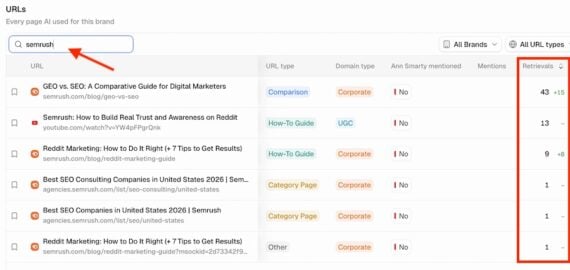
- Invisible Citations: These occur when an AI provides information derived from your site but does not explicitly mention your brand name or provide a direct link. While these help build the AI’s knowledge base, they drive negligible traffic.
- Visible Citations: These are the gold standard. They occur when the AI explicitly names the business, driving brand recall and, ultimately, purchasing decisions.
Industry data suggests that invisible citations are often a sign that the AI platform finds the information on a page useful, but the brand not relevant enough to the consumer’s journey. To convert invisible citations into visible ones, brands must focus on "Branded Answers." This involves creating content that isn’t just informative but is also distinctively branded—ensuring that when the AI synthesizes an answer, it feels compelled to cite the specific source of that expertise.
Implications for Future Strategy
The implication for marketing teams is clear: stop optimizing for the machine and start optimizing for the brand’s knowledge base.
Strategic Recommendations
- Audit Branded Prompts: Regularly use prompts that test the AI’s knowledge of your brand. If the AI provides vague or outdated information, your site architecture or schema markup likely needs an update to better "feed" the model.
- Prioritize "Retrievability": Shift the focus from tracking rankings to tracking how often your URLs are retrieved in response to industry-relevant queries.
- Invest in Branded Answers: Build content that is proprietary. AI models are trained on common knowledge; they struggle to replicate unique research, proprietary data, or distinct brand perspectives.
- Accept the Shift: The era of controlling your position on a search engine results page (SERP) is fading. The future is about influencing the synthesis of the answer.
Official Industry Stance
While search engines and AI companies remain tight-lipped about the exact mechanisms of their retrieval systems, the consensus among SEO practitioners is that the "answer engine" prefers clarity, depth, and structured data. The most successful brands will be those that provide AI models with clear, concise, and highly accurate information that acts as a "source of truth."
As the market matures, the tools that survive will be those that provide deep, granular data on how a brand is being represented, rather than those that simply count occurrences. Marketers must resist the urge to use these tools for vanity; instead, they must treat them as diagnostic instruments that reveal the health of their digital presence in an increasingly automated world.
Conclusion
The obsession with visibility scores is a distraction from the fundamental work of brand building. In a world where AI synthesizes information, the brand that provides the most useful, accurate, and structured information will naturally become the most visible. By moving away from manipulated metrics and focusing on the quality of retrieval and the consistency of brand presence, businesses can ensure they remain not just visible, but essential, in the evolving search landscape.