In the vast, interconnected landscape of the web, WordPress stands as a unique phenomenon. It is more than just a Content Management System (CMS); it is a sprawling, living ecosystem sustained by a complex web of human relationships, technical innovations, and commercial interests. As the platform matures into 2026, the question of how these disparate entities—agencies, product companies, and infrastructure providers—build and maintain trust has become the defining challenge of the era.
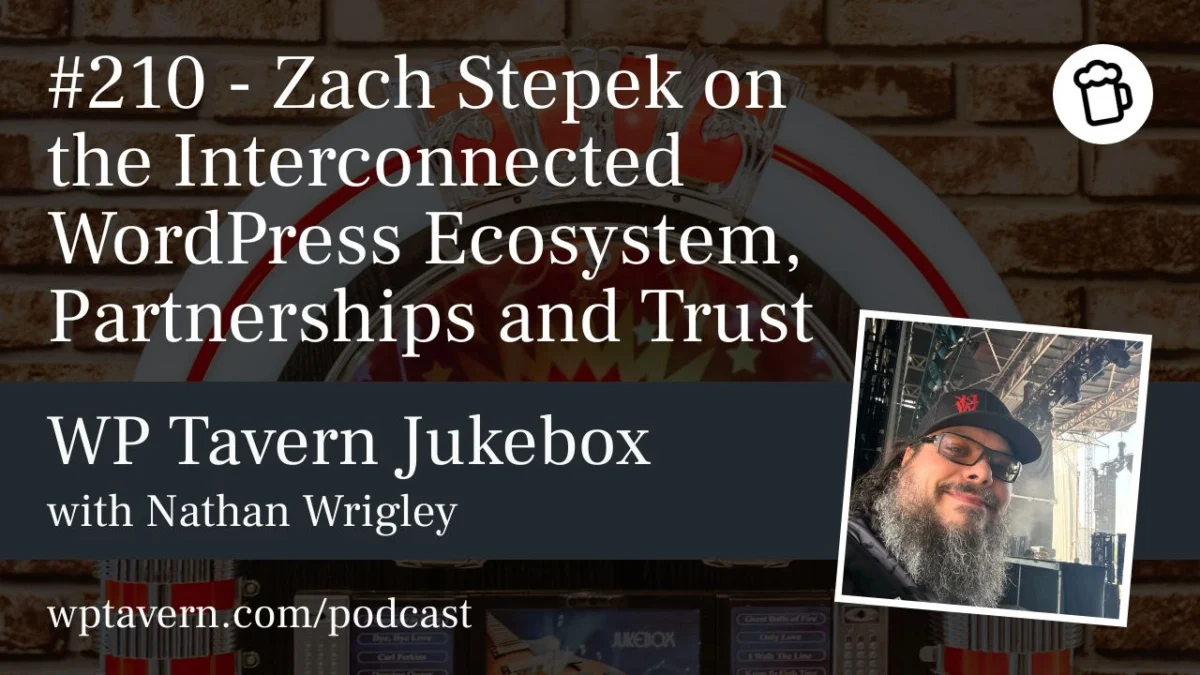
In a recent episode of the Jukebox Podcast from WP Tavern, host Nathan Wrigley sat down with Zach Stepek, a veteran of the tech industry and a self-described "unicorn" of the WordPress world. Their conversation peeled back the layers of the WordPress community to examine the "invisible threads" of partnership that hold the ecosystem together, the perils of short-term transactional thinking, and the vital importance of cultivating relationship equity in an era defined by economic uncertainty.
The Three Pillars of WordPress Success
To understand the health of the WordPress ecosystem, Stepek proposes a framework of three interconnected pillars. These layers do not exist in isolation; rather, they form a "Celtic knot" of dependencies, where the strength of the whole is determined by the weakest link in the chain.
1. The Agency/Individual Layer
At the front lines are the agencies and individual developers who build the websites. They serve as the translators between complex technology and client needs. According to Stepek, these entities are the primary architects of the user experience, often serving as the bridge between the product companies and the end-user.
2. The Product Layer
The second layer consists of the developers behind themes, plugins, and block-based tools. From form builders like Gravity Forms to essential SEO and performance plugins, these companies create the modular functionality that makes WordPress infinitely extensible. The challenge here, Stepek notes, is harmony; an agency must master these products to implement them effectively, while product companies must be responsive enough to evolve their offerings based on the real-world needs of those agencies.
3. The Infrastructure Layer
Finally, there is the hosting and infrastructure tier. Often misunderstood as a mere vendor relationship, Stepek argues that hosting is the "real estate" of the digital world. "If you skimp on hosting and go for the cheapest option, you are putting your storefront in the cheapest rent you can pay," Stepek explains. In a high-traffic, e-commerce-driven environment, hosting is the foundation upon which success—or failure—is built.
A Chronology of Evolution: From Flash to Foundation
Stepek’s perspective is informed by a career that spans the evolution of the web. He cut his teeth in the era of Cold Fusion and Flash, witnessing firsthand the dramatic collapse of the Flash industry when market conditions shifted overnight. That experience—where millions of dollars in potential revenue vanished in a week—taught him the harsh reality of fragile business models.
His introduction to WordPress was born of a "viral moment." During a Thanksgiving Day football game, an organization he was working with—the Oscar Mike Foundation—was featured on television. The resulting traffic spike overwhelmed their undersized VPS, leading to a total server collapse. Through that crisis, Stepek gained a deep appreciation for the technical demands of scaling and the critical importance of infrastructure.
This experience led him to WordCamp Milwaukee in 2015, where he connected with the WooCommerce team. This began a journey that took him from agency founder to a key voice in the hosting space, eventually leading to his current work as a fractional consultant focusing on partnership strategy.
The Perils of Transactional Thinking
A central theme of the discussion is the shift in the ecosystem’s collective mindset. In recent years, the influence of private equity and a heightened focus on Return on Investment (ROI) has begun to reshape how WordPress companies interact.
Stepek warns that when profit becomes the sole metric, the ecosystem suffers. "When you talk about an ecosystem of interrelated, interlocking pieces that all have to work in harmony, and then you have a force that is interested only in transaction, that is at odds with how an open source community is built," he says.
The temptation to chase short-term revenue spikes is understandable, especially in a volatile economy. However, Stepek argues that this approach is fundamentally shortsighted. He likens it to stripping a forest of its trees for quick profit, rather than cultivating the ecosystem for long-term health. "Trust and reputation compound over time," he emphasizes. "When every conversation becomes transactional, everyone starts to just focus on protecting their own interests, and the irony is that the strongest growth comes from the opposite approach."
Economic Uncertainty and the Infrastructure Crisis
The current economic climate, marked by post-pandemic inflation and supply chain volatility, has exacerbated these tensions. Hosting companies, often the largest financial players in the ecosystem, are facing a unique set of pressures.
Beyond the standard economic downturns, there is a technical hurdle on the horizon: the rapid rise of Artificial Intelligence (AI) and Large Language Models. These technologies require massive computational power, leading to a surge in demand for hardware components like RAM and high-end processors. As AI companies soak up these resources, the cost of raw hardware is rising, placing immense pressure on hosting providers that have built their business models on low-cost, high-volume hosting.
This, Stepek notes, creates a "fear-based" environment. When companies are afraid, they stop investing in the community. Sponsorships for WordCamps and industry events are dwindling, and companies are tightening their belts, often choosing to cut the "soft" costs of community engagement first.
Implications for the Future: Cultivating Relationship Equity
Despite the grim outlook for purely transactional models, Stepek remains optimistic about the potential for a return to values-driven partnerships. He advocates for a shift in how companies measure success. If revenue is the only signal, companies will inevitably miss the long-term trends that actually sustain the ecosystem.
Key Metrics for a Sustainable Future:
- Relationship Equity: Measuring the trust and collaboration between teams rather than just the immediate dollar value of a referral.
- Proactive Collaboration: Tracking how often partners work together to solve customer problems before they become critical failures.
- Community Stewardship: Recognizing and rewarding companies that contribute to Core and give back to the open-source project, effectively treating these contributions as essential business investments.
Stepek suggests that the "rising tide" metaphor is not just a platitude; it is an economic reality for WordPress. When agencies and product companies thrive, hosting companies benefit from a more robust and successful customer base. Conversely, when the infrastructure fails, the entire stack—and the reputations of everyone involved—comes tumbling down.
Conclusion: The Inflexion Point
As the WordPress ecosystem moves further into 2026, it sits at a critical inflexion point. The industry is being forced to reconcile the ideals of its open-source roots with the demands of a high-stakes, capital-intensive digital economy.
The path forward, according to Stepek, is not to reject business, but to re-evaluate the type of business being conducted. By prioritizing long-term relationship equity over short-term revenue, and by fostering an environment where all three pillars—agencies, product companies, and hosting providers—are invested in the success of the whole, the ecosystem can weather the current economic storms.
The "invisible threads" that bind WordPress together are fragile, but they are also resilient. As Stepek concludes, it is the people who do the hard, often invisible work of building trust who will ultimately define the future of the platform. In a world increasingly driven by automated, transactional AI, the human element—collaboration, partnership, and the shared goal of a better web—is perhaps the most valuable asset of all.