
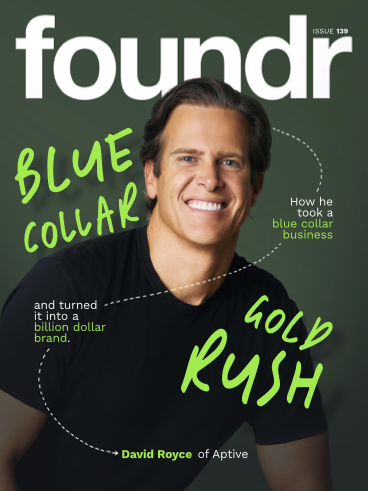
In the high-stakes world of modern entrepreneurship, the prevailing narrative often centers on Silicon Valley tech unicorns, disruptive software, or venture-backed innovation. However, David Royce, the founder and chairman of Aptive Environmental, has built a massive, multi-generational fortune by focusing on a sector most MBAs would dismiss as mundane: residential pest control.
As the force behind the third-largest residential pest control service in North America, Royce has demonstrated that extraordinary wealth is rarely found in the "next big thing." Instead, he argues that success is found in doing what others refuse to do, with a level of rigor that transforms "unsexy" industries into profit-generating machines. His journey—from a student who doubted his own intelligence to a stealthy architect of a $500 million annual revenue empire—offers a masterclass in persistence, operational discipline, and the art of scaling blue-collar services.
The Early Years: Redefining Intelligence and Persistence
David Royce’s trajectory was not forged in the halls of an Ivy League institution, but in the trenches of door-to-door sales. Reflecting on his youth, Royce admits to feeling academically alienated. "I struggled in school because I couldn’t focus unless I cared deeply," he explains. Without the diagnostic clarity of his adult years—where he identified his ADHD as a "double-edged sword"—he grew up believing he simply lacked intellectual prowess.
The turning point arrived in the sixth grade via an influential teacher, Mrs. Luft. Her belief in him catalyzed a shift in his work ethic. "She believed in me before I believed in myself," Royce says. This newfound confidence became his engine. When he later entered the workforce, he viewed his ADHD as a potential liability, but quickly learned to channel it into his professional life. In environments that engaged him—specifically sales and entrepreneurship—his brain functioned as a massive asset.

Chronology: A Path Built on Grit
Royce’s entry into pest control was purely accidental. Seeking summer income, he followed a friend’s advice and began selling pest control services door-to-door. His start was nothing short of disastrous.
- The Zero-Week: During his first week in Sacramento, Royce failed to make a single sale. While his peers were closing four deals a day, Royce spent the week essentially performing "free cardio."
- The Strategic Pivot: Rather than quitting, Royce retreated to a bookstore, purchased half a dozen sales manuals, and dedicated 90 minutes every day to deliberate study. By summer’s end, he was the top-performing rookie in a company of 200.
- The Professional Transition: While his peers pursued careers in investment banking, Royce’s mentor—who had just sold his own pest control startup to Terminix for $10 million—challenged him to start his own firm.
- The Capital Deployment: Royce invested his $300,000 in savings—money originally earmarked for an MBA—into his first venture. He didn’t seek VC funding; he chose to bootstrap using the template his mentor provided, refining the model with his finance-degree background.
- The Scaling Phase: Over the next decade, Royce sold three successive companies to the same strategic buyer, each time retaining his leadership team and scaling further, culminating in the creation of Aptive.
The Operational Philosophy: Why "Unsexy" Wins
Royce’s business model relies on three fundamental pillars that differentiate him from the 20,000-plus competitors in the North American market.
1. The Sales Machine
Royce built a sales culture that treated representation as a science. By implementing structured training programs, he saw productivity skyrocket. Reps who transitioned to his company from competitors frequently saw their output increase by 70%. His methodology includes "option closes" (e.g., "We’ll be in your area at three or five, which works better?") and the "RAC" method: Resolve the doubt, Add a new piece of information (the "Ace"), and Close again.
2. Deep Customer Intelligence
Having knocked on over 60,000 doors, Royce possesses a "PhD in homeowner complaints." He used this data to pivot service features, ensuring his company solved specific, recurring pain points that larger, more bureaucratic competitors ignored.
3. Gamification and Technology
Seventeen years ago, bringing software and tournament-style gamification into a blue-collar industry was revolutionary. Royce’s sales app helped normalize high-performance metrics, lifting overall productivity by up to 30% on tournament days.
Financial Realities: Cash Flow vs. Vanity Metrics
Royce’s most harrowing lesson occurred in his first year in Los Angeles, when he nearly bankrupted his company through rapid growth. While he had projected 5,000 new customers, he secured 7,500. Because his model required paying sales commissions upfront—before the recurring revenue from those customers arrived—he faced a critical liquidity crisis.
"Revenues are vanity. Profits are sanity. But cash flow is reality," Royce notes. To survive, he negotiated with his top sales leaders, offering 10% interest on their deferred bonus checks. It was a gamble that paid off, and the structural lessons he learned during that crisis became the bedrock of his future operations.
Culture as Design: Beyond the Ping-Pong Tables
Aptive is famous for its unconventional culture—private golf simulators, retreats to Thailand and Egypt, and skydiving excursions. However, Royce is quick to clarify that perks are merely "sugar," not the "protein."

"Culture isn’t vibes. It’s design," he says. The true strength of his culture lies in financial alignment. Royce famously distributed 25% of his company to his employees, ensuring that when the business was sold, his team members shared in the windfall. Many received six- or seven-figure payouts, allowing them to pay off mortgages and debt. For Royce, this was the ultimate retention strategy: "Ownership is a far better retention tool than ping-pong tables."
The Implications of "Stealthy Wealth"
Royce’s career highlights a major trend in American business: the "stealthy wealthy." Approximately 43% of the top 0.1% of income earners in the U.S. operate in what many consider "boring" blue-collar industries. As baby boomers retire and look to sell their businesses, a massive opportunity exists for entrepreneurs who are willing to apply modern technology, professional management, and rigorous sales training to these essential service sectors.
"AI is making these industries more attractive, not less," Royce points out. "AI can write code, but it isn’t unclogging your toilet or treating the termites in your walls."
Lessons in Leadership: Learning to Let Go
Perhaps the most challenging phase of Royce’s career was the transition from CEO to architect. After training his protégé for a decade, he eventually stepped aside. The transition taught him that "leadership at that level means letting someone else win, even if they’d do it differently."
He also learned the hard way that hiring "big company" executives doesn’t always translate to small-to-mid-sized business success. A botched CFO hire during a sale process led to missing forecasts, which caused potential buyers—who had valued the company between $1 billion and $1.6 billion—to walk away. It was a painful, high-stakes lesson in "trust but verify" and the importance of maintaining performance metrics during a sale.
Conclusion: The Summit is the Journey
When asked what he wants people to take from his story, Royce dismisses the idea of a final "number." For him, entrepreneurship is a mechanism for developing expertise, discipline, and character.
"If you don’t enjoy the climb, the summit is going to disappoint you," he reflects. Ultimately, David Royce’s legacy is not measured by the $500 million in revenue or the billion-dollar valuations; it is measured by the leaders he helped build. By choosing the opportunity over the image, Royce proved that the most lucrative path is often the one that others are too proud to walk.