Executive Summary
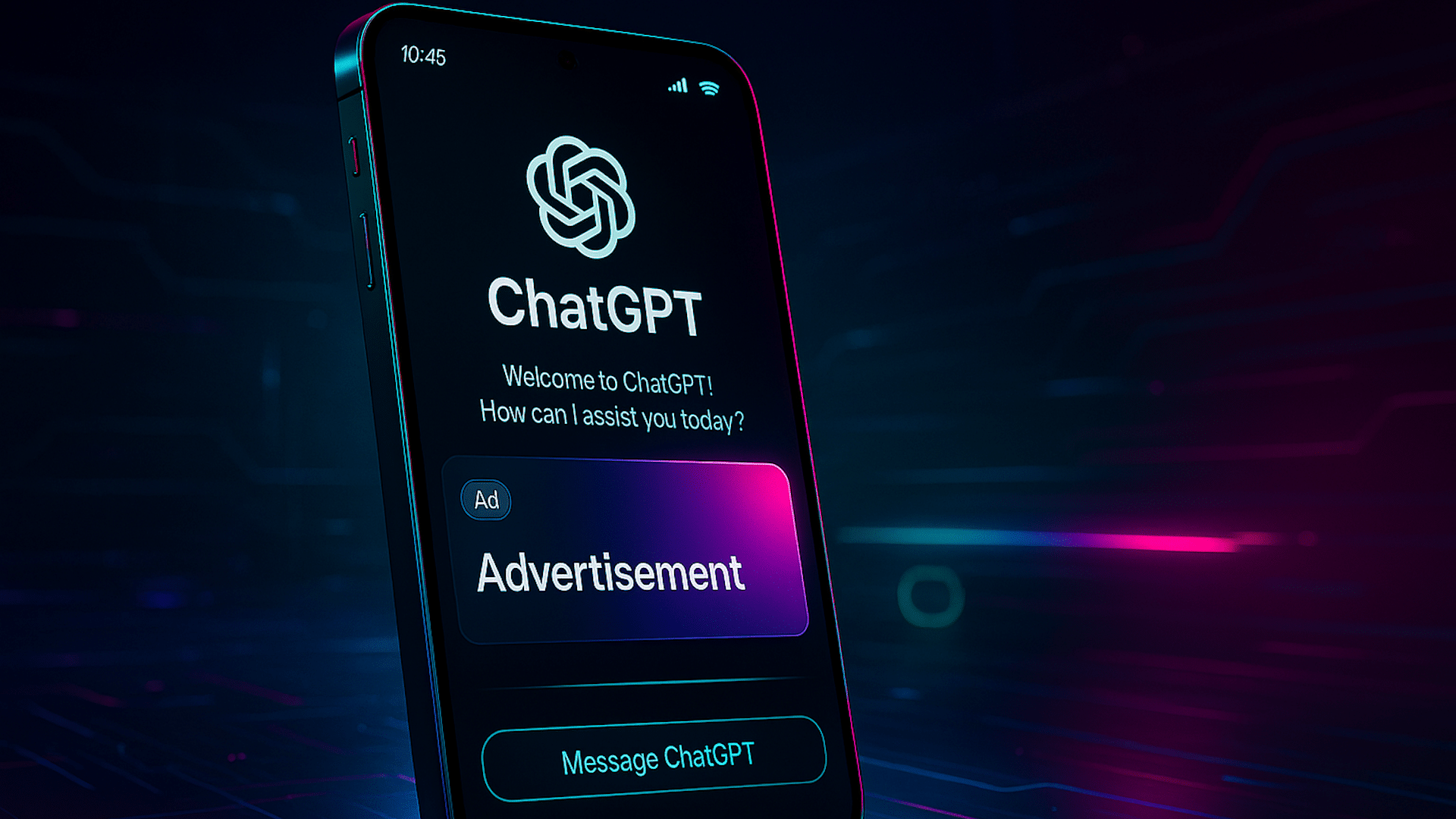
In a bid to challenge the long-standing duopoly of Google and Meta in the digital advertising arena, OpenAI has announced a suite of major updates to its fledgling advertising platform. Through an official email campaign dispatched to global advertising partners, the artificial intelligence pioneer unveiled a series of robust upgrades to both the ChatGPT Ads Manager interface and the native ChatGPT Ads experience.
Key enhancements include the introduction of Custom Audiences, a redesigned Overview Tab for performance tracking, AI-powered Suggested Ad Drafts, and a visually modernized Ad Card format. Concurrently, OpenAI is expanding its ad product footprint into two of Asia’s most lucrative digital economies: Japan and South Korea.
This strategic expansion indicates that OpenAI is rapidly transitioning ChatGPT from a premium consumer utility into a highly monetizable, programmatic ad network capable of capturing high-intent conversational search traffic.
1. Main Facts: Inside the ChatGPT Ads Update
OpenAI’s latest updates are designed to lower the barrier to entry for digital marketers while providing the granular targeting and measurement tools standard in mature ad platforms like Google Ads and Meta Ads Manager.
+-----------------------------------------------------------------------------+
|                          CHATGPT ADS MANAGER UPDATE                         |
+-----------------------------------------------------------------------------+
|  [ Custom Audiences ]  ---> Targets users based on first-party data & intent|
|  [ Suggested Drafts ]  ---> Generates optimized ad copy using native GPT tech|
|  [ Overview Tab ]      ---> Consolidated dashboard for real-time analytics  |
|  [ Refreshed Ad Cards] ---> Cleaner, less intrusive conversational UI       |
|  [ APAC Expansion ]    ---> Active rollout in Japan and South Korea         |
+-----------------------------------------------------------------------------+
Custom Audiences
The addition of Custom Audiences represents a significant leap forward in targeting precision. Historically, conversational search ads relied heavily on real-time contextual signals—the immediate prompt entered by the user. With Custom Audiences, advertisers can now:
- Onboard First-Party Data: Securely upload customer lists (hashed emails, device IDs) to re-engage existing customers within the ChatGPT conversational flow.
- Intent Retargeting: Segment users who have previously interacted with specific brand queries or clicked on prior ChatGPT ad cards.
- Lookalike Modeling: Leverage OpenAI’s proprietary user behavior models to identify "lookalike" profiles exhibiting conversational patterns similar to an advertiser’s highest-value customers.
Suggested Ad Drafts
Leveraging its own foundational models, OpenAI is integrating generative AI directly into the ad creation workflow. The "Suggested Ad Drafts" feature analyzes an advertiser’s landing page, historical campaign performance, and target audience to automatically generate optimized ad copy, call-to-actions (CTAs), and visual asset configurations. This reduces creative fatigue and accelerates campaign launch times.
New Overview Tab
To improve campaign management efficiency, the ChatGPT Ads Manager has introduced a unified Overview Tab. This dashboard offers a modernized data visualization layer, highlighting critical performance metrics such as:
- Conversational Click-Through Rate (cCTR): Measuring engagement in a non-linear search environment.
- Cost Per Conversational Action (CPCA): Tracking user progression from initial prompt to final ad interaction.
- Attribution Paths: Mapping how conversational touchpoints contribute to downstream conversions.
Refreshed Ad Card Format
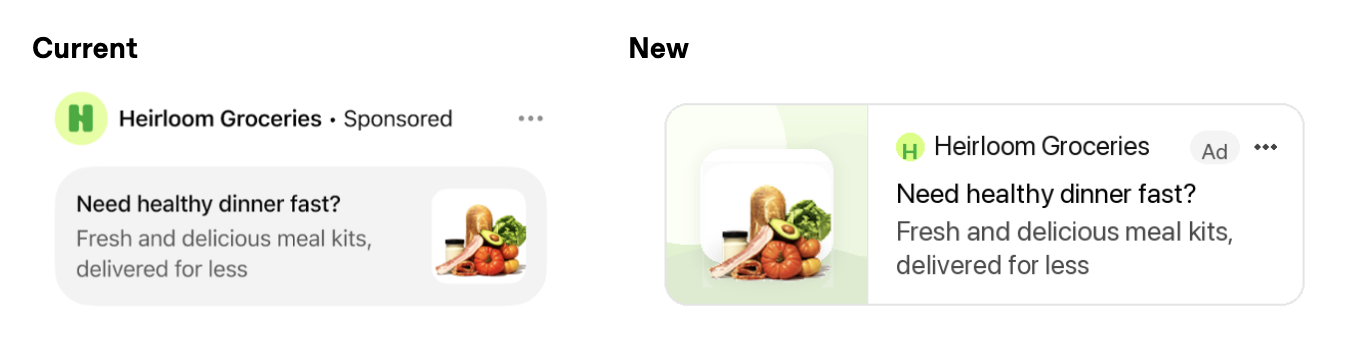
To preserve the user experience (UX) that made ChatGPT a global phenomenon, OpenAI has redesigned its native Ad Card format. The new format is cleaner, visually distinct from standard conversational responses, and optimized for both desktop and mobile layouts.
The updated cards feature clear "Sponsored" disclosures, structured brand metadata, and interactive elements that allow users to explore products without breaking the natural flow of their dialogue with the AI.
Geographic Expansion: Japan and South Korea
Recognizing the high digital density and mature mobile-commerce landscapes of East Asia, OpenAI is officially launching its advertising services in Japan and South Korea. These markets represent highly competitive search landscapes dominated by local players (such as Naver in South Korea and Yahoo! Japan), offering OpenAI a prime opportunity to position ChatGPT as an innovative alternative for localized, intent-driven digital marketing.

2. Chronology: The Evolution of OpenAI’s Monetization Strategy
The introduction of these sophisticated ad tools is the culmination of a rapid, multi-year evolution of OpenAI’s business model.
[Late 2022] ChatGPT Launches (Ad-Free, Subscription Focus)
     │
[Early 2023] Premium Tier (ChatGPT Plus) & API Monetization Rollout
     │
[Mid 2024] SearchGPT Prototype Tested (Introduction of Inline Citations/Sponsored Links)
     │
[Late 2024] Search Features Integrated into Main ChatGPT App
     │
[Early 2025] ChatGPT Ads Manager Beta Debuts for Select Enterprises
     │
[Mid 2026] Global Expansion (Custom Audiences, Suggested Drafts, APAC Rollout)- November 2022: OpenAI launches ChatGPT as a free research preview. The initial focus is purely on user acquisition, safety testing, and model refinement. Advertising is explicitly absent.
- February 2023: OpenAI introduces ChatGPT Plus, a $20/month subscription model. This establishes a dual-track monetization framework: enterprise APIs and consumer subscriptions.
- July 2024: OpenAI announces SearchGPT, a temporary prototype designed to combine the strength of its AI models with real-time web data. This phase marks the first serious testing of web publisher citations and structured, inline brand links, laying the groundwork for conversational search ads.
- Late 2024: SearchGPT features are fully integrated into the main ChatGPT interface. OpenAI begins quietly testing sponsored placements with select retail and travel partners.
- Early 2025: The closed beta of the ChatGPT Ads Manager is launched. Early adopters report high engagement rates but note a lack of robust audience segmentation and self-serve optimization tools.
- Mid 2026 (Current Milestone): OpenAI rolls out global programmatic capabilities (Custom Audiences, Suggested Drafts, and Refreshed Ad Cards) and expands its market footprint to Japan and South Korea, signaling its readiness to compete directly for global enterprise ad spend.
3. Supporting Data: The Changing Economics of Search Advertising
OpenAI’s aggressive push into ad tech is backed by shifting dynamics in global digital ad spend. As traditional search engine optimization (SEO) and pay-per-click (PPC) models face disruption from AI search engines, budgets are migrating toward conversational platforms.
The Rise of Generative Engine Optimization (GEO) and AI Search Ads
According to industry forecasts, search advertising spend on AI-driven conversational engines is projected to grow exponentially over the next three years.
| Metric / Industry Indicator | Traditional Search (e.g., Google) | Conversational AI Search (e.g., ChatGPT) |
|---|---|---|
| Average Click-Through Rate (CTR) | 1.5% – 3.0% | 4.5% – 8.0% (Context-driven) |
| User Intent Precision | Medium (Keyword-based) | High (Multi-turn dialogue context) |
| Ad Load Density | High (Multiple sponsored links per page) | Low (Highly curated, single-card format) |
| Primary Audience Demographics | Broad / Universal | Tech-forward, high-income, professional |
Market Potential: Japan and South Korea
The decision to expand into Japan and South Korea is highly strategic:
- Japan: With a digital ad market valued at over $22 billion USD annually, Japan has seen rapid adoption of conversational AI for customer service and personal productivity.
- South Korea: As one of the most hyper-connected nations globally, South Korea boasts a digital ad market of over $9 billion USD. By entering this market, OpenAI directly challenges Naver’s domestic dominance by offering advertisers a cross-border, AI-native alternative.
4. Official Responses and Industry Perspectives
OpenAI’s Strategic Stance
While OpenAI has maintained a relatively low profile regarding the public relations surrounding its ad network, internal communications sent to advertisers emphasize a commitment to privacy-centric, highly relevant advertising. In its email to partners, the company stated:
"Our goal with ChatGPT Ads is to connect users with high-quality, relevant brands at the exact moment of intent, without disrupting the conversational experience. These new features—particularly Custom Audiences and Suggested Drafts—empower advertisers to build highly efficient campaigns while maintaining the premium user experience our community expects."
Industry Analyst Insights
Digital marketing experts suggest that OpenAI’s updates address the primary complaints of early ad partners: limited scale and basic targeting.
Barry Schwartz, technologist and Contributing Editor to Search Engine Land, notes the importance of staying agile in this new landscape:
"ChatGPT Ads are new, and OpenAI continues to add features, expand to new markets, and test new ad formats and treatments. Marketers must stay on top of these changes, experiment, and continue to fine-tune their ad creatives and campaigns."
Other industry commentators point out that the inclusion of Suggested Ad Drafts highlights a fascinating meta-loop: OpenAI is using its own AI tools to help advertisers write ads that will be served within its own AI-powered search engine.
5. Strategic Implications for the Advertising Ecosystem
The maturation of ChatGPT Ads has profound implications for brands, agencies, and the broader digital ecosystem.
1. The Disruption of the "Blue Link" Monopoly
For over two decades, search engine marketing (SEM) has been defined by bidding on static keywords to appear in a list of blue links. ChatGPT Ads bypass this paradigm.
Instead of bidding on "best running shoes," an advertiser on ChatGPT can target a user who has spent the last five minutes discussing their marathon training schedule, foot arch structure, and budget with the AI. This multi-turn conversational context allows for unparalleled ad relevance.
TRADITIONAL SEARCH ADVERTISING:
User Query: "Best running shoes" ──> Keyword Match ──> Static Text Ad (Blue Link)

CONVERSATIONAL AI ADVERTISING:
User Dialogue: "I'm training for a marathon, have flat feet, and a $150 budget."
       │
       ▼ (Deep Context Analysis)
ChatGPT Ad Card: Displays curated, flat-foot supportive shoe within budget with direct buy CTA.
2. The Shift from SEO to GEO
As conversational engines synthesize web content into single-source answers, traditional SEO is evolving into Generative Engine Optimization (GEO). Brands can no longer rely solely on ranking position; they must ensure their products are cited by the AI model during natural conversations. The integration of paid Ad Cards offers a guaranteed visibility channel for brands that may be excluded from organic AI synthesis.
3. First-Party Data Integration in a Cookieless Era
With the ongoing deprecation of third-party cookies across major web browsers, the digital advertising industry has struggled to find alternative targeting mechanisms.
By introducing Custom Audiences, OpenAI offers a clean-room-style solution. Advertisers can match their first-party customer data within ChatGPT’s secure environment, combining deterministic customer profiles with real-time, high-intent conversational signals.
4. Creative Production at Scale
The "Suggested Ad Drafts" feature signals a major shift in creative operations. Instead of design and copy teams spending weeks tailoring assets for different formats, the platform’s native intelligence dynamically generates, tests, and refines creative assets in real time, shifting the human marketer’s role from "creator" to "editor and strategist."
Conclusion
OpenAI’s latest updates to ChatGPT Ads Manager demonstrate that the company is no longer treating advertising as an experimental side-project. By equipping advertisers with sophisticated targeting capabilities, automating creative workflows, and expanding into key global markets, OpenAI is positioning itself as a formidable contender for global digital marketing budgets.
For brands looking to capture high-value, tech-savvy audiences, the message is clear: conversational AI search is no longer just the future of information retrieval—it is the new frontier of digital advertising.