As the global sporting landscape shifts toward a digital-first consumption model, the intersection of entertainment and athletics has never been more pronounced. With soccer and other global sports capturing massive attention, the industry is closely watching how legacy institutions adapt to the streaming age. A prime example of this evolution is the strategic partnership between Major League Baseball (MLB) and Netflix, which officially kicks off its three-year broadcast tenure with the 2024 Home Run Derby in Philadelphia.
As industry leaders prepare to dissect these shifts at the upcoming ADWEEK House: Sports Summit in NYC on July 16, the Derby stands as a high-stakes case study in how to leverage fandom, media, and culture to capture a modern audience.
The Main Facts: A Shift in the Broadcast Paradigm
For over three decades, the MLB Home Run Derby was synonymous with ESPN. The network’s iconic production style defined the mid-summer classic for generations of baseball fans. However, in a move that signals a broader migration of live sports to streaming platforms, Netflix has secured the rights to the event for the next three years.
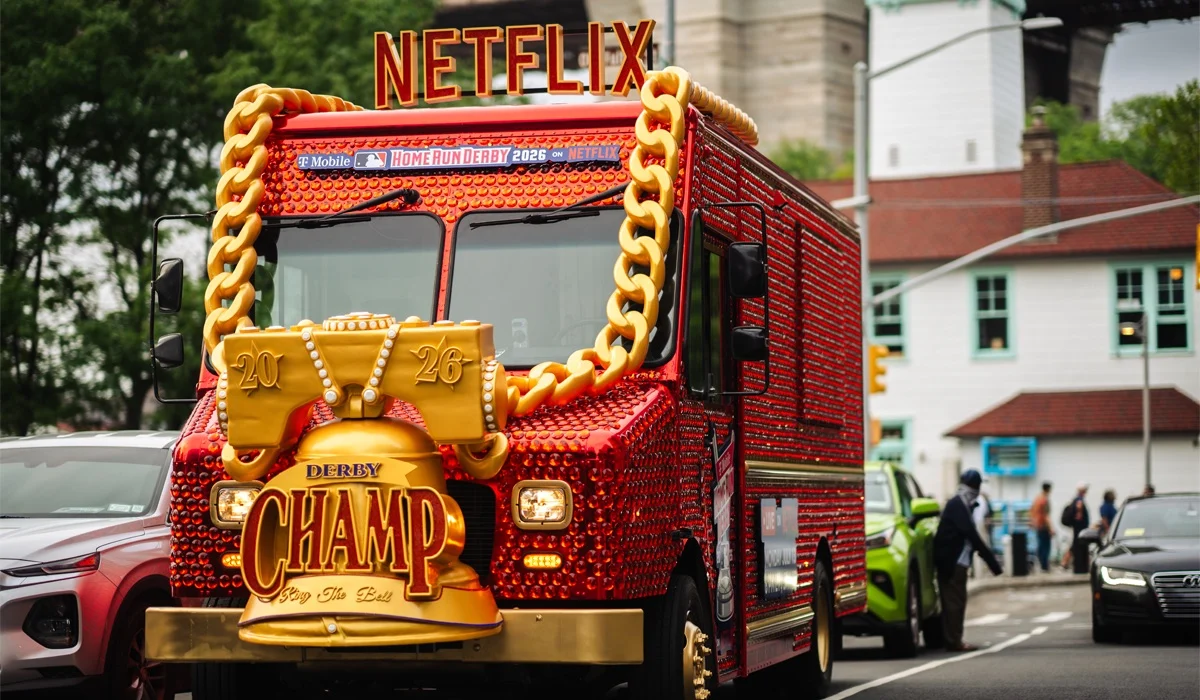
This is not merely a change in venue; it is a fundamental shift in presentation. Unlike traditional broadcast networks, Netflix is leveraging its vast library of talent and its "everything-is-content" approach to transform the Derby from a standard sports broadcast into a multimedia spectacle. The event, held in the historic baseball hotbed of Philadelphia, features everything from bejeweled promotional trucks traversing the city to cameos from Netflix’s high-profile stars, bridging the gap between the diamond and the streaming queue.
Chronology of the Transition
The path to this partnership was paved by a series of strategic maneuvers by both MLB and Netflix over the last 24 months.
- Early 2023: Industry rumors began to swirl regarding MLB’s desire to diversify its broadcast footprint, specifically looking for partners that could offer younger, global reach.
- Early 2024: Netflix began testing the waters of live sports, notably streaming the New York Yankees’ shutout victory over the San Francisco Giants during Opening Day. While the game was a technical success, it served as a proof-of-concept for the league’s digital capabilities.
- Spring 2024: MLB and Netflix officially announced a three-year deal, ending the long-standing ESPN era of the Home Run Derby.
- July 2024: The "Netflix era" of the Derby officially begins at Citizens Bank Park, Philadelphia. The lead-up to the event saw an aggressive marketing campaign designed to treat the Derby not as a game, but as a marquee entertainment special.
Supporting Data: Why the Move Makes Sense
The decision to move to Netflix is rooted in data-driven insights regarding audience fragmentation. According to recent industry reports, the demographic that consumes the most "live event" television is increasingly moving away from traditional cable bundles.
- Market Reach: Netflix maintains a global subscriber base that dwarfs traditional cable viewership, offering MLB a pathway to international markets that have previously been difficult to penetrate.
- Viewer Retention: Netflix’s internal data shows that users who engage with sports-related documentaries—such as Full Swing (golf) or Drive to Survive (Formula 1)—are significantly more likely to watch live sports events on the platform. By utilizing the Derby as a "gateway" event, MLB hopes to capture the "lifestyle" fan who may not watch 162 regular-season games but will tune in for the spectacle of the Derby.
- Engagement Metrics: The transition to a streaming platform allows for real-time interactivity. While the details of the Netflix/MLB tech stack are proprietary, industry analysts expect to see features such as multi-cam views, real-time advanced stats, and social media integration that cable television struggled to implement effectively.
Official Responses and Strategic Vision
The transition has been met with both excitement and cautious optimism from league officials. Kenny Gersh, the Executive Vice President of Media, Business Development, and Product at Major League Baseball, provided a clear distinction between the types of content Netflix is handling.
"Opening Day was a game," Gersh noted in a recent interview. "The Home Run Derby is pageantry."
Gersh’s distinction is crucial. While the Opening Day broadcast was an exercise in technical reliability, the Derby requires a different set of muscles—those of an entertainment producer. By tapping Netflix, MLB is acknowledging that the Derby is an exhibition of power and personality, not a tactical contest.
Netflix executives have echoed this sentiment, emphasizing that their goal is to bring the "Netflix sheen" to the event. This includes high-production value segments, behind-the-scenes access to players that isn’t typically seen on live broadcasts, and a tighter, more narrative-driven pace. By treating the Derby as a Netflix "Original Special," the streamer is applying the same production values they would to a blockbuster reality show or a high-end documentary series.
Implications for the Future of Sports Media
The migration of the Home Run Derby to Netflix has profound implications for the future of sports media.
1. The Death of the "Exclusive" Cable Window
For decades, sports leagues relied on the "exclusivity" of cable networks to drive subscription fees. As that model crumbles under the weight of cord-cutting, leagues are opting for reach and platform integration. Netflix, with its massive, algorithmic-driven recommendation engine, offers a level of discoverability that traditional television cannot match. If a fan watches a movie about a baseball legend, the algorithm can now push them directly toward the live Derby broadcast.
2. The Rise of "Sports-tainment"
The partnership underscores a trend where sports are becoming increasingly indistinguishable from other forms of premium entertainment. We are entering an era where the broadcast of a game must compete for attention with high-budget dramas, live social media streams, and gaming. The inclusion of Netflix talent and the "bejeweled truck" aesthetic is a direct attempt to make baseball "cool" for a demographic that may find the traditional 3-hour game too slow.
3. Data Ownership and Direct-to-Consumer Relationships
By moving to a streamer, MLB gains significantly more control over the user experience. They can track viewing habits, preferences, and drop-off points with granular precision. This data is the gold standard for future sponsorship deals, as it allows the league to offer brands a much clearer picture of who is watching and how they are interacting with the event.
4. The Challenge of Tradition
The primary risk in this transition is the alienation of the "purist" baseball fan. Traditionalists have long valued the straightforward, stats-heavy approach of ESPN’s coverage. If Netflix leans too heavily into the "spectacle" and neglects the actual mechanics of the sport, they risk alienating the core audience that keeps the league afloat. Balancing the pageantry required to attract new viewers with the technical depth required to satisfy die-hard fans will be the defining challenge of this three-year deal.
Conclusion: The Path to 2026
As we look toward the 2026 Sports Summit, the Netflix-MLB partnership serves as a bellwether for the industry. The Home Run Derby is no longer just a baseball event; it is a content play, a marketing engine, and a test case for the future of live streaming.
Whether this experiment results in a new golden age for baseball broadcasting or serves as a cautionary tale about over-producing live sports, one thing is certain: the era of the static, network-only broadcast is coming to an end. MLB is betting that by letting Netflix take the wheel, they can drive the sport into a new, more lucrative, and more culturally relevant era.
As the industry gathers in New York this July, the conversation will undoubtedly revolve around this shift. How can brands win when the lines between culture, media, and sports are permanently blurred? The answer may very well be found in the arc of a home run ball, broadcast not to a cable box, but to a global audience waiting on the other side of a screen.
For more insights into the future of sports media and how your brand can navigate the changing landscape of fandom, join us at the ADWEEK House: Sports Summit on July 16 in NYC.