In the digital age, the barrier to entry for content creation has never been lower. With a domain name, a hosting plan, and a standard WordPress template, anyone can launch a blog. Yet, despite the saturation of high-quality, well-structured, and SEO-optimized content, a significant number of bloggers find themselves trapped in a cycle of stagnation. They check all the technical boxes—keyword research, internal linking, consistent posting—but fail to gain the traction they desire.
The missing element is rarely a technical deficit. It is, more often than not, a failure of identity. In an era where AI-generated content can produce "perfect" information, the only remaining competitive advantage is the unique, inimitable personality of the human creator. This article explores why personal branding is the definitive differentiator in blogging and examines how ten leading digital creators have mastered the art of injecting personality into their platforms to build lasting, loyal communities.
The Anatomy of a Successful Blog: Beyond SEO
Historically, the blogging world focused heavily on technical proficiency. If you could rank for a high-volume search term, you could win. Today, the landscape has shifted. While SEO remains the engine that drives traffic, personality is the fuel that builds retention.
Readers are not just looking for information; they are looking for a perspective. They want to know who is behind the keyboard. A blog that lacks personality is a commodity—easily replaced by the next search result. A blog that radiates personality becomes a destination, transforming one-time visitors into a dedicated "tribe."

1. Visual Storytelling: The YTravel Approach
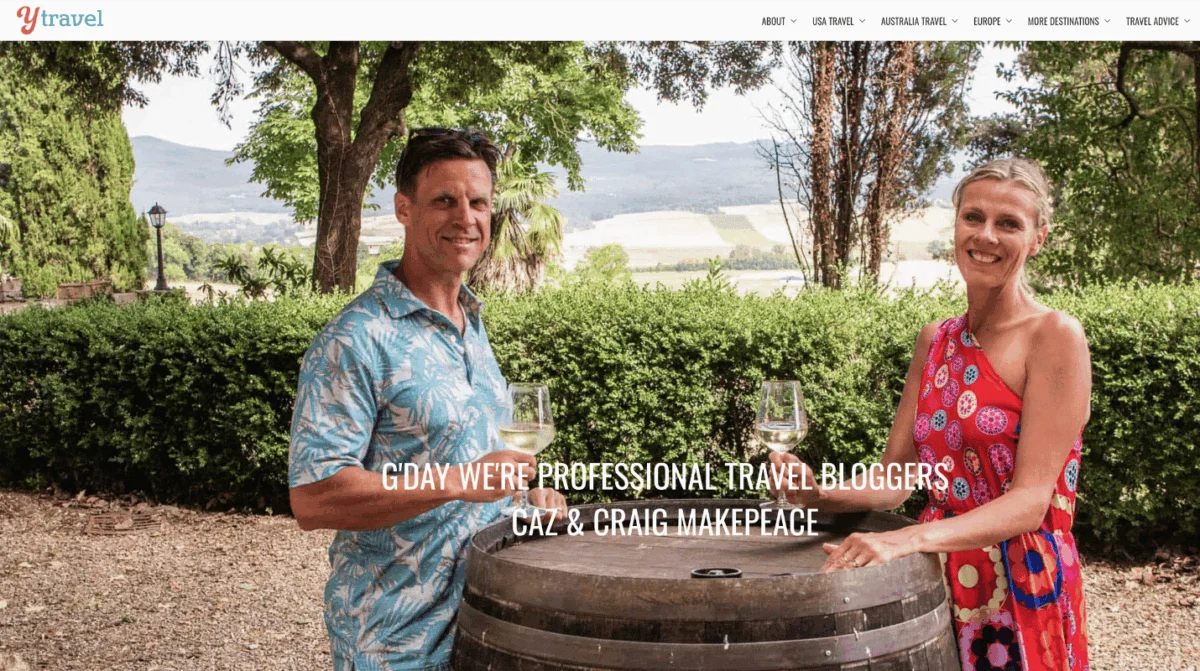
Travel blogging is perhaps the most competitive niche on the web. To succeed, one must move beyond generic stock photography. Caz and Craig of YTravel understand that their readers are not just looking for facts about a destination; they are looking for an experience.
By sharing candid, high-quality family snapshots—such as their documentation of flying with children—they invite the reader into their lives.

- The Lesson: Use your imagery to narrate, not just illustrate. When readers see your face or the messy, unpolished reality of your journey, they develop an emotional rapport that a professional stock photo can never replicate.
2. Brand Flair and Identity: The Pat Flynn Method
Pat Flynn of Smart Passive Income is a masterclass in professional branding that feels deeply personal. From the moment a user lands on his site, they are confronted with a clear identity: "Father, husband, serial entrepreneur."
By balancing his professional credentials with humanizing details—like his self-proclaimed title as "protector of Baby Yoda"—Flynn signals that he is a multi-dimensional human being.

- The Lesson: Don’t be afraid to list your "quirks." When you display your values and interests alongside your professional expertise, you attract a community that aligns with your personality, not just your topic.
3. The Power of Tone: Shannon Kelly White
There is a pervasive myth that to be a successful blogger, one must remain neutral and polite. Shannon Kelly White proves this wrong. By adopting a raw, unfiltered, and sometimes salty tone, she creates a polarizing but incredibly loyal audience.
- The Lesson: If you try to please everyone, you please no one. Authenticity often requires the courage to alienate those who don’t "get" you in order to deepen your connection with those who do.
4. Custom Visual Identity: The Blog Tyrant Model
Ramsey of Blog Tyrant utilizes custom illustrations—specifically his "blogging superhero" avatar—to create an instant, recognizable brand mark.

- The Lesson: A mascot or custom graphic style does more than decorate a site; it creates a visual shorthand for your brand. It makes your content immediately identifiable in a crowded feed.
5. The "About" Page as a Conversion Engine
For A Beautiful Mess, the "About" page is not an afterthought; it is a core component of their brand strategy. Elsie and Emma know that when a reader enjoys a post, the first thing they do is seek out the humans behind it.
- The Lesson: Your About page should be the most personality-driven page on your site. Use high-quality photography and a narrative that explains your "why," not just your "what."
6. Omni-Channel Consistency: The Chris Ducker Strategy
Consistency is the bedrock of trust. Chris Ducker ensures that his brand identity—his headshot, his tone, and his core messaging—remains identical across his blog, Twitter, Facebook, and LinkedIn.

- The Lesson: Fragmented branding leads to confusion. Ensure that wherever a reader encounters you, they have the same, recognizable experience.
7. The Psychology of Color: Jadah Sellner
Visual branding goes deeper than logos; it involves the subconscious psychology of color. Jadah Sellner’s site uses a curated, earthy color palette that mirrors her own personal style and clothing, creating a cohesive visual experience.
- The Lesson: When your visual environment matches your personal brand, the site feels like a physical extension of your personality, which increases time-on-site and user trust.
8. Clarifying the Brand Statement
James Schramko of SuperFastBusiness uses a bold, clear brand statement at the top of his site. This isn’t just for SEO; it is for human connection. It tells the reader exactly who he is, who he serves, and what they can expect.

- The Lesson: Clarity is a form of kindness. By defining your audience immediately, you filter out non-customers and welcome your ideal readers with open arms.
9. The "Call to Action" (CTA) that Connects
Kelly Exeter’s approach to CTAs is a masterclass in simplicity. Instead of forcing readers through long, impersonal funnels, she uses direct language to bridge the gap between her content and her services.
- The Lesson: Make your call to action an invitation, not a transaction. When you treat your readers like people rather than "leads," they are far more likely to engage.
10. Community Identification: The Puttylike Paradigm
Emily of Puttylike succeeded by creating a term—"Multipotentialite"—that allowed her readers to identify with a specific identity.

- The Lesson: If you can help your readers define themselves, you create a community. People love to belong to groups that validate their existence. A quiz or a specific term can turn a passive visitor into an active community member.
Implications of the "Personality-First" Era
The shift toward personality-driven blogging has profound implications for the industry. First, it renders "content mills" obsolete. If your primary value is simply information, you are already competing with advanced AI models that can synthesize data faster than you. However, AI cannot replicate a lived experience, a unique moral stance, or the specific humor of an individual.
Second, this shift favors the long-term builder. Creating a brand based on personality requires vulnerability, which is difficult to scale but impossible to replicate. This creates a "moat" around your business. Competitors can copy your blog post topics, but they cannot copy your relationship with your audience.

Finally, the monetization potential of a personality-driven blog is significantly higher. Readers who feel a personal connection to a creator are more likely to support their ventures, purchase their products, and defend their brand in the public sphere.
Conclusion: How to Start
If your blog currently feels like a collection of articles rather than a living brand, start by auditing your "About" page. Does it sound like you? Does it share your values? Next, look at your visual assets. Are they generic, or do they tell your story?

The goal is not to become a celebrity, but to become a human. In the vast, sterile landscape of the internet, your personality is the only thing that will make someone stop scrolling, click, and stay. What will you do next to make your blog uniquely yours?