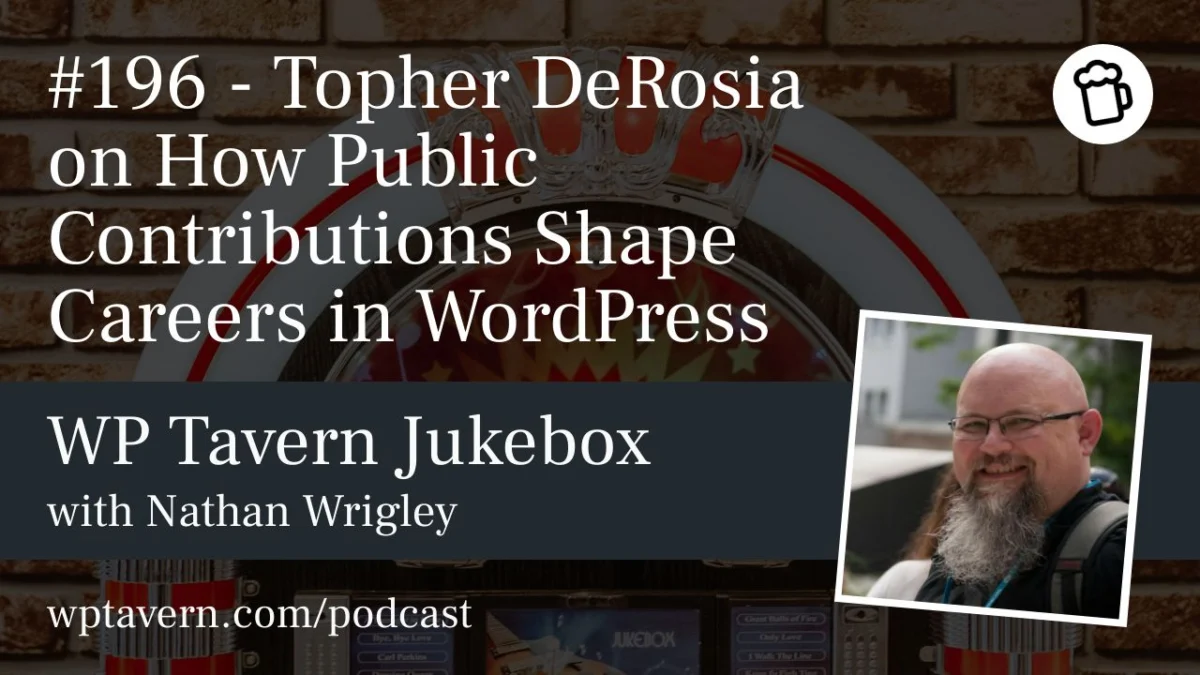
In the fast-paced, often hyper-commercialized world of web development, the concept of "working in public" is frequently misunderstood. It is often conflated with personal branding or influencer culture. However, for veteran developer and WordPress luminary Topher DeRosia, working in public is a philosophical choice—a commitment to transparency, community service, and the long-term, organic growth of one’s career.
In a recent episode of the WP Tavern Jukebox podcast, DeRosia sat down with host Nathan Wrigley to reflect on three decades of development experience, 15 years of which have been deeply embedded within the WordPress ecosystem. The discussion peeled back the layers of what it means to contribute to open source and why, in an age of instant gratification, the "slow and steady" approach to building a reputation remains the most sustainable path to professional fulfillment.
The Genesis of a Community-Centric Career
Topher DeRosia’s journey into the WordPress community was not born of a grand, calculated design. Like many, he entered the ecosystem as a developer looking for tools, only to discover a vast, interconnected network of people that would fundamentally alter his professional and personal trajectory.
DeRosia’s introduction to the community came via a suggestion from fellow developer Brian Richards. "I did not know there was a community for several years," DeRosia admits. "Brian said, ‘Hey, we should do a WordCamp.’ I said, ‘What’s a WordCamp?’ And then, of course, my life changed forever."
Since that pivotal moment, DeRosia has attended nearly 80 WordCamps globally. This level of engagement has done more than just build his resume; it has woven his family life into the fabric of the community. His children and wife have both participated as speakers at major events, and the connections he has forged have created a global support system that transcends typical professional networking.
Why Open Source Creates a "Hive Mind"
The conversation quickly turned to the unique nature of the WordPress community compared to other technical spheres. DeRosia and Wrigley explored the "secret sauce" that allows WordPress to foster such a high degree of volunteerism and mutual support.
The Philanthropic Foundation
DeRosia posits that the open-source nature of the project acts as a catalyst for altruism. Unlike proprietary software environments where the primary motivator is profit or corporate ladder-climbing, the WordPress community is built on the act of publishing and giving back.
"I think most people enjoy making other people more successful, happier, or more stable," DeRosia notes. This sentiment is echoed by the numerous success stories he has encountered through his project, HeroPress, which highlights how individuals leverage WordPress to change their lives. DeRosia recounts a touching encounter with a developer who lost their job, learned WordPress through online tutorials, and eventually built a career that allowed them to support their family.
The Reliability of Human Connection
The podcast explored the psychological underpinnings of this community. Referencing studies on happiness, the hosts noted that two primary predictors of human satisfaction are deep, meaningful friendships and the act of giving one’s time without the expectation of an immediate return. The WordPress community, despite its size, provides a space where these human needs are consistently met.
The Strategic Value of "Working in Public"
One of the central themes of the discussion was how sharing work openly creates a "long tail" of opportunity. DeRosia’s approach to professional development is decidedly non-linear. He describes his career not as a series of deliberate moves toward a specific title, but as a collection of public contributions that eventually created a "body of evidence."
Accidental Serendipity
DeRosia provided several examples of how his past work—often done with no immediate financial incentive—paid dividends years later:
- The Power of Proven Expertise: DeRosia’s early work creating videos for OS Training served as a portfolio that led to high-profile contract work years later. Potential clients, having seen his work online, already trusted his capabilities before an interview ever took place.
- Global Reach: DeRosia shared an anecdote about a company in Bangladesh hiring him for video production. Because he had been visible and active in the WordPress community, the geographical barrier was irrelevant. The client knew his work, his style, and his values, which facilitated a professional partnership that would have been impossible through traditional cold-contact methods.
- The "Community Known" Phenomenon: DeRosia distinguishes between "fame" and being "community known." While a developer may not be a household name to the general public, their status within the ecosystem serves as a powerful professional credential. It is a reputation built on utility and service rather than vanity.
Navigating the Tension Between Commerce and Community
As WordPress has matured, the tension between its philanthropic roots and its massive commercial success has become a frequent subject of debate. The podcast addressed the "cognitive dissonance" that occurs when users see immense wealth generated by the platform while simultaneously witnessing foundational contributors struggle to make ends meet.
The Reality of Business
DeRosia offered a nuanced perspective on this divide. He acknowledges that when a company scales—hiring employees and taking on investors—the nature of the work must change. Difficult decisions, including layoffs and reorganization, become inevitable. "It’s never going to be comfortable," DeRosia says. "At some point, it’s going to look like you’re just another company."
However, he remains optimistic. Despite the inevitable commercialization and the occasional internal strife, he believes the community remains ahead of the curve in terms of diversity, inclusivity, and general goodwill. The goal, according to DeRosia, is to ensure that the community does not "rest on its laurels," but continues to actively work toward maintaining its values.
Implications for the Future: A Commitment to the Beginner
Looking ahead to 2025 and beyond, DeRosia remains committed to the same principles that guided him 15 years ago. He is currently working on a new project: a series of short, accessible videos designed for beginners who need help with the basics of the WordPress admin interface.
The "One-Minute" Rule
DeRosia’s current initiative was born from his experience in support. "If I get asked a question more than three times, I’m making documentation," he explains. He has pivoted away from putting this content behind a paywall, choosing instead to publish it on YouTube.
His reasoning is grounded in his core mission: to help the "17-year-old at the library" who is discovering the web for the first time. By providing free, high-quality resources, he ensures that the barrier to entry remains low, regardless of the user’s financial situation.
Sustaining the Long Game
The episode concludes with a powerful takeaway for younger developers: Do not seek to be known; seek to be useful.
DeRosia warns that chasing fame often leads to burnout and disillusionment. Instead, he advocates for the "slow and organic" process. By consistently contributing to the community, sharing knowledge, and helping others, a developer builds a legacy that is both durable and personally satisfying.
"I think my experience tells me that there will always be a 17-year-old picking up a computer at the library for the first time and discovering WordPress and starting a new life," DeRosia says. "And I want to be there for that person."
This commitment to the next generation, combined with his willingness to work in public, defines the career of Topher DeRosia. It serves as a reminder that in an industry obsessed with the next "big thing," there is immense power in the simple, consistent act of being helpful.