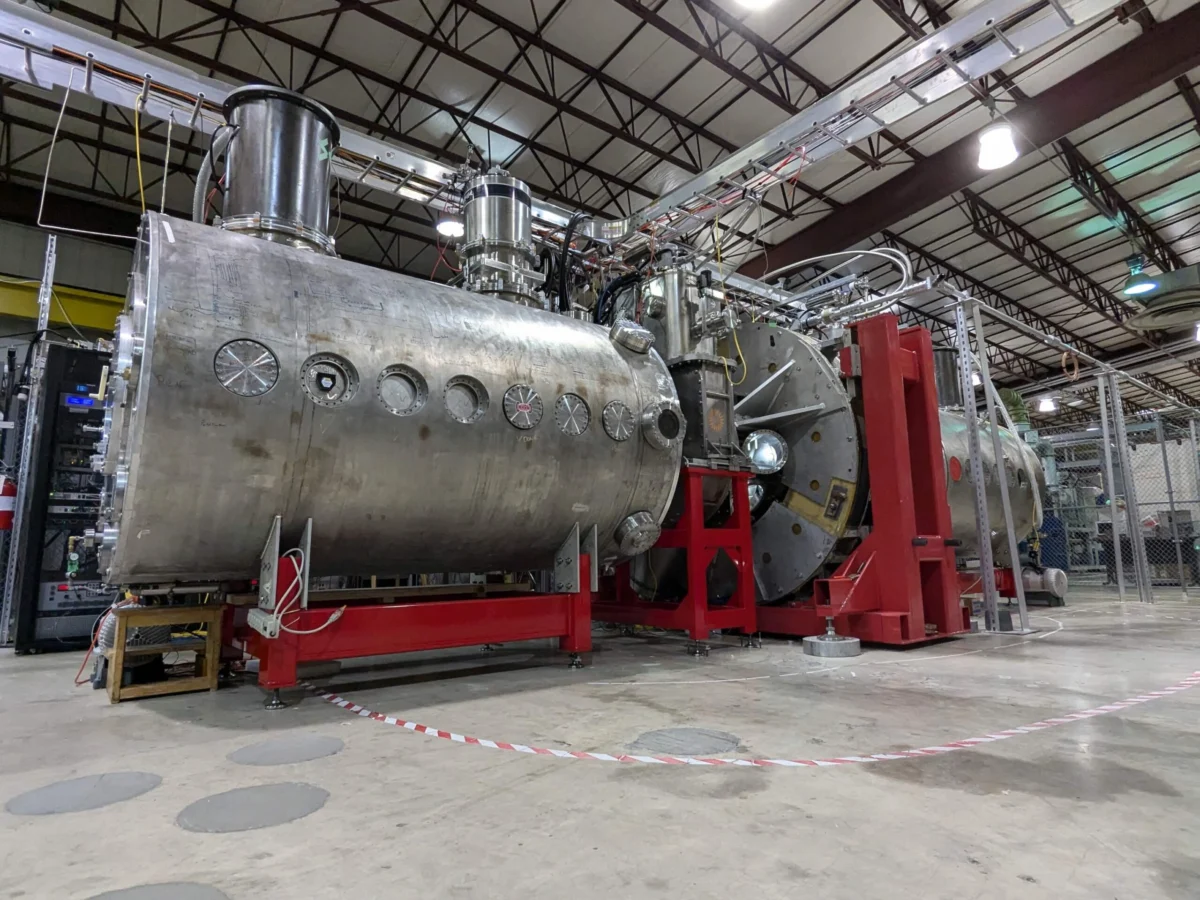
In a transformation that feels plucked from the pages of industrial lore, the storied Oscar Mayer factory in Madison, Wisconsin—a site long synonymous with the American meatpacking industry—is preparing for a radical evolution. Realta Fusion, a cutting-edge startup born from the laboratories of the University of Wisconsin-Madison, has officially selected the defunct food-processing facility as the site for its new research and development hub, dubbed "Forge."
For CEO and co-founder Kieran Furlong, the transition is both poetic and pragmatic. “From sausages to fusion,” Furlong remarked with a wry chuckle, highlighting the stark contrast between the site’s historical legacy and its future role in solving the world’s most pressing energy crisis. The Forge facility is slated to achieve its first plasma by 2029, marking a pivotal milestone in the company’s mission to harness the power of the stars to fuel the modern grid.
A Technological Breakthrough: The Direct-to-Electricity Milestone
Realta Fusion’s relocation is not merely a matter of real estate; it is a declaration of intent backed by tangible technological progress. Earlier this year, the company made headlines by successfully demonstrating the direct conversion of energy from fusion reactions into electricity. In the world of nuclear physics, this is akin to discovering the "holy grail." Most traditional power plant designs rely on the cumbersome process of using heat to boil water, which then turns a turbine. By bypassing this mechanical intermediary, Realta is carving a more efficient, direct path toward commercial-scale fusion power—a development that has significantly bolstered investor confidence.
Chronology of a Midwestern Comeback
The decision to anchor operations in Madison was not reached overnight. Realta spent two years vetting potential sites, weighing logistical necessities against regional incentives.
- 2024: While other Wisconsin-grown fusion entities, such as Type One Energy, opted to migrate to Tennessee, Realta remained committed to its Midwestern roots. This period saw the company refine its technology following successful experiments at the University of Wisconsin-Madison, which hit record-breaking magnet strength levels.
- April 2026: A watershed moment occurred when Wisconsin legislators, crossing party lines, signed a landmark sales tax exemption into law. This legislative act specifically targeted the fusion industry, signaling to the world that Wisconsin was open for high-tech business.
- Mid-2026: Realta finalized its assessment of the Oscar Mayer site. The facility’s existing industrial-grade power infrastructure—a prerequisite for energy-intensive fusion research—made it an ideal candidate.
- Present Day: With the incentive package secured and the site acquired, the company is transitioning into the construction phase of the Forge facility, aiming for a 2029 plasma milestone.
Supporting Data: The Economic and Industrial Landscape
The fusion sector is currently experiencing an unprecedented surge in capital. According to industry tracking data, fusion startups have secured over $1.5 billion in funding in 2026 alone. This influx of capital is driven by a massive, global increase in electricity demand, fueled by the rapid expansion of AI data centers and the broader push toward total economy-wide electrification.
Realta’s financial structure for the Forge project is heavily supported by a $55 million incentive package. The breakdown of this public-private collaboration underscores the state’s commitment:
- $37.5 million: Derived from the newly enacted fusion-specific sales tax exemption.
- $15 million: Allocated via enterprise zone tax credits from the State of Wisconsin.
- $2.8 million: Provided by the City of Madison in tax increment financing.
Beyond the numbers, the regional ecosystem plays a critical role. The University of Wisconsin-Madison serves as a perennial pipeline for talent, graduating a consistent stream of plasma physicists and engineers. This concentration of human capital, paired with the presence of other industry players like SHINE Technologies in the nearby suburbs, is rapidly turning the Madison area into a globally recognized cluster for fusion research.
Official Responses and the "State Champion" Strategy
When asked why Realta chose Wisconsin over the traditional, coastal hubs of fusion research—such as those near national laboratories in California or the Northeast—Furlong pointed to the intangibles of regional support.
“Wisconsin really decided they want to throw their weight behind fusion,” Furlong stated. Unlike coastal regions where startups might be one of a thousand tech ventures, Realta has successfully positioned itself as a "state champion."
This strategic alignment has yielded tangible benefits. By engaging directly with the Governor’s office and state legislators, Realta has secured a level of high-level political attention that is difficult to replicate in more saturated markets. “We get the attention of people who matter, who can help us, who want to see Realta succeed and want to see Wisconsin be a major hub for fusion,” Furlong added. This symbiotic relationship between state policy and private enterprise has effectively neutralized the "brain drain" that plagued Wisconsin’s fusion sector just two years ago.
Implications: The Future of Energy and the Rust Belt
The implications of the Forge facility extend far beyond the borders of Madison. The site represents a broader shift in how "Rust Belt" cities are reinventing themselves. By leveraging existing industrial footprints—which provide the high-voltage electrical grid access necessary for fusion—and pairing them with aggressive tax policy and local university partnerships, cities like Madison are proving they can compete with Silicon Valley and the Route 128 corridor.
1. The Energy Security Nexus
As AI and machine learning continue to expand, the demand for reliable, carbon-free, baseload power is becoming a national security issue. If Realta succeeds in its 2029 timeline, it could provide a blueprint for a decentralized, clean-energy grid that alleviates the strain currently placed on municipal power providers by large-scale data centers.
2. Policy as a Competitive Advantage
The Wisconsin legislature’s decision to pass industry-specific tax exemptions serves as a case study in effective economic development. By creating a regulatory and fiscal environment that caters to the specific lifecycle of a fusion startup—which is capital-intensive and long-horizon—Wisconsin has successfully attracted a company that could define the next century of power generation.
3. The Talent Pipeline
The presence of the University of Wisconsin-Madison remains the "X-factor." As the fusion industry matures, the ability to recruit locally without needing to relocate high-cost talent from the coasts will be a primary competitive advantage. The university’s output of specialized physicists ensures that Realta will not suffer from the talent shortages that often cripple similar startups in more isolated locations.
Conclusion
The conversion of the Oscar Mayer plant is more than just a renovation project; it is a symbol of a new era. As the global economy grapples with the transition to sustainable energy, the fusion industry is moving from the realm of academic theory into the domain of industrial reality. Realta Fusion, supported by a unique blend of state-level political will, local academic excellence, and a legacy industrial site, is now positioned to lead that charge.
While the road to 2029 will undoubtedly be filled with scientific and engineering challenges, the "Forge" is already achieving something equally difficult: it is forging a new identity for the American Midwest, proving that the future of power may very well be built on the foundations of the past. As the facility prepares to break ground, the world will be watching Madison, waiting to see if this former sausage factory will indeed be the birthplace of the next great energy revolution.