
In the hyper-competitive landscape of digital commerce, the adage "what worked yesterday won’t necessarily work tomorrow" has transformed from a cautionary note into a fundamental law of survival. As consumer attention spans fragment and inbox saturation reaches an all-time high, the intuition of even the most seasoned founders is no longer enough to guarantee growth. In this environment, A/B testing—the systematic comparison of two versions of a digital asset—has shifted from a "nice-to-have" optimization tactic to a non-negotiable operational standard.
For entrepreneurs and marketing leads, A/B testing is the bridge between guesswork and data-driven scaling. It is the process by which small, incremental wins compound into massive revenue gains, allowing businesses to extract significantly more value from their existing audiences without the prohibitive costs of aggressive customer acquisition.
Main Facts: The Anatomy of Optimization
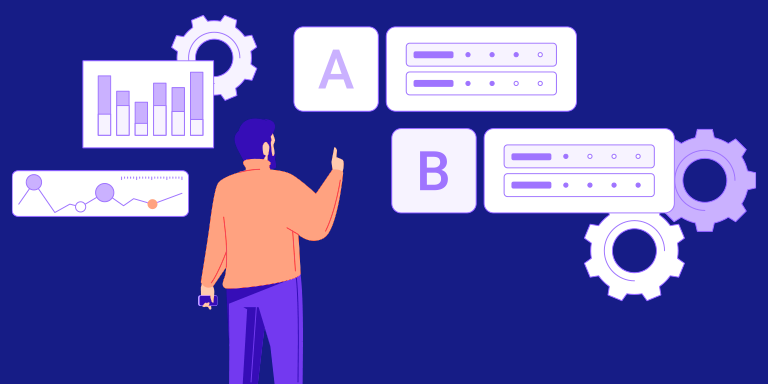
At its core, A/B testing (or split testing) is a controlled experiment. By presenting two variations of a variable—such as an email subject line, a landing page layout, or a Call-to-Action (CTA) button—to a representative sample of an audience, businesses can determine which version statistically outperforms the other.
The primary objective is not just to "win" a test, but to build a proprietary database of customer preferences. When a brand identifies that its audience responds more favorably to curiosity-driven subject lines over benefit-led ones, that insight becomes a permanent asset. It informs future ad copy, website headers, and even product positioning.
The Cumulative Effect of Incremental Gains
The power of A/B testing lies in the compounding nature of optimization. If an email campaign undergoes a series of small, iterative tests—a 5% lift in open rates here, a 10% bump in click-through rates (CTR) there—the cumulative effect on the bottom line is exponential. A list that generates $100,000 monthly can, through disciplined testing, see its revenue climb to $130,000 or more without adding a single new lead to the database. This represents pure profit margin expansion.
Chronology: The Evolution of Email Optimization
The methodology of digital testing has evolved alongside the sophistication of consumer behavior and marketing technology.
- The Early Era (2000–2010): Testing was largely binary and manual. Marketers relied on rudimentary A/B tools, often manually splitting lists in Excel spreadsheets. The primary focus was simple: "Does the link work?"
- The Data-Driven Shift (2010–2020): As CRM and email service providers (ESPs) matured, automated testing became standard. Platforms began offering built-in split-testing modules, allowing for more granular control over variables like time-of-day delivery and automated segmentation.
- The Modern Era (2020–Present): Today, testing is integrated into the fabric of automation. Platforms like Omnisend have pioneered "always-on" testing within triggered workflows. The focus has moved beyond simple open rates to conversion-based optimization—ensuring that the entire journey, from the first welcome email to the post-purchase flow, is calibrated to the user’s unique behavior.
Supporting Data: Why Strategy Trumps Intuition
The data supporting the necessity of A/B testing is overwhelming. According to recent market analysis, including insights from Omnisend, the shift toward rigorous testing has produced tangible results across the e-commerce sector.
Key Performance Indicators (KPIs)
- Open Rate Growth: Average open rates for merchants rose from 22.9% in 2022 to 25.1% in 2023, a direct result of better testing and more precise audience segmentation.
- Engagement Metrics: Click rates followed a similar upward trajectory, rising from 1.2% to 1.5%.
- The Power of Automation: Automated emails currently outperform standard manual campaigns by staggering margins. These flows—triggered by specific user actions like signing up or abandoning a cart—see 52% higher open rates, 332% higher click rates, and a 2,361% improvement in conversion rates.
The Cost of Neglect
Ignoring the subject line is a high-stakes gamble. Research indicates that 43% of users decide to open an email based solely on the subject line. Conversely, 69% of users will mark an email as spam based on the subject line alone—a move that damages sender reputation and kills future deliverability. Furthermore, personalized subject lines have been shown to boost open rates by as much as 26%, underscoring that testing is not just about copy; it is about relevance.
Official Perspectives and Expert Insight
Industry experts and analysts emphasize that A/B testing is not a task to be checked off a list, but a "systemic mindset."
"The most successful brands are those that never stop asking, ‘What if?’" says one industry lead. "When you stop testing, you stop growing. You become a prisoner to your past performance, which is a dangerous place to be when consumer tastes shift so rapidly."
Experts note that testing allows brands to survive "inbox fatigue." When consumers are bombarded by dozens of emails daily, only those that resonate personally—or arrive at the precise moment of need—get clicked. By testing send times and frequency, brands ensure they are guests, not intruders, in their customers’ inboxes.
Implications: Building a Resilient Business
The implications of adopting a rigorous A/B testing culture are profound, affecting everything from operational efficiency to brand identity.
1. Operational Efficiency
By automating the testing process, companies reduce the "human cost" of marketing. Once a winning pattern is established, it can be templated and reused, allowing lean teams to produce high-performing results that previously required large departments.
2. Market Intelligence
Every test is a form of market research. A failed test is not a loss; it is a data point. If a particular CTA fails, you have gained valuable insight into what your audience dislikes, which is just as important as knowing what they like. This intelligence creates a competitive moat that is difficult for rivals to bridge.
3. Revenue Resilience
In an economic downturn, customer acquisition costs (CAC) often skyrocket. Brands that have invested in A/B testing their retention funnels are more resilient. By maximizing the Lifetime Value (LTV) of the existing list, these brands can sustain profitability even when the cost of acquiring new traffic increases.
Executing the Perfect Test: A Strategic Framework
To avoid the common trap of "comparing guesses," founders must follow a disciplined, five-step framework:
- Formulate a Clear Hypothesis: Move away from random changes. Instead, articulate a clear goal: "I believe that using a scarcity-based subject line will increase open rates by 5% because it creates a sense of urgency."
- Isolate Variables: Never test two things at once. If you change both the subject line and the CTA, you will never know which one drove the performance improvement.
- Choose the Right Metric: Ensure your success metric aligns with your variable. If testing a subject line, track open rates. If testing a button color or text, track the click-through rate.
- Statistical Significance: Don’t draw conclusions from small samples. Platforms like Omnisend suggest a minimum of 1,000 recipients per version. If your list is small, use a split-delivery model (20/20/60) to ensure the winner is served to the largest segment of your audience.
- Document and Iterate: Build a "Testing Library." Treat your test results as a company asset. Review these findings quarterly to refine your brand voice and overall strategy.
Conclusion
A/B testing is the quiet engine behind every scaling e-commerce brand. It transforms the digital marketing funnel from a leaky bucket into a precision instrument. By committing to constant, intentional experimentation, founders can move beyond the anxiety of "what if" and build a business that is consistently tuned to the needs and desires of their customers.
For those looking to move fast without the bloat of multiple tools, integrated platforms like Omnisend offer a path to seamless automation and testing. With the right tools and a commitment to data-driven growth, the journey from small list to high-revenue channel is not just possible—it is inevitable.