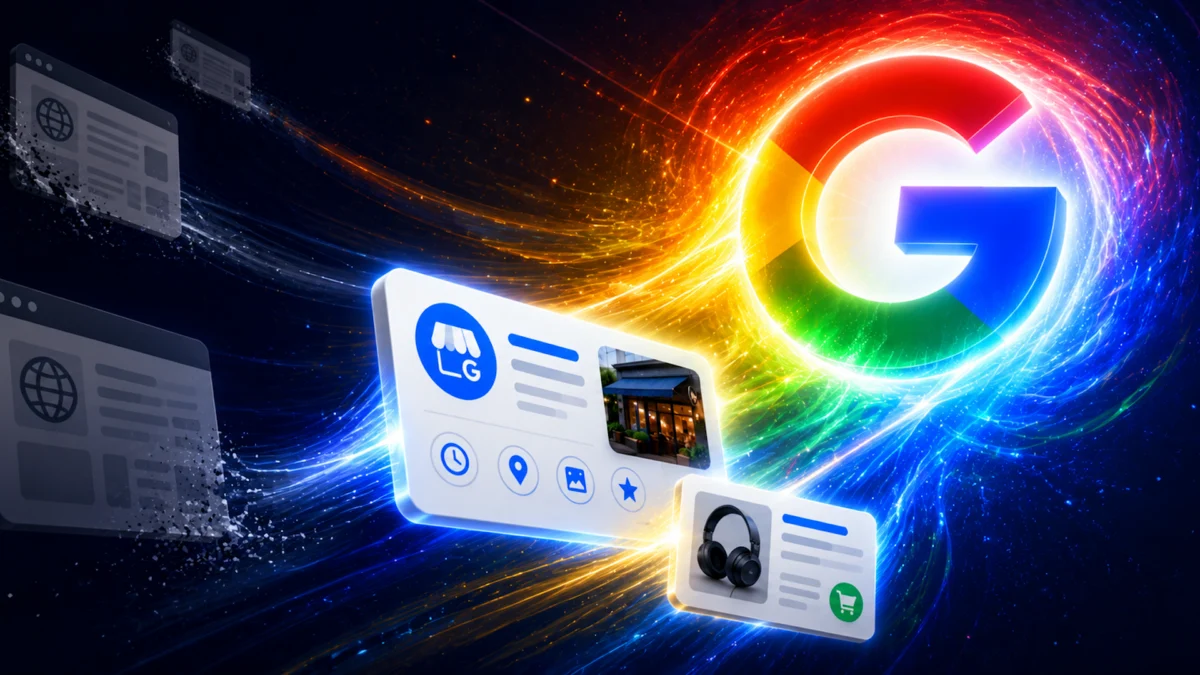
The landscape of search engine optimization (SEO) is undergoing its most profound transformation since the advent of mobile search. As Google integrates generative artificial intelligence deeper into its core search product—collectively referred to as "AI Mode" or AI Overviews—the tech giant is fundamentally altering how information is distributed.
According to recent data from search intelligence firm Profound, Google has dramatically increased citations to its own domain (google.com) within its AI-generated search results. Over a critical two-month tracking window, self-citations spiked by an astonishing 8.4x, positioning Google’s own domain as the second most cited source within its generative search ecosystem.
This shift marks a major departure from traditional search engine mechanics, where Google acted primarily as a portal directing users to third-party websites. Instead, the search giant is increasingly keeping users within its own walled garden, raising urgent questions for businesses, digital marketers, and antitrust regulators worldwide.
Main Facts: The Rapid Ascent of Google’s Self-Citations
At the heart of this shift is how Google’s AI Mode answers user queries. Rather than pointing users toward independent blogs, e-commerce platforms, or local directories, the generative AI engine is pulling data from Google’s own structured databases and presenting them as the primary sources of truth.
The 8.4x Surge and the No. 2 Ranking
According to Profound’s tracking, the volume of citations pointing back to google.com grew more than eightfold in a span of roughly ten weeks. This rapid escalation catapulted Google’s own domain to the number two spot among all cited domains within AI Mode.
Historically, search engines prioritized external websites to maintain a healthy web ecosystem. However, in the generative search landscape, Google has emerged as its own primary beneficiary, utilizing its AI interface to cite its own internal subdomains and platforms over independent publishers.
The Role of Google Business Profiles and Product Knowledge Panels
The surge in self-citations is not a random distribution across all Google services. Instead, it is highly concentrated in two areas:
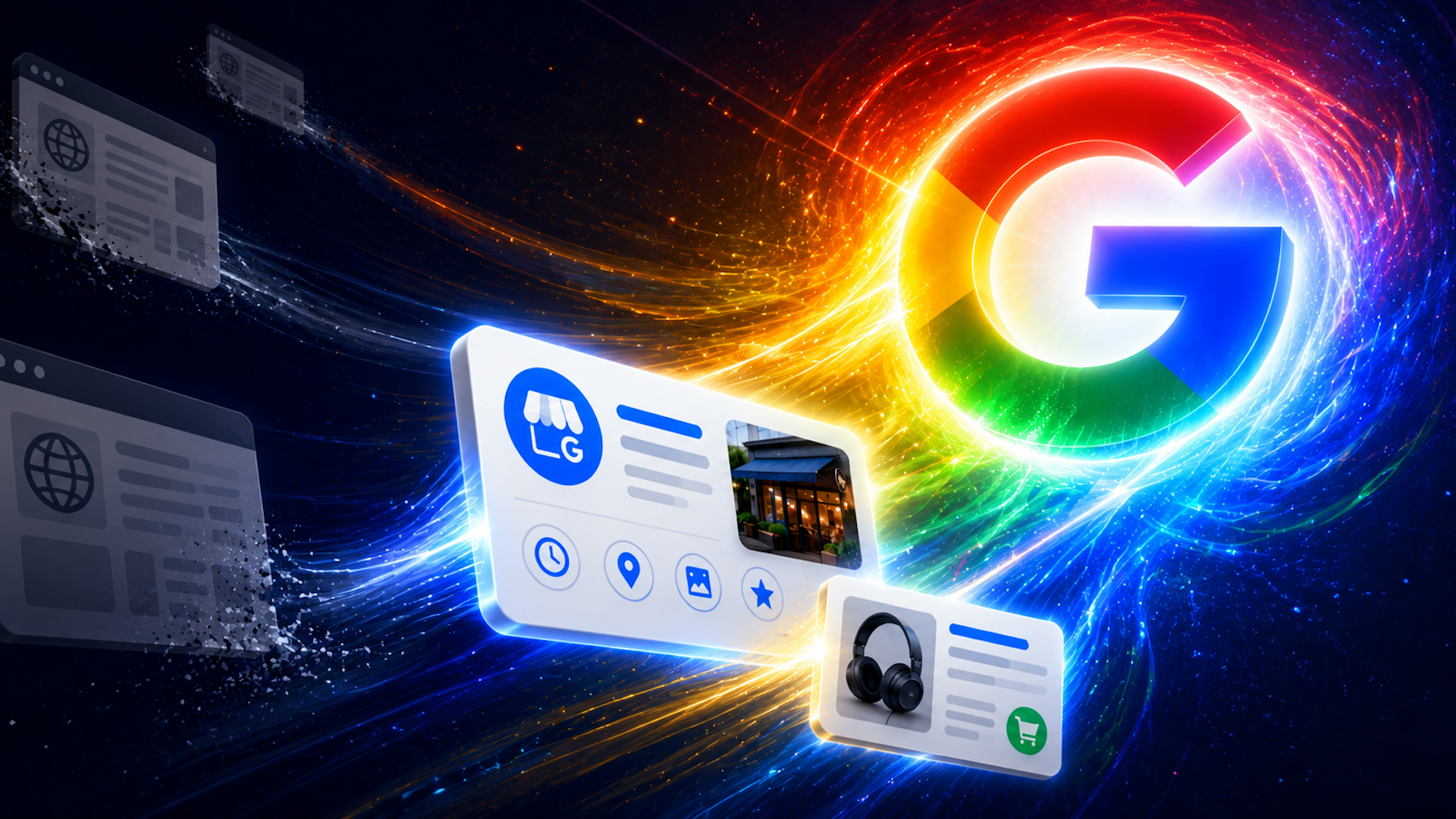
- Google Business Profiles (GBP): Formerly known as Google My Business, these profiles serve as the foundation for local search. AI Mode now routinely surfaces GBP data as interactive, inline panels directly inside generative answers for local-intent queries.
- Product Knowledge Panels (PKPs): For commercial queries, Google’s AI draws heavily from its Merchant Center and structured product graph, displaying comparative charts, specifications, and compatibility details hosted on Google’s own servers.
The "Zero-Click" Evolution
By embedding these rich, Google-hosted cards directly into AI Mode answers, Google provides users with comprehensive details—such as operational hours, physical addresses, user reviews, pricing, and product photos—before they ever have a chance to click through to a brand’s actual website. This evolution represents the next stage of "zero-click searches," where the search engine itself satisfies the user’s query, effectively bypassing the traditional publisher-consumer pipeline.
Chronology: The Two-Month Shift to AI-Generated Cards
The transition of Google’s search engine from a directory of external links to a self-contained answer engine has been years in the making, but the specific integration of Google-hosted cards into generative AI answers accelerated rapidly in the spring of 2024.
[April 15, 2024]                      [May 14, 2024]                       [June 30, 2024]
       |                                     |                                    |
  Profound begins                        Google I/O:                          Profound tracking
  tracking window;                       AI Overviews                         closes; google.com
  self-citations                         officially roll                      recorded as the
  at baseline.                           out in the US.                       No. 2 cited domain.
April 15, 2024: The Tracking Baseline
Profound initiated its targeted tracking of Google’s AI Mode citation distribution. At this point, Google was actively testing various iterations of its generative search experience (then known broadly as the Search Generative Experience, or SGE) with a subset of users. While self-preferencing was visible, it had not yet been fully optimized into the inline-card format that would soon dominate local and product searches.
May 14, 2024: The Google I/O Catalyst
During its annual developer conference, Google announced the official rollout of "AI Overviews" to the general public in the United States, with plans to expand globally. Following this launch, Google adjusted its AI algorithms to improve accuracy and reduce "hallucinations." To do this, the AI began relying more heavily on structured, verified data sources—namely, Google’s own database of local businesses and product feeds.
June 2024: The Integration of Inline Panels
Throughout June, users and SEO professionals observed a distinct shift in how local and transactional queries were answered. Instead of generating text summaries with links to local blogs or review sites, the AI engine began embedding interactive Google Business Profile cards and Product Knowledge Panels directly into the conversational output.
June 30, 2024: The Tracking Window Closes
By the end of Profound’s study, the integration of these proprietary panels had cemented google.com as the dominant citation source in AI Mode, second only to a handful of massive informational repositories like Wikipedia.
Supporting Data: Analyzing the Verticals and Query Types Most Affected
The data provided by Profound is derived from a massive sample size, analyzing more than 32 million google.com/searchviewer instances between April 15 and June 30. The findings highlight that the shift toward self-citation is highly concentrated in industries where local intent and product specifications drive direct consumer revenue.
Local-Intent Categories Leading the Surge
In industries where physical location, immediate service, and trust are paramount, Google’s AI Mode has shifted almost entirely to surfacing Google Business Profiles. The categories experiencing the most significant disruption include:
| Industry Vertical | Primary Google Asset Surfaced | Impact on Organic Website Traffic |
|---|---|---|
| Hospitality & Restaurants | Google Maps / GBP Cards | High reduction in direct website menu clicks |
| Home Services (Plumbers, HVAC) | Google Local Services / GBP | Direct phone calls placed via Google interface |
| Medical & Dental Practices | GBP Reviews & Hours | Patient booking shifts toward Google-integrated widgets |
| Real Estate & Local Agencies | Google Maps Panels | Users view photos and locations within the SERP |
In these sectors, the Google-hosted profile has effectively replaced the company’s homepage as the initial point of consumer contact.
Product Panels Gaining Ground in E-Commerce
For retail and e-commerce queries, the data reveals a similar pattern. When users input queries regarding product comparisons, compatibility, or specific technical standards, Google’s AI increasingly bypasses traditional e-commerce blogs, affiliate review sites, and brand specification pages.
Instead, the system displays Product Knowledge Panels. These panels aggregate:
- Retailer pricing comparisons.
- Real-time inventory status.
- Technical specifications (dimensions, weight, power requirements).
- Aggregated customer reviews.
By presenting this structured data directly in the AI overview, Google limits the necessity for users to visit multiple retail websites to compare options.
Official Responses and the Self-Preferencing Debate
The revelation that Google’s AI is directing a massive share of traffic back to its own properties has reignited intense debate surrounding antitrust issues, "self-preferencing," and the future of the open web.
The Regulatory Backdrop
For years, regulatory bodies such as the European Commission and the U.S. Department of Justice (DOJ) have scrutinized Google for allegedly favoring its own comparison-shopping services and local search products over competitors. The European Union’s Digital Markets Act (DMA), which took full effect in early 2024, specifically aims to curb self-preferencing by "gatekeeper" platforms.
Critics argue that by prioritizing its own Business Profiles and Product Panels within AI-generated responses, Google is utilizing its monopoly power in search to dominate secondary markets, such as local business directories and e-commerce aggregators.
Google’s Defense of User Experience
While Google has not commented directly on the specific metrics published by Profound, the company has consistently defended its search design choices on the grounds of user experience and data quality.
Google’s official stance on generative search features emphasizes the following points:
- Accuracy and Reliability: Generative AI is prone to fabrication. By anchoring AI responses to structured, verified databases like Google Business Profiles and the Google Merchant Center, the search engine ensures that users receive accurate, up-to-date business hours, locations, and product details.
- Friction Reduction: Google asserts that users prefer immediate answers to complex queries without the need to click through multiple slow-loading websites to find basic information.
- Continuing to Send Traffic: Google maintains that AI Overviews actually increase the quality of traffic sent to publishers, arguing that users who do eventually click through from an AI Overview are highly qualified leads who are closer to making a purchase decision.
Implications: Navigating the Era of "Zero-Click" AI Search
For digital marketers, local business owners, and e-commerce brands, the implications of Profound’s report are clear: the traditional playbook of optimizing a website solely for organic search clicks is no longer sufficient. To survive in an AI-driven search ecosystem, businesses must pivot from a website-centric SEO strategy to a holistic Google Ecosystem Optimization (GEO) strategy.
1. Google Business Profile is the New Homepage
Because Google’s AI Mode surfaces local profiles as inline panels before users ever reach an external website, a business’s Google Business Profile is now its most critical digital storefront.
[Traditional Search Funnel]
User Query ➔ Google SERP ➔ Click to Brand Website ➔ View Hours/Reviews ➔ Conversion

[AI Mode Search Funnel]
User Query ➔ AI Overview (Inline GBP Panel) ➔ Direct Conversion (Call/Directions from SERP)
To optimize for this new reality, local businesses must:
- Maintain Impeccable Data: Ensure that operational hours, holiday closures, addresses, and phone numbers are accurate to the minute.
- Curate High-Quality Visuals: Regularly upload professional photos of products, services, and storefronts, as the AI prioritizes visually complete profiles.
- Proactively Manage Reviews: A high volume of positive, keyword-rich reviews increases the likelihood of a profile being selected by the AI to answer specific user queries (e.g., "best gluten-free Italian restaurant near me").
2. E-Commerce Brands Must Optimize for the Merchant Center
For product brands, appearing in AI-generated Product Knowledge Panels requires seamless integration with Google’s backend retail systems. E-commerce sites must feed structured, real-time product data directly into the Google Merchant Center.
Key focus areas include:
- Schema Markup: Implementing comprehensive product schema markup (including price, availability, review ratings, and product identifiers like GTINs) on all product detail pages.
- Detailed Specifications: Providing exhaustive compatibility and technical specification data within product feeds to capture highly specific, long-tail AI queries (e.g., "is charger X compatible with phone Y").
3. Redefining Key Performance Indicators (KPIs)
As direct organic clicks to websites face downward pressure due to zero-click AI responses, marketing teams must redefine how they measure success.
- Impression Share in AI Overviews: Tracking how often a brand’s assets (profiles, products, or reviews) are featured in generative answers.
- On-Platform Actions: Monitoring actions taken directly on Google-hosted properties, such as phone calls, direction requests, and message inquiries originating from Google Business Profiles.
- Conversion Rate Optimization (CRO): Ensuring that the traffic that does reach the website is met with a highly optimized user experience designed to convert high-intent visitors immediately.
Ultimately, while the rise of self-citation in Google’s AI Mode presents a challenging hurdle for traditional web traffic, it also offers a streamlined path to conversion for brands that successfully optimize their presence within Google’s own structured ecosystem.