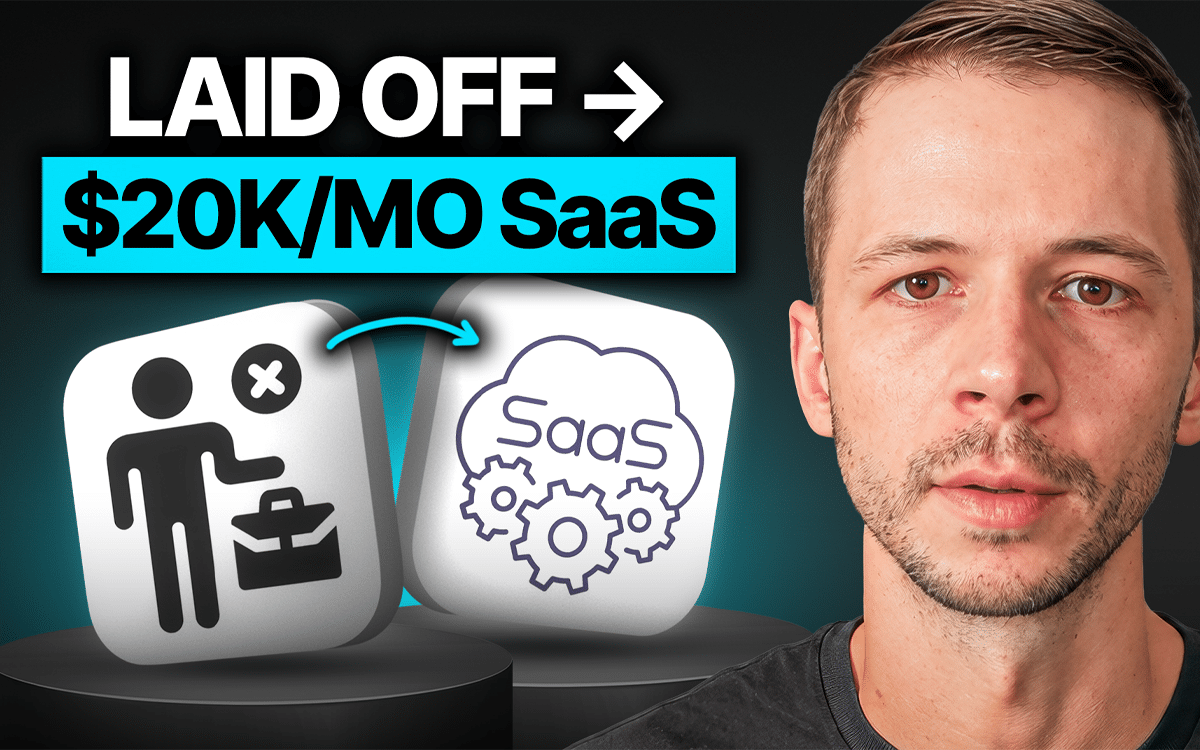
In the landscape of modern entrepreneurship, the "overnight success" story is often a myth, masking years of iterative pivoting and quiet, diligent labor. Ben Bozzay, the founder of Tech Lockdown, exemplifies the more realistic—and arguably more sustainable—path to startup success. In a recent appearance on the Niche Pursuits podcast, Bozzay detailed how he transformed a personal struggle with digital distraction into a thriving SaaS enterprise currently generating $20,000 in monthly recurring revenue (MRR).
Bozzay’s journey is not a tale of a disruptive invention launched with venture capital, but rather a masterclass in "market-led evolution." By systematically solving his own technical hurdles and documenting the process, he transitioned from a content creator to a software architect, proving that when you solve a genuine, painful problem, the business model often reveals itself.
The Genesis: A Problem of Self-Control
Ben Bozzay’s background was the ideal incubator for his eventual business. With a professional history spanning software engineering, cybersecurity, and SEO-driven marketing, he possessed the unique technical aptitude to identify a gap in the consumer market.
In 2020, as the world moved into lockdown, Bozzay found himself struggling with the same digital habits as millions of others: excessive screen time and the inability to disconnect. However, his approach to solving this was distinctly non-consumer. While the average user might download a generic app blocker, Bozzay knew these tools were flimsy—easily bypassed by anyone with basic technical knowledge.
Leveraging his background in cybersecurity, he began implementing enterprise-grade controls on his personal devices. He moved beyond "blacklists" and began utilizing advanced DNS filtering and mobile device management (MDM) protocols—the same infrastructure corporations use to lock down employee laptops and phones. This was the seed of Tech Lockdown: the realization that the best way to control personal internet usage was to treat one’s own device like a secure corporate asset.
Chronology of a Growing Enterprise
The trajectory of Tech Lockdown was anything but linear. Bozzay’s path serves as a roadmap for founders who prefer to build in response to actual demand rather than theoretical projections.
- 2020 (The Content Phase): Bozzay started writing on Medium and Reddit, sharing his technical experiments with internet-blocking guardrails. The goal was never to build a company; it was to document his personal journey toward a healthier digital workspace.
- 2021 (The Monetization Phase): As his content gained traction via Google search, Bozzay realized his readers wanted more than advice—they wanted a roadmap. He launched a paid membership site, offering productized consulting. He essentially sold the time-saving benefits of his research, helping users set up complex filtering systems without the headache of manual research.
- 2022 (The Transition to SaaS): The limitations of paid content became apparent; once a customer successfully set up their system, they no longer needed the guidance. To ensure long-term retention, Bozzay introduced a DNS filtering service. This shifted the business model from one-time "informational" sales to recurring subscription revenue.
- 2023 (The Full-Time Pivot): Following a layoff from his corporate engineering role, Bozzay faced a crossroads. With roughly 300 customers and a modest profit, he took the leap into full-time entrepreneurship. Despite initial financial stress and a period of stagnant growth, he persisted, focusing on product refinement.
Supporting Data and Strategic Growth
The growth of Tech Lockdown is intrinsically tied to a "deep-content" SEO strategy. In an era where many websites are struggling with the volatility of Google’s algorithm updates, Bozzay’s site flourished, reaching peaks of 70,000 organic visitors per month.
His content strategy relied on three core pillars:
- Technical Specificity: Rather than writing generic articles like "Top 10 Website Blockers," Bozzay targeted high-intent, long-tail queries, such as "how to prevent bypassing app blockers on Windows via Task Manager."
- The Content Tree Model: By linking specific, narrow technical guides to broader, high-level articles, he created a cohesive internal linking structure that signaled authority to search engines.
- Branded Terminology: Bozzay noted that as AI search summaries (like Google’s SGE) become more prevalent, ranking for generic keywords becomes less reliable. By creating his own unique frameworks and categories, he ensured that his brand remained the primary answer to the problems he solved.
The Pivot to the Adult Market
One of the most defining aspects of Tech Lockdown is its target demographic. While most digital safety companies focus on parental controls, Bozzay realized that the most "difficult" user is the adult attempting to restrict their own behavior.
Unlike children, adults have administrative access to their devices. They can delete profiles, change passwords, and bypass restrictions. By focusing on this "self-accountability" market—which includes individuals struggling with productivity, compulsive browsing, or addiction—Bozzay created a product with a much higher barrier to entry and a more loyal customer base. His tools were not designed to be easily circumvented; they were designed to be "tamper-proof," even by the administrator themselves.
Official Insights: The Founder’s Perspective
In the Niche Pursuits interview, Bozzay emphasized that his transition to full-time was not a smooth ride. "The first few months after going full-time were flat," he noted. The pressure to generate revenue was intense, particularly given the cost of healthcare and the temptation of job offers.
Bozzay’s philosophy on hiring and scaling remains conservative. Despite hitting the $20K MRR milestone, he operates as a solo founder, relying on contractors and AI-driven automation to manage support and operations. He maintains a cautious approach to scaling, preferring to keep the business lean until a clear, proprietary technical advantage—such as his work on a non-reset iPhone management solution—is fully realized.
Implications for Future Founders
The story of Tech Lockdown offers profound implications for those looking to build SaaS businesses today.
1. Documentation as Market Research
Bozzay’s business started as a blog. By writing about the problems he solved, he effectively performed market research in public. The comments and emails he received were not just feedback; they were a roadmap of exactly what features people were willing to pay for.
2. The Power of "Pain-Point" SaaS
Bozzay’s product does not compete with free, lightweight tools. It competes with the "pain" of not having control. Because his product solves a high-stakes, emotional, and persistent problem, his churn rates are low, and his customers are highly motivated to keep the service running.
3. Resilience in the Face of AI
While many creators worry that AI will replace informational content, Bozzay’s experience suggests the opposite: technical, first-hand experience is more valuable than ever. Because he actually performs the tests and documents the results, his content possesses a level of "ground truth" that AI-generated summaries struggle to replicate.
4. The Value of Iterative Evolution
Too many founders fail because they attempt to build the "perfect" software before finding a market. Bozzay proved that you can start with a simple article, move to a paid guide, then to a basic tool, and finally to a full-featured SaaS. By the time he reached the SaaS phase, he already had a customer base and a proven content engine.
Conclusion: The Path Forward
Today, Tech Lockdown continues to evolve. With the expansion of the LivingRoom brand—an app focused on visibility and AI-driven content detection—Bozzay is moving from pure restriction to a broader ecosystem of digital health.
For the aspiring entrepreneur, the lesson is clear: you do not need a billion-dollar idea or a venture capital infusion to build a life-changing business. You need a deep understanding of a specific problem, a willingness to document your journey, and the patience to let your business model emerge from the needs of your users. Ben Bozzay didn’t just build a software company; he built a platform for personal transformation, and in doing so, created a blueprint that others can follow.