The landscape of ecommerce is undergoing a seismic shift. As generative AI transitions from a novel creative tool to the foundational layer of digital business, merchants are finding themselves in a new race: the race for visibility, efficiency, and automated intelligence. This week’s roundup of service updates reveals a clear trajectory toward "agentic commerce"—a paradigm where AI does not merely assist, but actively executes tasks, manages customer relationships, and optimizes sales funnels in real-time.
From the rise of Generative Engine Optimization (GEO) to the integration of autonomous logistics and blockchain-based payments, the following report details the latest advancements defining the future of retail.
Main Facts: The New Frontier of Ecommerce Infrastructure
This week’s industry updates focus on three primary pillars: AI-driven creative production, the weaponization of first-party data, and the emergence of "agentic" customer service.

Major platforms are consolidating their power. Trustpilot’s new partnership with Shopify marks a significant move by the review giant to entrench itself within the largest ecommerce ecosystem, effectively turning Shopify’s admin panel into a centralized hub for reputation management. Meanwhile, the creative space is being transformed by tools like ImageKit’s Creative Automation and Canva’s Grow 2.0, both of which suggest that the "manual production" phase of digital marketing is nearing its end.
Perhaps most notably, the concept of "Agentic Commerce"—systems capable of autonomous decision-making—has gained institutional backing. Nudge has secured $1.1 million in funding to build a platform specifically designed to help brands navigate AI search visibility, proving that investor interest is pivoting toward the specific technical challenges posed by large language model (LLM) search interfaces.
Chronology: A Week of Rapid Integration
The following timeline highlights the sequence of technological announcements that have reshaped the merchant toolkit over the past seven days:

- Early Week: Neolix expands its autonomous delivery fleet into European retail, signaling a push toward 24/7 automated logistics. Simultaneously, Redo secures an $81 million Series B, underscoring the massive market demand for post-purchase lifecycle management.
- Mid-Week: A flurry of AI-specific tools hits the market. CiteLens launches its GEO platform to track brand visibility across AI answer engines, while Contentful debuts Palmata, a specialized tool for brands to audit how AI models interpret their corporate identity.
- Late Week: Amazon Web Services (AWS) releases its "agentic customer experience designer," a no-code solution for deploying self-service AI. Following this, Meta introduces embedded appointment booking for lead ads, streamlining the path from social discovery to conversion.
- Weekend: Ppro and Coinbase finalize a collaboration to bring stablecoin payments to U.S. merchants, bridging the gap between legacy commerce and decentralized finance.
Supporting Data and Technical Breakthroughs
The data behind these launches points to a desperate need for scale. Rokt mParticle’s new Performance Engine addresses the "first-party data" crisis. With cookie deprecation and tightening privacy regulations, brands are losing the ability to track customers across the web. The Performance Engine’s "Audience Agent" and "Performance Accelerators" are built specifically to combat eroding match rates and non-scalable segments, providing a technical workaround for the loss of third-party signals.
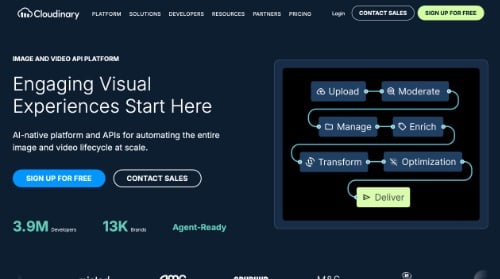
In the realm of media and content, Cloudinary’s "Image to Video" tool is a direct response to the "video-first" requirement of modern social algorithms. By enabling brands to convert static image libraries into channel-ready video at scale, Cloudinary is lowering the barrier to entry for high-converting social commerce content.
The Mobigital AI Virtual Livestream technology represents a shift in labor economics. By utilizing virtual presenters for 24/7 product demos, retailers can theoretically maintain global store presence without the prohibitive costs of human staffing or time-zone-bound broadcasting.
Official Responses and Strategic Motivations
Industry leaders have been vocal about the "why" behind these innovations.
Trustpilot’s leadership noted that this Shopify integration is the "first under a new strategy to work more closely with large ecommerce platforms," signaling a move toward deeper, platform-native ecosystems.
Nudge’s investors at S16VC—a fund backed by the founders of industry stalwarts like Miro and Datadog—highlighted that the funding for their agentic platform was driven by the urgent need for brands to "match experiences with intent."
Albertsons Media Collective provided insight into the integration with Criteo, stating that the goal is to "connect with shoppers as they are looking to buy." This represents a shift from "search-as-a-list" to "search-as-a-conversation," where brands are paying to be the recommended "answer" within an AI-generated chat response.
Implications: The Future of the Merchant Ecosystem
The cumulative effect of these announcements suggests three critical implications for ecommerce merchants over the next 18 months:
1. The Death of Static Content
With tools like Cloudinary’s video generator and ImageKit’s creative automation, the cost of high-quality content production is collapsing. Merchants who continue to rely on manual, static assets will be rapidly outpaced by competitors who use these tools to generate thousands of performance variations in minutes.

2. The Rise of "Answer Engine" Dominance
Brands can no longer rely solely on traditional SEO. The launch of CiteLens and Palmata suggests that "Generative Engine Optimization" (GEO) is becoming a discipline unto itself. If your brand is not being cited or recommended by AI search agents, you are effectively invisible to a growing demographic of consumers who use AI as their primary research tool.
3. The Automation of the Post-Purchase Experience
The massive $81 million injection into Redo and the rise of autonomous logistics like Neolix indicate that the "post-purchase" phase—returns, tracking, and delivery—is being re-evaluated as a profit center rather than a cost center. By automating the return process and optimizing last-mile delivery, merchants are finding ways to increase customer lifetime value (LTV) while simultaneously cutting operational overhead.
4. Convergence of Finance and AI
The collaboration between Ppro and Coinbase is a bellwether for the retail sector. As stablecoin payments become easier to implement, the friction of international commerce will decrease. When you combine this with the autonomous, agentic capabilities of the new AWS and Nudge platforms, we are approaching a future where a store can exist, operate, and transact globally with almost zero human oversight.

Conclusion
The message for the modern ecommerce merchant is clear: Intelligence is the new inventory. Whether it is the data you capture via the Rokt mParticle engine, the visibility you earn via CiteLens, or the customer experience you deploy via AWS, the brands that thrive will be those that integrate these agentic tools into their core stack. The era of manual, static, and disjointed ecommerce is over; the era of the autonomous, AI-optimized brand has officially arrived.