The landscape of personal technology is undergoing its most radical transformation in decades. As the generative AI boom matures, the industry has shifted its focus from the software itself—large language models and chatbots—to the hardware that serves as the bridge between human intent and machine execution. In this crowded, high-stakes race, Bengaluru- and San Francisco-based startup Aina has emerged as a significant new contender, securing $5.5 million in a funding round to prove that the future of AI isn’t just about recording what we say, but controlling what we do.
The New Frontier of AI Hardware
The current market is saturated with experimental form factors. From the discreet, health-focused utility of smart rings like Sandbar to the ambitious, wearable AI pins and desktop notetakers pioneered by companies like Plaud and Pocket, the industry is searching for the “next smartphone.” Others, such as Bee and Friend, have leaned into the concept of the AI companion, while giants like Meta, in collaboration with Ray-Ban, and high-valuation startups like Even Realities, are betting that smart glasses will be the definitive interface of the future.
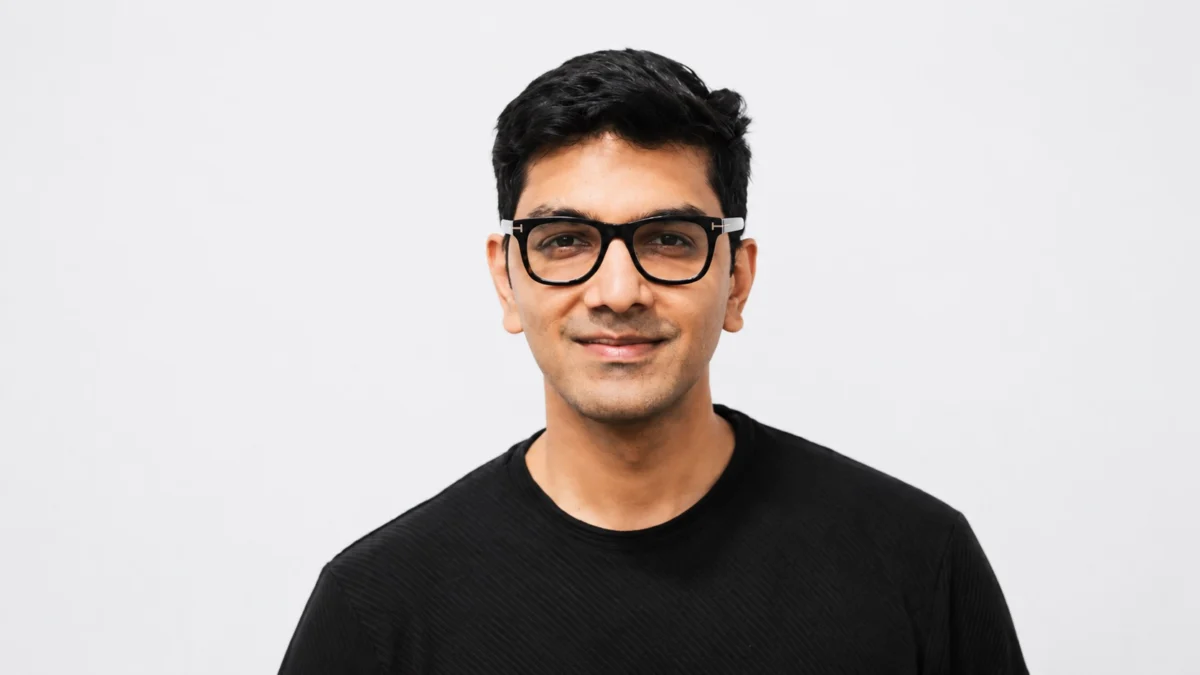
Amidst this flurry of innovation, Aina—whose name means “mirror” in Hindi—is attempting to cut through the noise. Founded by Apoorv Shankar, a veteran of the hardware design space, the company is positioning itself not as another passive recording device, but as an “action-oriented” bridge between users and their digital workflows.
A Chronology of Innovation: From Ultrahuman to Aina
To understand Aina’s philosophy, one must look at the trajectory of its founder. Apoorv Shankar is no stranger to the complexities of human-computer interaction (HCI). Before launching Aina (formerly known as Project Mirage), Shankar served as the VP of Hardware at the prominent smart ring manufacturer, Ultrahuman.
His pedigree in the field traces back to his time at LazyCo, a hardware startup he founded that gained notoriety for developing a ring capable of controlling external devices like smartphones. That innovation led to an acquisition by Ultrahuman, where Shankar spent time refining his vision for hardware. However, the rapid evolution of the AI market prompted him to pivot once more.
“I left Ultrahuman last year because I was just super curious about the space of AI interfaces,” Shankar explains. “Devices like the Rabbit R1 and the Humane Pin had launched, and I had my own disappointments with them. However, I was just excited that we are seeing interfaces being a thing now. As an engineer turned product designer, this was the hottest thing I could imagine myself building.”
Following his departure, Shankar spent the last year in stealth mode, prototyping various interfaces before settling on the current vision for Aina. The company’s successful $5.5 million funding round, led by Redstart Labs (Info Edge India) and 360 ONE, with backing from industry stalwarts like MIXI Global Investments, Antler, and the Blume Founders Fund, suggests that investors are equally eager to move beyond the “always-listening” trend toward something more functional.
Supporting Data: The Rise of the Macro Controller
Aina’s initial product, Dune, is a context-aware, three-key “macro” keyboard. While it may seem modest compared to the futuristic promises of neural implants or holographic displays, it addresses a fundamental friction point in modern computing: the need for rapid, physical control over software agents.

The device allows users to manage mic and camera settings during meetings and execute complex scripts or shortcuts based on the application currently active on the user’s screen. By prioritizing a tangible, tactile interface, Aina is tapping into a burgeoning niche.
Data from the broader developer community supports this strategy. As knowledge workers increasingly rely on AI coding assistants like OpenAI’s Codex and Claude Code, the demand for dedicated hardware to trigger these agents has skyrocketed. OpenAI recently released a custom keypad in partnership with Work Louder, and a vibrant ecosystem of DIY enthusiasts and keyboard manufacturers are already iterating on macro-controllers.
Aina’s development process further validates this shift. The company originally prototyped three distinct devices:
- Dune: The three-key keypad.
- Radiance: A tabletop remote featuring a dial for volume and dedicated buttons for meeting management.
- Shift: A single-tap “agentic” button designed to trigger AI-driven tasks via a mobile connection.
During early testing, the company found that Dune was the clear winner among users, leading the team to consolidate the features of its siblings into the keypad. This data-driven approach highlights a maturity in the startup’s strategy: shipping what the user actually adopts rather than what the designer imagines they might need.
Official Responses and Strategic Vision
The funding round attracted a notable roster of individual investors, including WhatsApp head Kunal Shah, Razorpay co-founders Harshil Mathur and Shashank Kumar, and Scribd founder Tikhon Bernstam. Their participation signals a strong vote of confidence in Shankar’s vision for “agentic” hardware.
In an interview with TechCrunch, Shankar emphasized that Aina is intentionally avoiding the "passive capture" trap. "I think you have enough context in your phone and your laptop all the time, and we haven’t even started using that well," he noted.
The strategy is clear: rather than building yet another device that merely records meetings or transcribes conversations—functions that are increasingly being commoditized by native software integrations—Aina wants to control the flow of work. By moving from "passive context capture" to "active agent invocation," Aina is attempting to turn the AI from a spectator into a tool that the user physically commands.
The Implications: What Does Controlling AI Look Like?
The implications of Aina’s arrival are twofold. First, it marks a potential cooling of the "wearable hype" cycle. While companies like Humane and Rabbit generated massive initial interest, their struggles have taught the industry that a device is only as good as the utility it provides within the user’s existing workflow.

Second, Aina represents the growing recognition that the mouse and keyboard—the primary interfaces of the last 40 years—are insufficient for the era of LLMs. As Qualcomm, OpenAI, and a dozen hardware startups experiment with everything from smart speakers to rings, the "form factor wars" are heating up.
Aina’s approach is fundamentally conservative yet highly practical. By focusing on the input mechanism, they are ignoring the vanity of "the next big wearable" and focusing on the friction of digital labor. If a user can trigger a complex, multi-step AI workflow with a single press of a physical button on their desk, they are arguably more productive than someone wearing an expensive, battery-draining pin on their lapel.
A Look Ahead
As Aina prepares to ship Dune and begins internal testing for its next generation of devices, the startup finds itself at a crossroads. The company is currently keeping its future roadmap under wraps, though Shankar hints that the next device will further lean into the concept of controlling agents rather than just managing meetings.
The broader tech industry is watching closely. There is no clear winner yet in the race to define the AI interface. Is it voice? Is it gesture? Or is it, as Aina suggests, a return to the tactile? As the market continues to churn through capital and failed experiments, Aina’s methodical, "learn-in-the-wild" approach may prove to be the most resilient strategy of all.
Whether the future of AI is worn on the finger, pinned to the shirt, or sitting quietly on the desk remains to be seen. However, one thing is certain: the era of the dumb peripheral is over. The era of the agentic controller has just begun.
Disclaimer: When you purchase through links in our articles, we may earn a small commission. This does not affect our editorial independence.