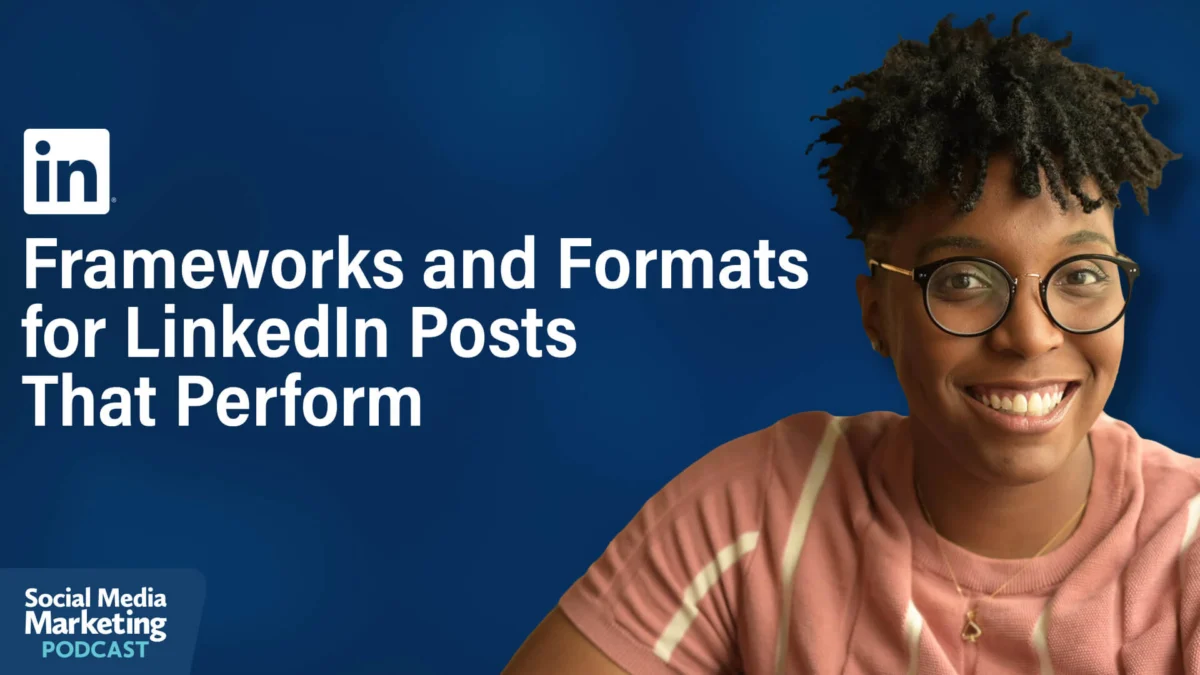
In an era dominated by AI-generated copy and automated scheduling tools, the professional landscape of LinkedIn has reached a saturation point. Yet, a startling statistic remains: only 1% of the platform’s massive user base actually creates content. This inherent supply-and-demand gap creates a lucrative opening for those willing to move beyond generic, machine-written posts.
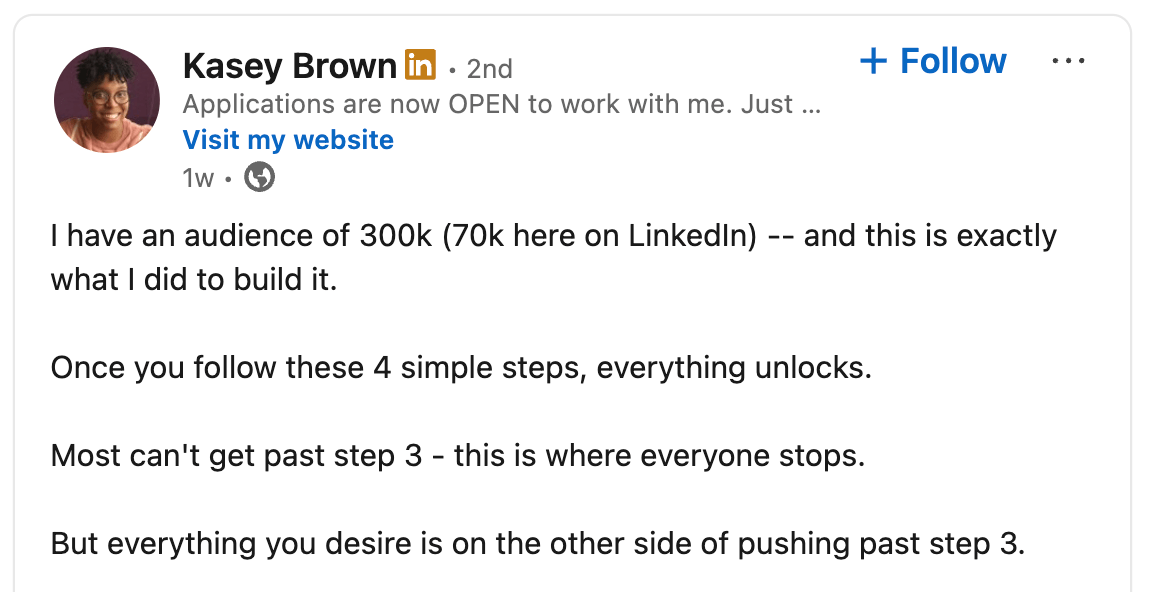
According to LinkedIn growth strategist Kasey Brown, success on the platform is not found in volume, but in a deliberate, human-centric approach. By implementing a three-part "Triple S" framework—Stop, Stay, and Share—creators can pivot from noise-making to building a high-converting authority engine.
The Foundation: Strategy Before Syntax
Before a single word is drafted, success requires a shift in mindset. Consistency is a vanity metric if the content lacks direction. Brown argues that professional creators must first anchor their efforts in three foundational pillars:
- The Ideal Client Profile (ICP): Many creators fall into the trap of targeting "everyone." An effective ICP must be surgically precise. It should be defined by specific pain points and economic milestones—for example, targeting "consultants earning $20K+ monthly who need organic content systems to scale." If a virtual assistant cannot use your ICP description to find a specific prospect via search, your profile is too vague.
- The Transformation Metric: Every post must promise a clear "before-and-after" for the reader. If a follower engages with your content for 30 days, what specific problem will have been solved?
- Reader-Centricity: The most common mistake creators make is prioritizing their own ego (e.g., "Look how smart I sound") over the reader’s utility. Shifting the focus to what the reader gains from the post is the catalyst for exponential growth.
Chronology of the Triple S Framework
The framework functions as a psychological funnel. It follows a chronological progression that mirrors the user’s journey from their initial scroll to their ultimate decision to share the content.
Phase 1: Stop (The Scroll-Stopper)
The first hurdle is the "scroll." Data suggests that the attached image and the opening two lines of text account for 80% of a post’s total impressions.
Visual Strategy: While many professionals opt for polished studio headshots, Brown advocates for "unpolished authenticity." In a recent A/B test, she compared a high-resolution, professional presentation photo against a 0.5x wide-angle, casual selfie taken from the stage. The casual, "behind-the-scenes" shot outperformed the professional image by a margin of 15:1, generating 3,000 leads compared to 200. The lesson: vertical images that take up more screen real estate, combined with a sense of raw, in-the-moment reality, break the user’s habitual scrolling patterns.

The Hook: A successful hook must trigger at least two of the "Five Cs": Curiosity, Contrast, Contradiction, Controversy, or Confusion. A post starting with "I was at a job I hated in 2021" followed by "In 2026, I spent $30K to visit this beach" creates immediate tension by highlighting a radical contradiction. It forces the reader to click "see more" to resolve the narrative arc.
Phase 2: Stay (The Engagement Retention)
Once the "see more" button is clicked, the creator enters the retention phase. The goal here is to earn the right to the reader’s time.
The Re-Hook: The third line of your post is your second chance to capture attention. Avoid "resolving" the story too quickly. If the hook promises a story, the re-hook must deepen the conflict. Instead of revealing the success immediately, describe the struggle or the "wild dream" that preceded it. By delaying the resolution, you keep the reader anchored to the text.
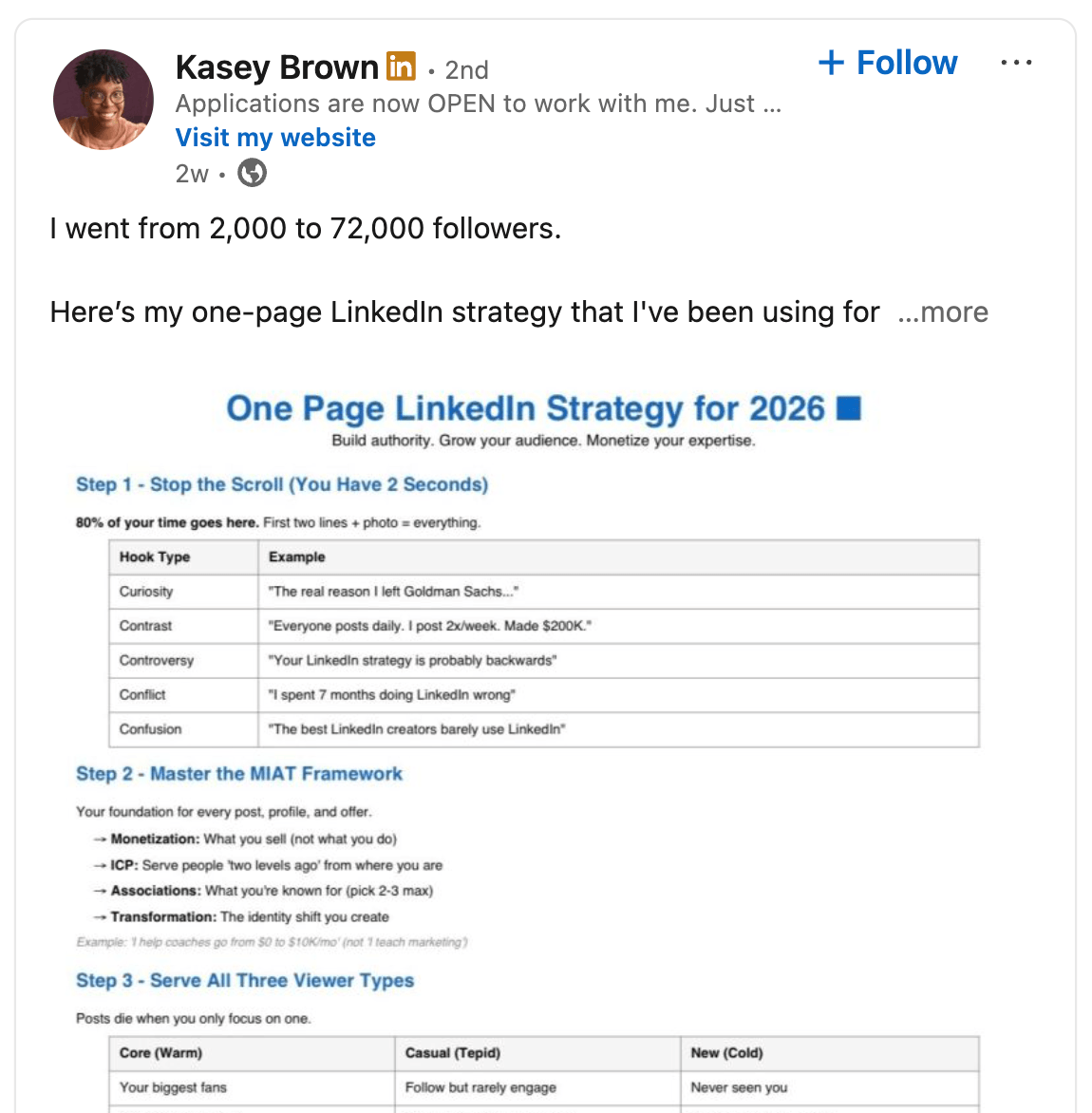
Structural Rhythm: Visual fatigue is the enemy of retention. Brown recommends a rhythmic pattern: three to four single-sentence lines, followed by a dense block of two to three sentences, then returning to short, punchy lines. This cadence prevents the reader from feeling overwhelmed by long paragraphs. Furthermore, checking your content against a fourth-to-seventh-grade reading level—using tools like the Hemingway App—ensures accessibility for a global, mobile-first audience.
Phase 3: Share (The Multiplier)
The final "S" is the most critical for algorithmic reach: the Share. A share is the ultimate endorsement, indicating that the content was valuable enough for a user to attach their own professional reputation to it.
Supporting Data and Metrics
The efficacy of the Triple S framework is backed by specific, actionable KPIs. Brown tracks "shares per impression" as the primary diagnostic tool for content health.
- 0.3 Ratio: This is considered a solid performance.
- 0.5+ Ratio: This is elite status. Posts that hit this threshold are candidates for a "recycled rotation," where the exact same content is reposted every 60 to 90 days.
This data-driven approach removes the pressure to reinvent the wheel daily. If a piece of content has already proven its ability to drive shares, it is a high-value asset that deserves to be resurfaced to new audiences who missed it the first time.
Implications for Modern Marketers
The implications of this framework are significant. By prioritizing the reader’s transformation, creators move from "content noise" to "authority building."
The Role of AI: While AI tools are prevalent, they often struggle with the nuanced "human-first" elements of this framework, such as the 0.5x wide-angle selfie or the personal narrative arc of a "re-hook." AI can assist in formatting or summarizing, but it cannot replicate the lived experience required to build deep trust with a target audience.
Mobile Optimization: With 70% of LinkedIn traffic occurring on mobile devices, formatting is not just an aesthetic choice; it is a functional requirement. Using tools like Authored Up to preview how a post renders on a small screen is a non-negotiable step for any professional creator. If your text collapses into a monolithic wall of words, your engagement will plummet regardless of the quality of your insights.
Conclusion: The "Goodie Bag" Effect
At the conclusion of every post, the creator should offer a "goodie bag"—a concrete, actionable takeaway that the reader can apply immediately. This is what transforms a personal story into a resource that is worth saving or sharing.
By applying the Triple S framework, creators no longer need to fear the algorithm or the changing tides of social media trends. When you build content that stops the scroll with raw authenticity, keeps readers engaged through psychological tension, and offers a tangible takeaway that provides value to the reader’s own professional journey, you are not just posting; you are building a scalable, high-converting business asset.
In a digital landscape that is increasingly noisy, the most effective strategy is to remain human. The "content gap" on LinkedIn is still wide open for those who choose to bridge it with genuine insight and strategic structure.
Kasey Brown is a LinkedIn growth strategist and the founder of Digital Kairos. Her agency specializes in helping founders, consultants, and executives build organic systems that convert. For more insights on scaling via LinkedIn, follow her journey on her YouTube channel or her primary LinkedIn profile.