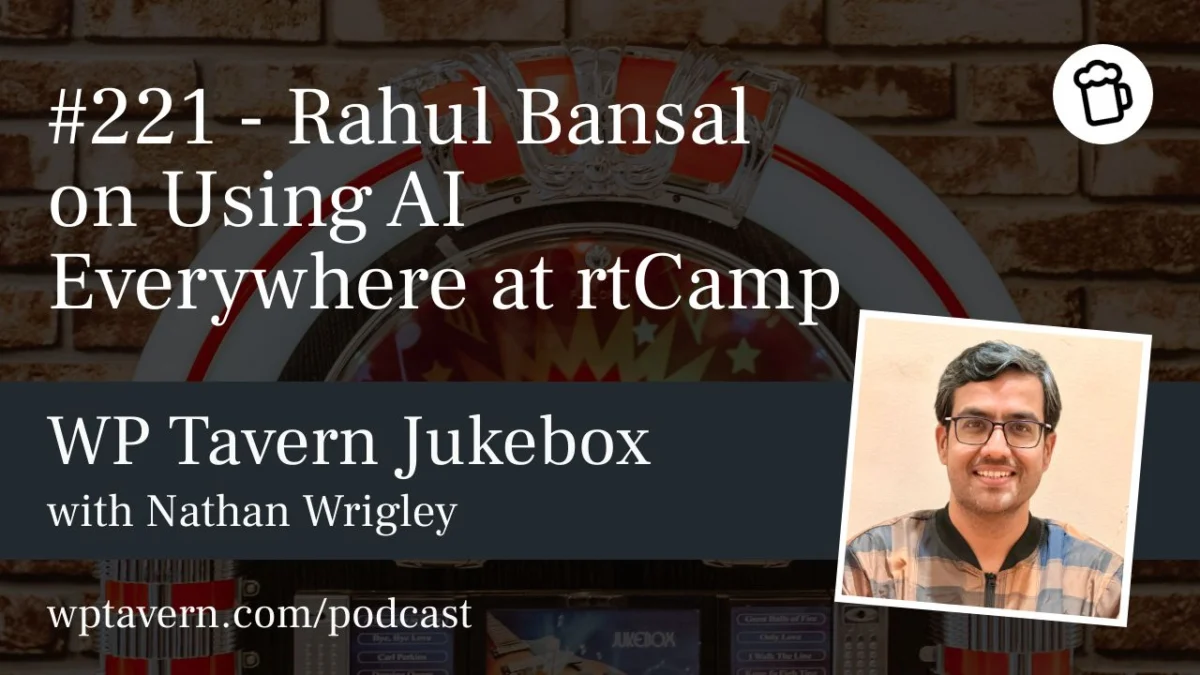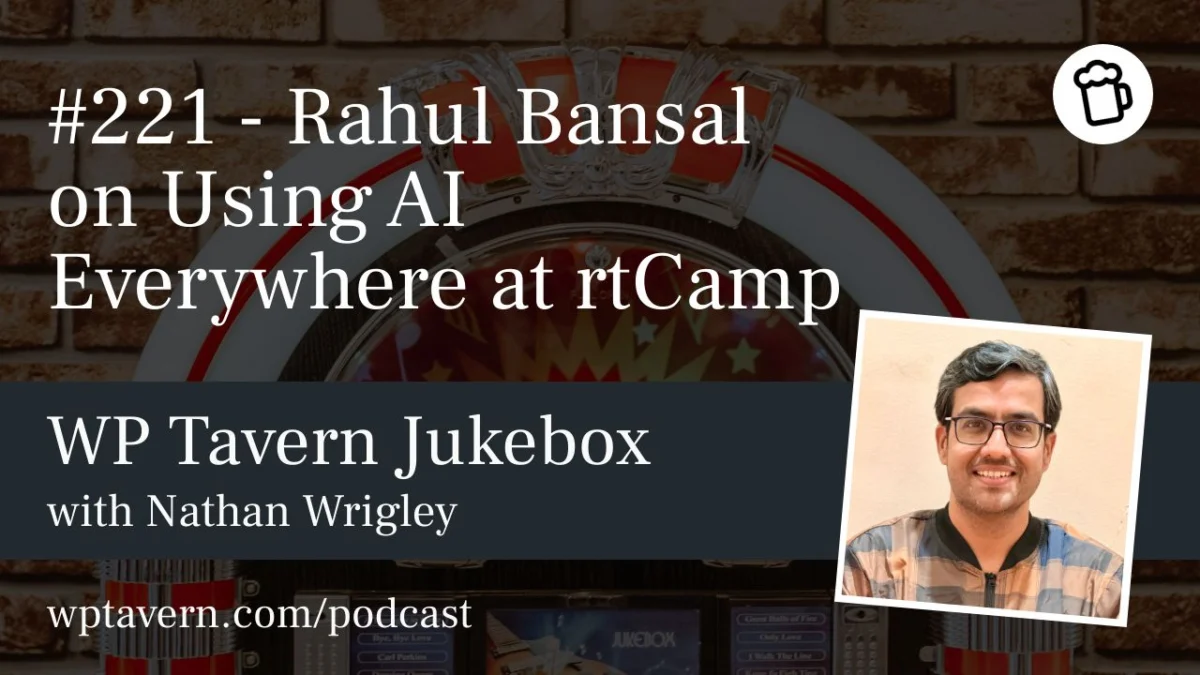
In an era where artificial intelligence threatens to disrupt the traditional agency model, one industry leader is not just adapting—he is fundamentally re-engineering the business of web development. Rahul Bansal, founder and CEO of the enterprise WordPress powerhouse rtCamp, recently took to the stage at WordCamp Asia to deliver a roadmap for the future of agency work.
With 17 years of experience steering rtCamp through the shifting tides of the web, Bansal’s recent insights suggest that the “manual” era of agency growth is coming to a definitive end. By integrating AI into every facet of the business—from sales and proposal writing to technical proof-of-concept builds—rtCamp is transitioning into a lean, high-velocity operation that challenges the conventional wisdom of scaling human capital.
The Evolution of an Enterprise Powerhouse
Founded in 2009, rtCamp emerged during a time when WordPress was primarily viewed as a simple blogging platform. While many of his peers were chasing broader tech trends, Bansal made the strategic—and occasionally risky—decision to go "all-in" on WordPress.
This early commitment to a niche allowed rtCamp to scale alongside the platform itself. Over the last decade and a half, the agency has grown into a global player, working with Fortune 500 companies, major publishers, and tech giants like Google. Their expertise extends beyond standard web development, encompassing complex SaaS connectors, bespoke Chrome extensions, and large-scale enterprise migrations.
However, as Bansal reflected during his WordCamp Asia keynote, the playbook that built rtCamp from a small shop to a multi-hundred-person agency would not work if he were starting today. In a crowded market, simply claiming to be a "WordPress agency" is no longer enough to differentiate a business.
The Strategy of Complementary Hiring
One of the most enduring lessons from Bansal’s journey, and a core takeaway for any aspiring agency owner, is his philosophy on team composition. When scaling from a freelance operation to an agency, many founders fall into the trap of hiring "clones"—people who share their exact technical or creative skill sets.
Bansal advocates for the opposite: hiring your complementary set.
"I was good at engineering but weak at sales," Bansal explains. "My early hires were people who were the opposite of me. By mapping out my own weaknesses and filling those gaps with specialists who possessed different strengths, we were able to build a resilient, well-rounded organization."
This concept extends beyond human resources to client acquisition. Bansal suggests that agencies should seek out clients who don’t necessarily understand WordPress. This creates a "premium" relationship where the client values the agency’s expertise rather than treating them as a commodity. By positioning the agency as the expert in a niche-within-a-niche—such as specialized payment gateway integrations or ERP synchronization—agencies can avoid the "race to the bottom" that plagues generalist shops.
The AI Mandate: A New Operational Backbone
The most significant shift at rtCamp is the company’s decision to treat artificial intelligence not as an add-on, but as the operational backbone of the business. Bansal’s mandate is clear: If a process can be handled by AI, it will be.
Chronology of an AI-First Transition
- Pre-2020: rtCamp focused on scaling via human capacity, building a reputation for high-traffic, custom WordPress solutions.
- The COVID Era: Faced with rapid demand, the agency began consolidating its internal tooling to manage a growing workforce.
- The Integration Phase: The agency adopted Frappe ERPNext, an open-source platform that centralized accounting, payroll, CRM, and project management. This "single source of truth" proved to be the agency’s greatest asset when the AI boom hit.
- 2024 and Beyond: rtCamp is now leveraging this unified data to automate sales, optimize project management, and accelerate technical builds.
"Because we have a unified interface and database, we are not limited by the fragmented data silos that hold back other agencies," says Bansal. "We can query our own historical data to train workflows, which gives us a massive competitive advantage."
Supporting Data: Efficiency at Scale
The implications of this shift are quantifiable. According to Bansal, the agency is seeing dramatic reductions in the time and cost required for key business processes:
- Sales and Proposals: What used to require hours of human analysis and manual document creation is now handled by AI integrations in minutes.
- Project Timelines: By using AI to automate discovery, data mapping, and QA testing, rtCamp has cut project preparation time significantly. In one recent case, a complex migration project that would have taken weeks was prepared in just five days.
- Cost Reduction: Bansal estimates that the agency is currently seeing AI gains in the range of 20% to 90%, depending on the task. He projects that within two years, the total build time for custom enterprise solutions will decrease by 70%.
Implications for the Future of Agencies
The rise of AI in agency operations carries profound implications for the talent market and business models.
The Shift in Workforce Composition
Bansal notes that rtCamp has stopped hiring for traditional engineering roles, not because work has decreased, but because existing teams are significantly more efficient. The agency is now pivoting its hiring strategy: the next 50 hires are projected to be primarily in sales and marketing.
The value is shifting away from "coders who cannot think" toward "growth engineers" and "prompt engineers"—professionals who can conceptualize solutions, manage AI contexts, and ensure that the final output aligns with client business goals.
The Death of the "Billable Hour"
As AI makes execution faster and cheaper, the traditional model of billing for hours is becoming obsolete. Clients are increasingly demanding fixed-price, high-value outcomes. Agencies that fail to lower their operational costs through AI will find themselves unable to compete on price, while those that do will enjoy significantly higher margins and faster delivery cycles.
Official Stance: Optimism over Pessimism
Despite the widespread anxiety surrounding AI in the tech industry, Bansal remains profoundly optimistic. He rejects the notion that AI will simply "kill" agencies. Instead, he views it as a catalyst for growth.
"The pie is getting bigger," he asserts. "By making complex migrations and high-end web development more affordable, we are opening the door to clients who previously couldn’t justify the investment. We aren’t inventing AI algorithms; we are consumers and consultants of AI, using it to solve boring, existing problems more efficiently."
Conclusion: A Roadmap for 2026
For agency owners looking to survive and thrive in the coming years, Bansal’s advice is both challenging and liberating:
- Niche Down: Don’t just be a WordPress agency. Become the expert in a specific vertical or technical integration.
- Centralize Data: You cannot automate effectively if your operations are scattered across five different SaaS products. Build or adopt a unified operating system.
- Hire for Complement: Stop looking for people who think like you. Find people who cover your blind spots.
- Embrace the Boring: Use AI to make the "unsexy" parts of your business (sales admin, data migration, QA) invisible and cheap.
As rtCamp continues to evolve, it serves as a bellwether for the rest of the industry. The future of the enterprise WordPress agency is not just about writing code; it is about orchestrating AI-driven systems to deliver faster, cheaper, and more impactful results for clients. For those willing to pivot, the next few years promise not an end to the agency model, but a new, more efficient beginning.