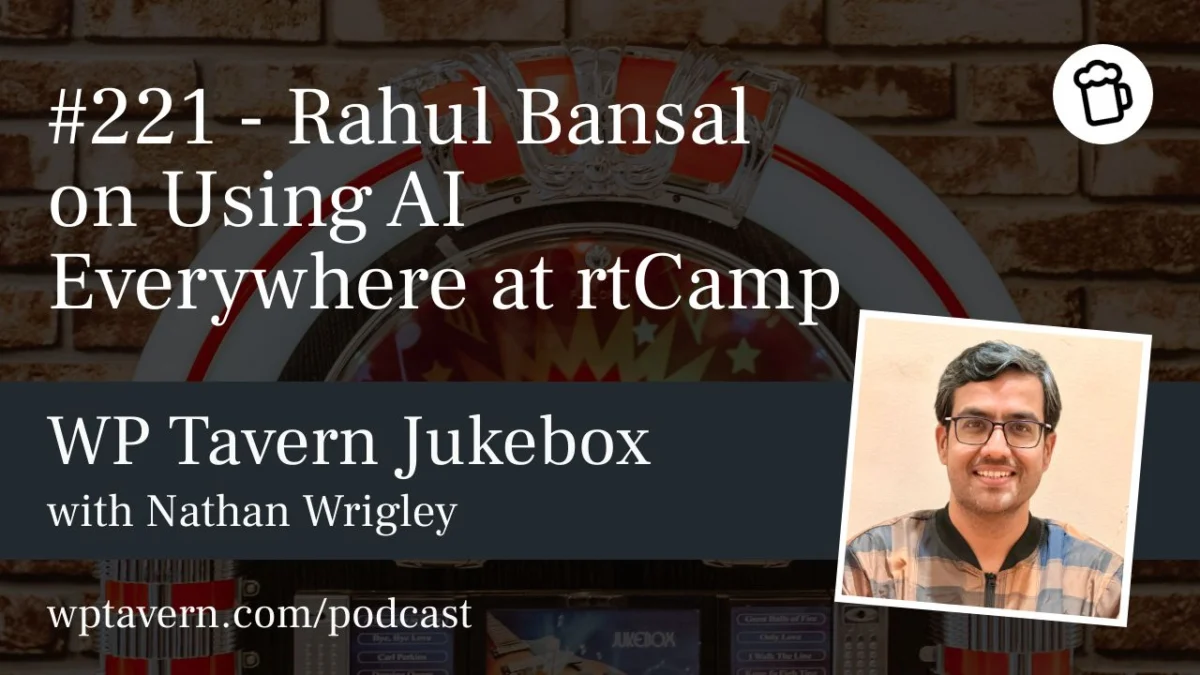
In the rapidly evolving landscape of digital development, few agencies have managed to maintain the sustained growth and reputation of rtCamp. Founded 17 years ago by Rahul Bansal, the firm has transformed from a niche blogging venture into a global powerhouse, serving enterprise clients like Google and various Fortune 500 companies. However, as the industry faces its most significant shift since the dawn of the mobile web—the integration of Artificial Intelligence—rtCamp is once again at the forefront, pivoting its operational backbone to meet the demands of 2026 and beyond.
The Evolution of an Enterprise Giant: From Blogging to Global Consultancy
The story of rtCamp is one of calculated adaptation. Founded in 2009, the agency did not begin with a grand vision of becoming an enterprise leader. Instead, it was born out of a successful media company—a blog network that required deep technical customization of WordPress to handle massive traffic.
"We didn’t start as an agency," says Bansal. "We were a media company. We were using WordPress, and we needed it to scale and look unique. We were essentially our own first client."
This "dog-fooding" philosophy became the agency’s competitive advantage. By solving their own scaling issues—such as implementing Nginx and custom code when few others were doing so—they attracted the attention of other major publishers and tech firms. Over the last two decades, rtCamp scaled to hundreds of employees, moving from simple web builds to complex SaaS connectors and Chrome extensions.
A Chronology of Strategic Pivots
The history of rtCamp can be categorized into three distinct eras:
- The Media Era (2009–2012): The firm operated primarily as a high-traffic blog network. The focus was on editorial content and learning the intricacies of WordPress internals to survive high-concurrency environments.
- The Agency Growth Era (2013–2022): Leveraging their technical reputation, the team shifted fully into a service-based model. They became a "shipping company" for the internet, helping large enterprises migrate from legacy CMS platforms like Adobe Experience Manager to WordPress.
- The AI-Operational Era (2023–Present): Following the global disruption of the COVID-19 pandemic, the agency began a radical internal refactoring. By adopting unified ERP software (Frappe ERPNext), they centralized their business operations, setting the stage for an AI-first future.
The "Complementary Set" Philosophy
Central to Bansal’s management style is his approach to human capital. Contrary to the traditional urge to hire "more of oneself," Bansal advocates for hiring "complementary sets."
"When you scale from a freelancer to an agency, there is a natural bias to find people who think like you," Bansal explains. "But I realized that my strength was engineering, not sales. So, I looked for people who were the polar opposite. This set theory—borrowed from my early math education—has allowed us to cover weaknesses across the board."
This philosophy extends to client acquisition. Bansal argues that agencies should target clients who do not possess deep technical expertise in WordPress. By positioning the agency as the expert guide, the relationship shifts from a commodity provider to a premium consultant.
AI: The Operational Backbone, Not Just a Feature
Perhaps the most disruptive element of rtCamp’s current strategy is their "AI-everywhere" mandate. In his recent talk at WordCamp Asia, Bansal outlined a future where AI is not merely a tool for code generation, but the fundamental operating system of the business.
"If something can be done by AI at rtCamp, it will be," says Bansal. This is not hyperbole. The agency has utilized AI to automate sales proposals, project management, and even technical proof-of-concept builds.
Key AI Implementation Data:
- Sales Efficiency: AI-driven lead qualification has removed the need for manual vetting, saving hours of initial discovery time per lead.
- Cost Reduction: By integrating AI across their unified Frappe ERP stack, the agency aims for a 70% reduction in build time and operational costs within the next two years.
- The "Vibe Coding" Strategy: The agency now creates functional WordPress "playground" environments during the proposal stage. This allows clients to interact with a potential solution before a contract is even signed, significantly increasing win rates.
Implications for the Future of WordPress Agencies
The shift towards AI-driven development has profound implications for the WordPress ecosystem. As manual coding becomes less labor-intensive, the role of the developer is evolving into that of a "Growth Engineer" or "Context Architect."
1. The Death of Commodity Coding
Bansal predicts that the era of "code-only" developers is coming to a close. "Coding is a race to the bottom," he notes. "The value is shifting away from people who can only code to those who can understand the context of a business problem and prompt an AI to solve it."
2. The Expansion of the Pie
Despite the fear that AI will shrink the workforce, rtCamp’s leadership remains optimistic. They believe that by making large-scale migrations and builds more affordable and faster, they are lowering the barrier to entry for enterprise clients. This, in turn, creates more demand for services, effectively growing the market for all WordPress professionals.
3. Specialization is Non-Negotiable
In 2009, merely saying "we are a WordPress agency" was enough to stand out in the Indian market. Today, that is no longer the case. Bansal stresses that agencies must now drill down into "niches within niches"—such as specializing in WooCommerce payment gateway integrations or back-office ERP connectivity.
Official Stance: The Human Element in an Automated World
When asked about the fear of displacement, Bansal is refreshingly candid. He acknowledges that some entry-level roles—such as manual data entry or basic proposal drafting—are vanishing. However, he emphasizes the agency’s commitment to retaining their team.
"We don’t want to lay off people. We want to retrain them," he says. The shift in headcount is not toward reduction, but toward reallocation. The agency is moving from a 90/10 split (engineers to sales/marketing) toward a more balanced model, as they anticipate needing fewer engineers to produce the same volume of work, but more consultants to manage the increased inflow of projects.
Conclusion
The journey of rtCamp serves as a masterclass in agency sustainability. By embracing "luck" as a factor in their success while remaining rigorously disciplined in their operational infrastructure, they have built a business capable of weathering the volatility of the tech industry.
For other agency owners, the takeaway is clear: the future belongs to those who stop viewing AI as a "bolt-on" and start using it to remove the friction from their core operations. As Bansal concludes, "We are the movers and packers of the internet. AI is just the new technology that allows us to move more, faster, and more affordably. If you aren’t optimistic about that, you’re looking at the wrong map."