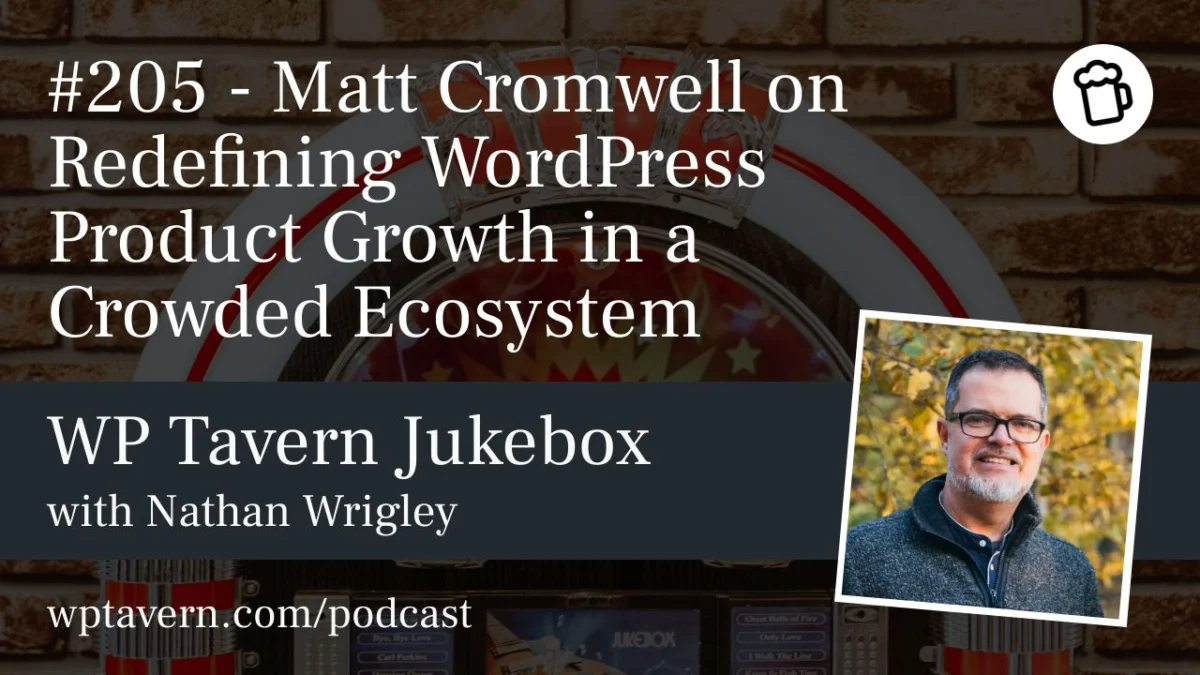
The WordPress ecosystem, once a wild frontier of rapid, unbridled expansion, has entered a period of profound transformation. For years, the prevailing sentiment among plugin and theme developers was simple: build a solution, upload it to the repository, and wait for the "rising tide" of the CMS’s global adoption to lift your boat. However, as the ecosystem faces shifting market shares, tighter economic conditions, and an influx of sophisticated external competition, that era of passive growth has effectively come to an end.
Enter Matt Cromwell, a veteran of the WordPress space and co-founder of GiveWP. Following a successful exit to Liquid Web and a tenure within the StellarWP leadership team, Cromwell has launched a new venture, "Roots & Fruit." His mission is to transition WordPress product makers from a code-centric mindset to a growth-oriented, customer-first philosophy.
The Evolution of the WordPress Product Landscape
For over a decade, WordPress was the undisputed titan of web development. As its market share climbed from 35% to over 40%, developers enjoyed a "rising tide" effect where demand for extensions and themes seemed infinite. However, the post-pandemic landscape brought a harsh reality check. Many product shops experienced a "COVID-19 high," followed by a sharp contraction as business budgets tightened and market saturation hit an all-time high.
The core challenge, as identified by Cromwell, is that the WordPress ecosystem is no longer isolated. It is now part of a global web economy where SaaS platforms, proprietary site builders, and AI-driven tools compete for the same user attention. The days of "build it and they will come" are over; today’s developers are competing in a saturated harbor where success requires more than just functional code.
Chronology of a Shift: From Code to Commerce
The journey of the average WordPress developer has historically been one of technical focus.
- The Early Years (Pre-2020): Developers operated as "nerds" behind screens, prioritizing the technical integrity of their plugins. The WordPress.org directory acted as the primary discovery engine, and community goodwill was the primary marketing vehicle.
- The Growth Phase (2020–2022): The pandemic accelerated digital transformation, leading to record-breaking sales for many WordPress businesses. However, this growth masked underlying inefficiencies in customer acquisition and branding.
- The Maturation Period (2023–2025): Market saturation became undeniable. The sheer volume of plugins in the repository—now exceeding 60,000—made organic discovery nearly impossible for new entrants.
- The New Era (2026–Present): With the rise of AI-assisted coding, the technical barrier to entry has collapsed. Code is no longer the differentiator; the product experience, brand identity, and customer journey have become the new battlegrounds.
Supporting Data: Why "Build and Pray" No Longer Works
The economic reality of 2026 is defined by two primary factors: competition and commoditization.
- Repository Congestion: With over 60,000 plugins in the official directory, the noise level is deafening. A developer launching a new utility—such as an AI-based alt-text generator—now faces dozens of competitors appearing simultaneously, many backed by significant venture capital or established agency resources.
- The SaaS Threat: WordPress users are no longer "WordPress-first." They are "outcome-first." If a customer needs a donation tool, they do not necessarily look for a WordPress plugin; they look for a solution. If a SaaS product provides a superior user experience, the customer will opt for that, regardless of whether it is "pluggable" into a WordPress site.
- The Democratization of Code: AI has changed the rules of production. When an individual can generate functional, high-quality code in minutes, the value of the "code" itself drops to near zero. The value now lies in the "product"—the wrapper of trust, support, documentation, and user interface that surrounds that code.
The Official Perspective: Matt Cromwell on Strategy
In a recent interview, Matt Cromwell articulated the shift required for survival. "You aren’t being paid for the time you put in; you are being paid for the product, and for the outcomes that the customer experiences," Cromwell noted.
His agency, Roots & Fruit, serves as a fractional Chief Growth Officer for teams that have mastered the technical side of development but struggle with the business side. Cromwell distinguishes between "code businesses" and "product businesses." A code business focuses on features and GitHub commits; a product business focuses on the customer journey, from the first touchpoint on a marketing website to the long-term satisfaction of the user.
"Many developers get stuck in a scatter-gun approach," says Cromwell. "They try to be on Reddit, LinkedIn, and email simultaneously, but they lack a cohesive strategy. My goal is to help them prioritize growth efforts, refine their product experience, and avoid the scattered approach that many developers fall into."
Implications for the Future of WordPress
The pivot toward professionalized product management has several critical implications for the WordPress ecosystem:
1. The Rise of the "Product-First" Developer
The next generation of successful WordPress entrepreneurs will likely be hybrid professionals—individuals who understand the technical constraints of the platform but spend 80% of their time on marketing, UX research, and customer retention. The era of the "lone developer" successfully running a business without a marketing strategy is closing.
2. AI as an Opportunity, Not a Threat
While many fear that AI will replace the need for plugins, the reality may be the opposite. As WordPress core continues to integrate AI, the platform becomes even more attractive to developers who know how to build on top of it. Because WordPress is one of the most thoroughly documented, open-source projects in existence, AI models are uniquely capable of understanding its architecture, creating a "lucrative future" for those who can integrate these models into high-value product experiences.
3. Consolidation of the Market
We should expect to see more consolidation. Smaller, niche plugins that cannot sustain a robust product experience may be acquired by larger entities like StellarWP, or they may simply vanish as they fail to compete with more polished, user-centric alternatives.
4. Branding as a Competitive Advantage
In a world where features can be copied by an LLM in seconds, branding becomes the ultimate moat. A product that users trust—a product with a human face, a clear mission, and a seamless checkout experience—will survive, while anonymous, feature-heavy plugins will struggle to retain market share.
Conclusion: Planting for the Future
The "rising tide" metaphor is dead. The harbor is now crowded, the water is choppy, and the boats are bumping against one another. However, as Matt Cromwell and other industry leaders emphasize, this does not mean the ecosystem is failing. It means it is maturing.
For developers willing to put down the "scatter gun" of impulsive feature releases and pick up the strategic tools of branding, customer success, and prioritized growth, the WordPress space remains one of the most fertile environments in the tech world. Success in 2026 and beyond will not be found in the code itself, but in the fruits that grow from a carefully cultivated, customer-centric product business.
As the ecosystem shifts, the survivors will be those who recognize that they are not just developers, but architects of outcomes—turning the "roots" of their technical expertise into the "fruit" of a sustainable, growth-oriented enterprise.