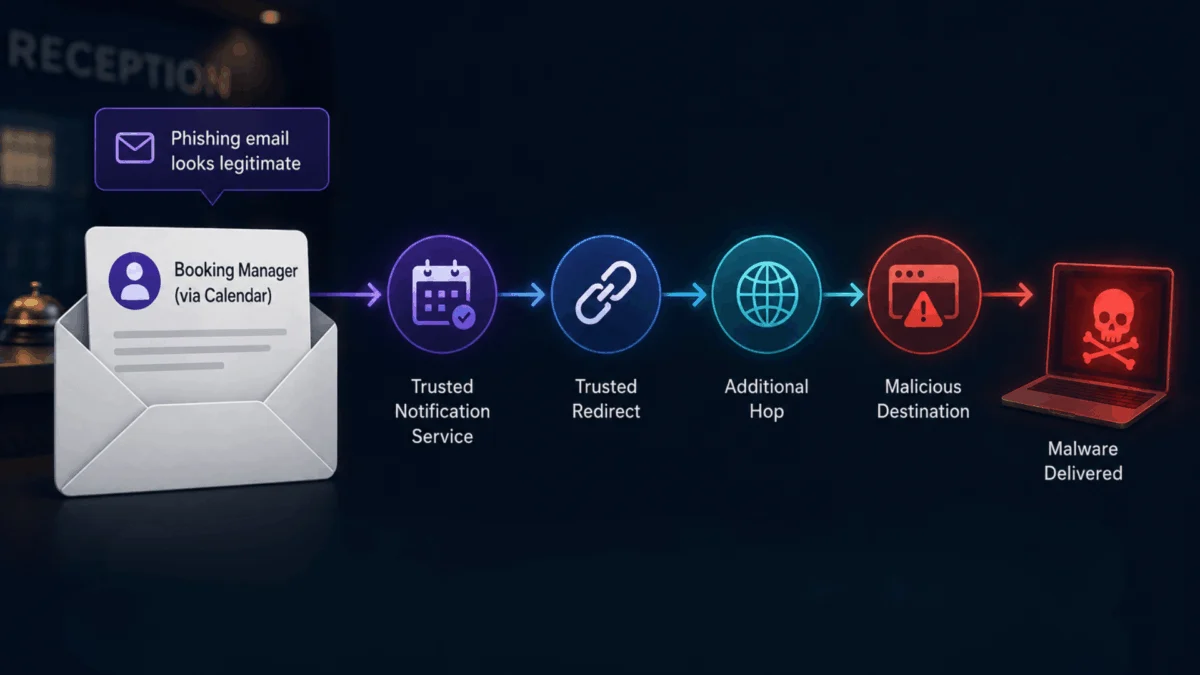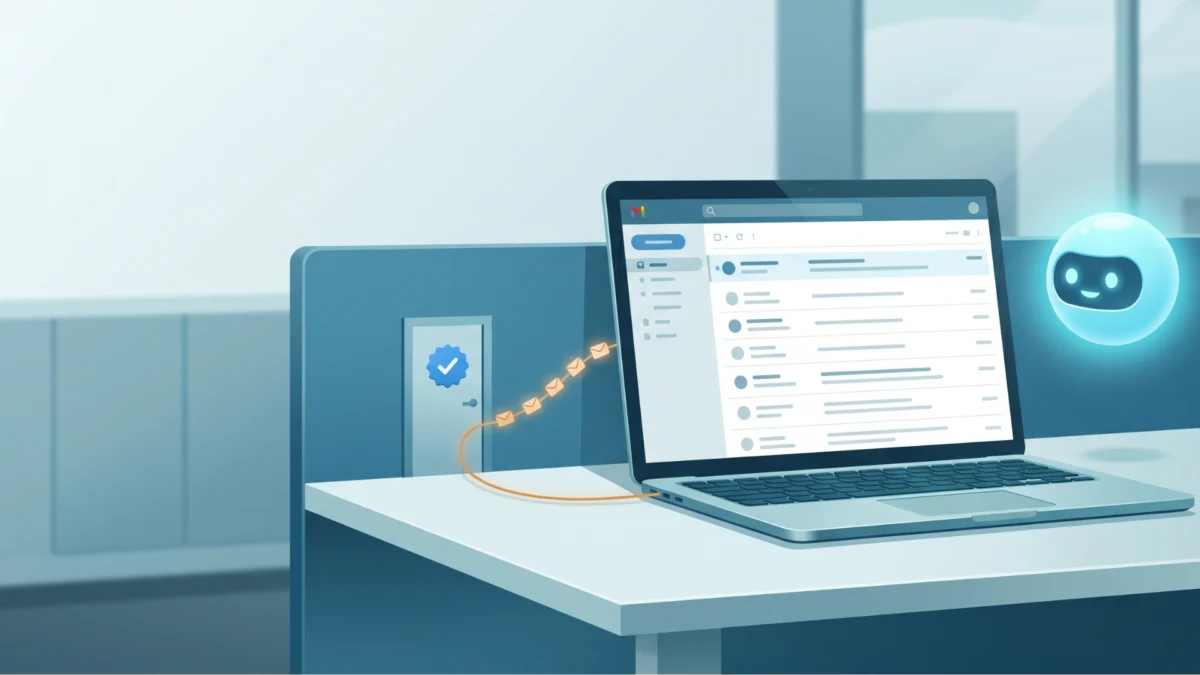
For decades, the gospel of cybersecurity has been etched into the minds of every corporate employee: check the link before you click. It is the foundational mantra of email security, a simple heuristic designed to thwart the crude machinations of phishing campaigns and credential harvesters. However, as the enterprise integrates generative AI into the heart of its productivity stack, this advice has been rendered dangerously obsolete.
A newly disclosed vulnerability chain, dubbed "SearchLeak" (tracked as CVE-2026-42824), demonstrates that the most trusted address in your browser—microsoft.com—can now be weaponized to turn your AI assistant against you. Disclosed by Varonis Threat Labs on June 15, 2026, SearchLeak represents a paradigm shift in how we perceive the "trusted" perimeter. In this scenario, a single click on a legitimate Microsoft link triggers a chain reaction that allows an attacker to exfiltrate a user’s most sensitive data—email contents, calendar invites, and SharePoint files—without the need for malicious plugins, escalated user permissions, or secondary prompts.
The Mechanics of SearchLeak: A Three-Fold Failure
To understand why SearchLeak is being hailed as a critical wake-up call for AI security, one must deconstruct the sophisticated, yet deceptively simple, "recipe" used to bypass Microsoft’s internal defenses. The vulnerability does not rely on a single, massive flaw but rather the orchestration of three distinct, manageable weaknesses that, when chained together, form an invisible data siphon.
1. Parameter-to-Prompt Injection
The first link in the chain involves how Copilot Enterprise processes input. Varonis researchers discovered that the AI’s search function treats information contained within the URL parameters as an executable instruction rather than a static query. In essence, an attacker can craft a URL that includes a malicious, hidden command. When the victim clicks this link, the Copilot interface interprets the appended text as a prompt, compelling the AI to perform unauthorized actions, such as searching through private mailboxes or indexed documents.
2. The Sanitizer Race Condition
As Copilot generates a response to the injected prompt, it streams the answer onto the user’s screen. During this process, there exists a brief window of time—a "race condition"—where an image reference embedded within the AI’s output is rendered before the security system can finish its sanitization process. The attacker exploits this latency by injecting a malicious image tag that executes before the safety filters are fully engaged.
3. Bing as an Unwitting Exfiltration Proxy
The final piece of the puzzle relies on the trust Microsoft places in its own ecosystem. The Copilot page is configured to load images from a "whitelist" of trusted domains, which includes Bing. Because Bing’s image search feature is designed to fetch URLs server-side, the attacker can hide the exfiltrated data within a carefully crafted image URL. When the AI attempts to render the image, it inadvertently sends the stolen data directly to the attacker’s server logs. As Varonis aptly summarized, the vulnerability turns Microsoft’s own infrastructure into an unwitting exfiltration proxy.
A Chronology of the Disclosure
The timeline of SearchLeak highlights the rapid, closed-loop nature of modern SaaS security.
- Early June 2026: Microsoft identifies and remediates the vulnerability on the back end. Because Copilot Enterprise is a managed service, the patch is deployed silently to all users, requiring no action from IT departments or end-users.
- June 15, 2026: Varonis Threat Labs publicly discloses the vulnerability chain, providing a detailed technical proof-of-concept (PoC).
- Post-Disclosure: The security community begins analyzing the implications. Despite the vulnerability being patched, the CVSS scores remain a point of contention, with Microsoft assigning a 6.5 (Medium) and the National Vulnerability Database (NVD) grading it a 7.5 (High), reflecting the discrepancy between how vendors and independent researchers weigh the risks of AI-driven data exposure.
The Inbox as an Attack Surface: Broader Implications
Beyond the technical specifics of CVE-2026-42824, the broader implication is that the inbox is undergoing a fundamental transformation. For years, we have treated "transactional" emails—password reset links, two-factor authentication (2FA) codes, and calendar confirmations—as harmless digital plumbing. In the age of AI, this "plumbing" is the primary target.
The Death of the "Perimeter"
Traditional email security gateways are designed to hunt for suspicious domains, malicious attachments, and known phishing patterns. They look for the "bad." SearchLeak succeeds because it looks like the "good." Because the request originates from a legitimate Microsoft domain and is processed by a trusted AI assistant, standard security stacks are blind to the activity. The "blast radius" of such an attack is not confined to a single compromised email; it is a total breach of the user’s digital workspace. If the AI assistant has access to the user’s permissions, the attacker essentially gains the user’s identity within the corporate environment.
The Pattern of "Leakage"
SearchLeak is not an isolated incident. It is the third time in roughly a year that researchers have demonstrated the ability to weaponize AI assistants.
- EchoLeak (2025): A zero-click vulnerability that allowed for the silent extraction of data.
- Reprompt (Early 2026): A one-click attack targeting Copilot Personal, which mirrored the mechanics later found in the enterprise version.
These incidents point to a systemic "fault line" in the industry: the intersection of user intent and untrusted, AI-processed text. We are moving toward a reality where the assistant—which is supposed to save us time—is the very thing that requires our constant, suspicious oversight.
Official Responses and Industry Outlook
Microsoft’s prompt remediation of SearchLeak underscores the company’s "secure-by-design" commitment for its managed AI services. However, the recurring nature of these vulnerabilities has sparked a debate about the inherent risks of LLM-based productivity tools.
Security analysts from organizations like BleepingComputer and The Hacker News have echoed the sentiment that while individual patches are necessary, they are not sufficient. The industry is grappling with the realization that as we grant AI more autonomy to access our files and calendars, we are effectively handing over the keys to the kingdom. If an AI can be "talked into" reading your mailbox, the distinction between a helpful assistant and a malicious insider vanishes.
What Organizations Can Do
While the immediate threat of SearchLeak has been mitigated by Microsoft’s server-side updates, the structural lesson remains. Organizations cannot simply "patch" their way out of AI-enabled threats. Instead, they must shift their security strategy:
- Strict Content Security Policies (CSP): Review and limit the domains that your organization allows AI tools to fetch content from. If the AI does not need to fetch images from external, untrusted sources, disable that capability.
- Behavioral Monitoring: Organizations should implement telemetry to monitor for anomalous AI behavior. For instance, if an AI starts parsing through sensitive emails or executing search queries that the user did not initiate, this should trigger an immediate security alert.
- Human-in-the-Loop Verification: Treat all AI-generated content with the same skepticism once reserved for suspicious emails. If the AI displays information it was not explicitly asked for, or if it redirects the user, it should be treated as a potential breach attempt.
- Zero Trust Architecture: Organizations must double down on Zero Trust principles. Even if an attacker compromises the AI interface, robust identity and access management (IAM) controls should prevent the AI from accessing highly sensitive repositories without secondary verification.
Conclusion
The "SearchLeak" vulnerability serves as a poignant reminder that in the race to deploy generative AI, security has often been treated as a secondary feature rather than a foundational requirement. The era of blindly trusting AI assistants is coming to an end. As these tools become an intelligent layer over our communication, they become an attack surface that is uniquely responsive to plain-English prompts.
We are entering an age where the "check the link" advice is being superseded by a more complex, uncomfortable requirement: check the assistant. We must scrutinize what our AI is allowed to do, what data it is permitted to see, and how it handles our private digital lives. In the end, technology may promise efficiency, but it is human vigilance that must provide the final, essential layer of defense against the machine.