In the modern digital product landscape, the gap between "design intent" and "engineering implementation" remains one of the most persistent hurdles to efficient development. While design systems have become the industry standard for maintaining visual consistency, they often fail to bridge the collaborative divide. Too many teams treat design systems as mere libraries of buttons, chips, and cards—static elements that, while useful, do little to facilitate the complex, real-time workflow required to build sophisticated products.

The solution, according to industry experts and seasoned product teams, lies not in the elements themselves, but in the design patterns they form. By shifting the focus from atomic design elements to functional, reusable patterns, cross-functional teams can unlock a new level of parallel processing, alignment, and velocity.

The Core Challenge: Why Traditional Design Systems Stall
True collaboration is rarely a natural byproduct of meetings or Slack channels. In many organizations, a "design system" becomes a rigid mandate—a top-down instruction manual that developers must follow and designers must police. This often leads to "The Handoff Trap," where developers sit idle waiting for high-fidelity assets, or designers find their concepts impossible to implement due to technical constraints discovered far too late.
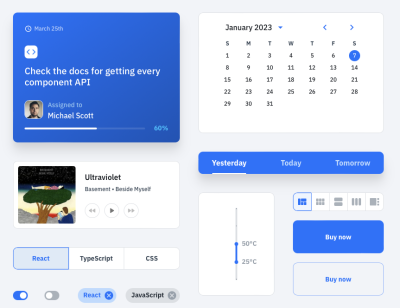
The root of this friction is a fundamental misunderstanding of what a design system is for. It is not merely a collection of assets; it is a product in its own right, with users, requirements, and a lifecycle. When teams focus exclusively on elements—the "atoms" of the UI—they miss the opportunity to define how those atoms behave in concert to solve specific user problems.
Chronology of a Pattern-First Workflow
To understand how this shift in perspective transforms team dynamics, we can look at the lifecycle of a product development cycle that prioritizes patterns over pixels.

Phase 1: Conceptual Alignment (The "Pre-Design" Stage)
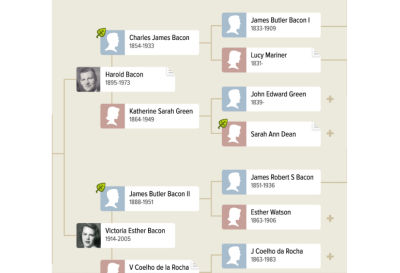
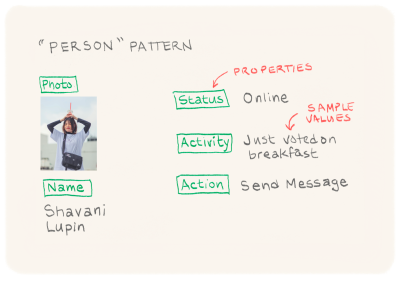
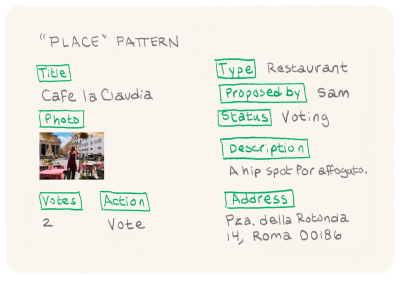
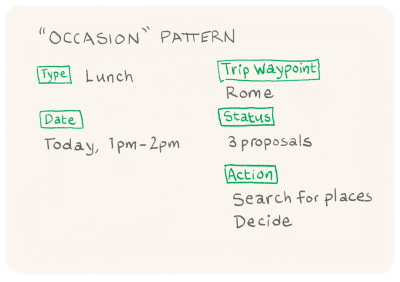
Before a single pixel is drawn in Figma, the product team—designers, developers, and product owners—engages in "pattern definition." This is a collaborative brainstorming session where the team identifies the core objects of the user experience. Using the example of "WeTrip," a group travel app, the team identifies entities like "Person," "Place," and "Occasion." By defining the properties of these entities together, the team establishes a shared vocabulary.
Phase 2: Building the Blueprint
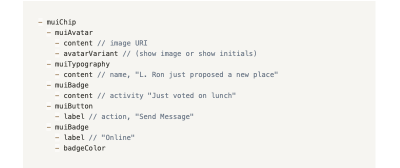
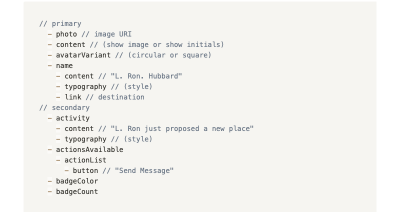
Instead of moving to high-fidelity design, the team creates a shared documentation space (such as a Notion document or a collaborative wiki). Here, they map out the essential properties of each pattern. For a "Person" pattern, they might define status, avatar, and availability. This document acts as the "source of truth," accessible to both engineering and design.

Phase 3: Parallel Development
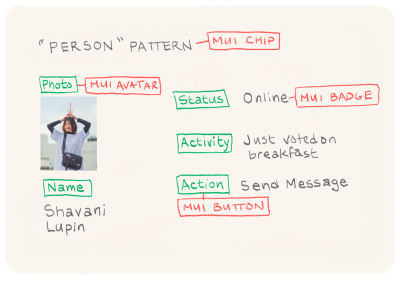
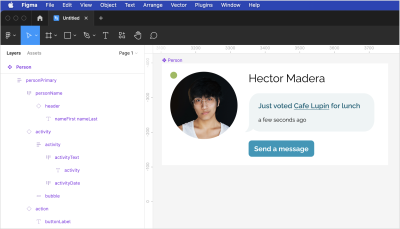
Because the pattern properties are defined, the dependency chain is broken. An engineer can begin scaffolding a "Person" component in TypeScript, knowing exactly what props are expected. Simultaneously, a designer can begin building the visual representation in Figma using established UI library components (like MUI or Tailwind). If a new property, such as "Presence," is identified by the engineer during coding, it is added to the documentation and immediately becomes a part of the design requirement.
Phase 4: Integration and Scaling
As the patterns stabilize, they move from rough outlines to refined, reusable modules. These modules are eventually integrated into the product’s codebase and design library. As the application grows, these patterns are reused across different views, significantly reducing the time required to build new features.
Supporting Data: The Efficiency of Reusable Patterns
While many organizations track "velocity," few track "reusability impact." However, teams that adopt a pattern-first methodology report significant improvements in core KPIs. By treating patterns as an API, organizations can:
- Reduce Time-to-Market: Teams report that once a core set of patterns is established, the development time for new screens drops by as much as 40%.
- Increase Test Coverage: Since patterns are distinct, reusable modules, they lend themselves perfectly to automated testing. Teams can verify the functionality of a "Place" card in isolation, ensuring it performs correctly wherever it is deployed.
- Minimize Technical Debt: By defining patterns early, teams avoid the "one-off" component syndrome where similar UI elements are coded differently across the application, leading to a bloated and difficult-to-maintain codebase.
Expert Perspective and Organizational Implications
The philosophy behind this approach draws heavily from Christopher Alexander’s The Timeless Way of Building, which posits that even the most complex structures are built from a small number of composable patterns.
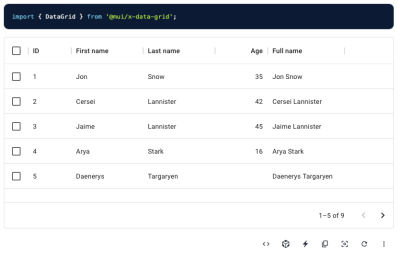
"The most common pitfall in design systems is the ‘element-first’ trap," says a lead design architect. "Having a perfect button library is vanity. Having a library of patterns that solve business problems—like a ‘List Builder’ or ‘Data Grid’—is survival."
Organizational Buy-in
The shift to pattern-first design requires a shift in how stakeholders perceive the design system. It is no longer an "internal project" that can be sidelined for feature work. Instead, it is integrated into the product planning process. When a feature is proposed, the question is not "What does it look like?" but "What patterns does this use?" or "What new pattern does this create?"
The Role of Management
For this to work, engineering and product management must view the pattern library as a shared asset. This requires:

- Ownership: Assigning stewards to specific patterns who ensure they remain performant and accessible.
- Standardization: Using tools like Webpack’s Module Federation to share these patterns across different services or even different applications.
- Metric Tracking: Treating the "reuse rate" of patterns as a primary success metric for the design system team.
The Future of Collaborative Design
The implications of this approach extend beyond just speed. When designers and developers work in the same "pattern language," the quality of the final product improves. The friction of constant back-and-forth is replaced by a rhythm of refinement.

As we move toward a more modular future—where micro-frontends and design tokens are becoming the norm—the ability to articulate a product through patterns will be the defining skill for the next generation of product builders. By embracing this approach, teams don’t just build faster; they build more cohesive, resilient, and human-centric experiences.
In summary, the transition from "elements" to "patterns" is more than a tactical change; it is a cultural evolution. It empowers every team member to contribute to the design system, removes the bottlenecks that kill morale, and ultimately delivers a better product to the user. The "WeTrip" scenario is not a fantasy—it is a roadmap for any team struggling to find harmony in the chaotic process of modern software development.