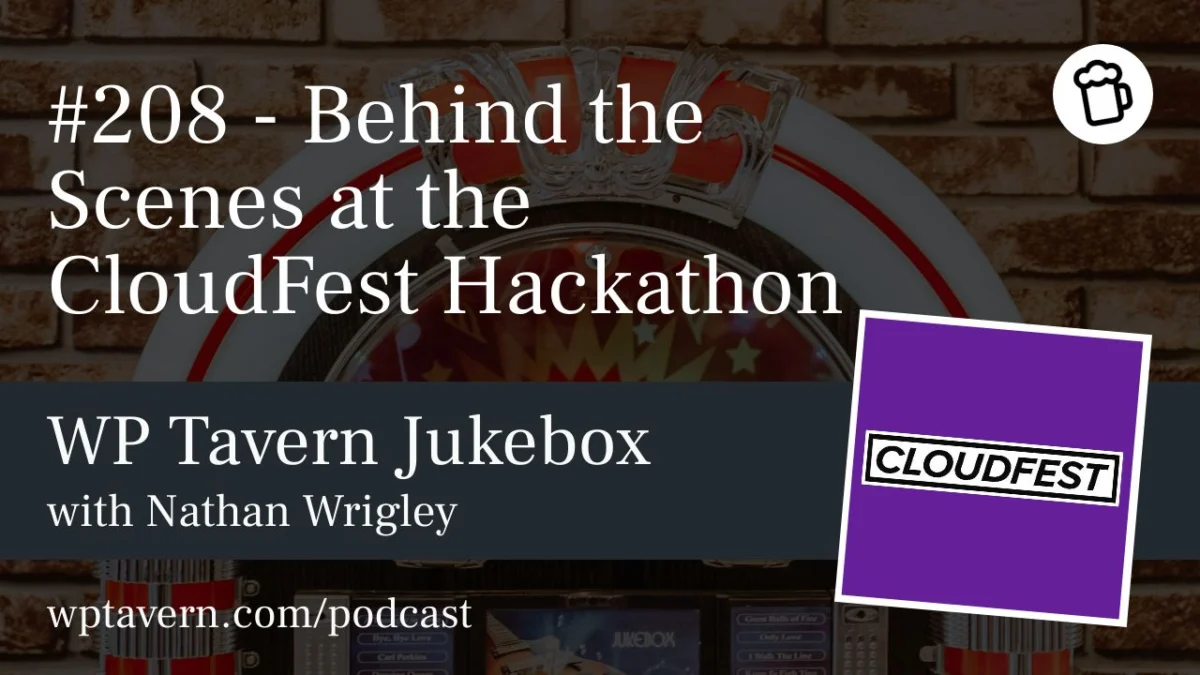
While the rollercoasters of Europa-Park in Rust, Germany, test the physical limits of gravity for thousands of thrill-seekers, a different kind of intensity unfolds just a few hundred yards away. Within the walls of one of the world’s most prestigious tech conferences, the CloudFest Hackathon serves as a high-stakes, collaborative crucible where developers, UX designers, and system architects gather to push the boundaries of the modern internet.
Unlike the high-pressure corporate hackathons that dominate the tech industry—often designed as thinly veiled marketing exercises to promote a specific API or to incubate a disruptive startup in a sleepless 48-hour window—the CloudFest Hackathon operates under a distinct philosophy. It is professional, non-commercial, and fundamentally committed to the health of the open-source ecosystem.
Main Facts: The Human API of the Open Web
At its core, the CloudFest Hackathon is an attempt to create a "human API." The internet is a massive, decentralized collection of interconnected open-source projects—from the Linux kernel and PHP to WordPress, which powers over 40% of the web. Typically, the contributors to these massive systems live in silos, communicating primarily through cold, transactional mediums like GitHub issues or formal API documentation.
The Hackathon removes the screen, placing the maintainer of a security plugin at the same table as an engineer who manages millions of servers for a global hosting giant. By shifting the environment from digital isolation to physical proximity, the friction of development disappears. Problems that have languished in backlogs for months are often resolved over a shared meal or a casual coffee break.
Carole Olinger, the head of the CloudFest Hackathon, describes the event as a gathering of open-source enthusiasts who are fed, caffeinated, and driven by a shared mission: to improve the open web. With over 110 participants descending upon the event, the Hackathon functions as a masterclass in cross-community collaboration, bridging the gaps between WordPress, TYPO3, Drupal, and Joomla developers.
Chronology: From Concept to Code
The event may last only three days, but the reality of organizing such an assembly is a Herculean task that begins months in advance.
The Preparation Phase (September – January)
The planning cycle commences in September, shortly after the previous event has concluded. Olinger and her team, including Lucas Ratke (Automattic), Alain Schlesser (Yoast), and Thierry Muller (Google), begin by reviewing feedback from the previous year. The goal is to set manageable objectives that align with the broader themes of the main CloudFest conference. By October, the operational intensity begins to ramp up, with January described by Olinger as "the most crazy month," characterized by intense logistics management—securing accommodations, catering, and vetting the project pitches.
The Selection Process
The evolution of the project selection process reflects the maturity of the event. In past years, the organizing team had to actively "hunt" or "plant" ideas within CMS communities. This year, for the first time, the team received 22 unsolicited pitches from various open-source projects.
The selection criteria are rigorous. The team prioritizes:
- Alignment with CloudFest themes: For example, incorporating AI-driven projects as the technology continues to dominate industry discourse.
- Cross-CMS collaboration: Selecting projects that encourage, for example, WordPress contributors to work alongside Drupal or Joomla engineers.
- Skill-Matching: With 300 to 400 applications for only 110 spots, the organizers meticulously curate the attendee list to ensure that the talent present matches the requirements of the chosen project tables.
The Three-Day Sprint
When the event officially begins, it is not a free-for-all. Following an initial pitch session, the room settles into a "chaotic, yet structured" period where participants distribute themselves among the 10 chosen projects. Throughout the three days, the support team monitors the tables, acting as facilitators. If a table becomes too full or lacks a specific technical skill, the organizers step in to politely reassign individuals, ensuring every team has the resources required to succeed.
Supporting Data: The 2024 Project Landscape
The 2024 edition saw a diverse array of projects, ranging from AI-integrated development tools to infrastructure-level decentralization.
- CMS Cloud Manager: Led by Javier Casares, this project seeks to automate not just the installation of a CMS, but the configuration of the server environment itself, bridging the gap between one-click installs and production-ready architecture.
- Federated Events: Mattias Pfefferle’s team is building a decentralized alternative to platforms like Meetup.com, utilizing the Fediverse and ActivityPub to ensure users are not reliant on proprietary, closed-source networks.
- WP-CLI + AI: Milana Cap and her team introduced AI capabilities into the WordPress Command Line Interface (WP-CLI), successfully building a "spam machine" MVP within the first day.
- CMS Freedom: Patricia BT’s project focuses on data ownership, using LLMs to extract HTML content and import it into block-based themes, with the long-term goal of making the tool platform-agnostic.
- Accessible Infographics: Anne-Mieke Bovelett’s team is developing a WordPress block that automatically generates accessible metadata for infographics—a critical step in ensuring compliance and inclusivity for complex web data.
- Peer-to-Peer Federated RAG: Wesley Stessens is exploring the frontiers of Retrieval Augmented Generation (RAG) by building a decentralized network where users can share niche knowledge databases without relying on centralized servers.
- Staging to Live: Tadas Pukas and his team focused on a practical plugin for WordPress that allows users to create staging environments and sync changes back to live sites, simplifying the workflow for thousands of administrators.
Official Responses and Jury Deliberations
The final day culminates in a judging process that, while competitive, is designed to highlight achievements rather than declare a singular "winner" in the traditional, cutthroat sense.
The jury, composed of nine individuals including top-tier partners and representatives from the Groundbreaker Talents charity, evaluates the projects across five distinct categories:
- Tech Visionary Award: Based on technical achievement and the hurdles overcome.
- Pitch Perfect Award: For the most compelling presentation of results.
- Social Media Master Award: Tracking the project’s buzz and reach.
- Breaking Barriers Award: A new category recognizing inclusive technology and diverse, cross-functional collaboration.
- Overall Winner: Determined by a points-based system aggregating scores across all categories.
Everything collected in terms of sponsorships for these awards is donated to the Groundbreaker Talents initiative, reinforcing the message that the Hackathon’s primary goal is the support of the open-source ecosystem, not profit.
Implications: The Future of the Open Web
The significance of the CloudFest Hackathon extends far beyond the three days spent in Europa-Park. There is a growing focus on the sustainability of these projects post-event. Organizers are currently working on better ways to follow up with project leads, ensuring that the momentum generated during the sprint is not lost.
The implications for the broader tech industry are profound. By bringing together disparate communities—those who manage infrastructure, those who write code for CMS platforms, and those who advocate for accessibility—the event creates a blueprint for a more interoperable internet.
As Carole Olinger notes, the goal is to unlock resources and support for these projects, allowing them to evolve from mere proofs-of-concept into robust, production-ready solutions. For the participants, the Hackathon is a reminder that the "cloud" is not a monolithic corporate entity, but a fragile, human-led construction. It requires constant maintenance, collaborative effort, and the occasional three-day sprint to ensure that the plumbing of the internet remains secure, robust, and open to all.
For those considering future participation, the message is clear: you do not need to be a top-tier coder to contribute. The event thrives on a diverse array of talents, from project managers and designers to marketers and documentation specialists. As the industry looks toward CloudFest 2026, the Hackathon stands as a testament to the fact that when you remove the barrier of the screen, the only limit to innovation is the willingness of people to sit at the same table and solve problems together.