By Sharon Atefi
PR, Talent and Partnerships Professional
Somewhere sitting quietly inside your email marketing database right now is a customer who genuinely loves what you sell. They have purchased from your brand multiple times, taken the time to leave a glowing five-star review, and would happily recommend your products to a friend over coffee. In fact, their circle of friends likely mirrors your exact ideal buyer persona.
And yet, there is a very high probability that you have never actually asked them to do it.
For many modern entrepreneurs and e-commerce founders, managing a referral program is akin to paying for a gym membership. It technically exists in theory, but nobody has used it since January. There is a lonely, forgotten hyperlink buried somewhere in the website footer, and that serves as the absolute extent of the business’s word-of-mouth strategy.
This oversight is a massive missed opportunity, especially when you examine the economics of referrals. When a trusted friend looks you in the eye—or texts you a link—and says, "You would absolutely love this," the traditional sales pitch is already finished. No paid advertising platform on earth can buy that level of authentic social proof, and no advanced machine-learning targeting algorithm can ever truly replicate it.
So why do the vast majority of digital referral programs produce virtually zero revenue? The answer usually comes down to structural execution: businesses build their referral initiatives as a static web page rather than a dynamic, automated growth program.
Why Referrals Outperform Every Traditional Marketing Channel
Take a moment to reflect on the last major purchase or discovery driven entirely by a friend’s recommendation. It could have been an underground restaurant, a critically acclaimed streaming series, or a durable pair of running shoes. Did you stop to meticulously read dozens of third-party reviews, or spend hours comparing alternative options across the web?
Of course not. You simply gave it a try because someone whose opinion you inherently trust had already done the heavy lifting of vetting the product.
This is the psychological magic of a referral. It takes years of accumulated trust between two individuals and instantly transfers that credibility to your brand via a single digital message.
This underlying trust explains why referred customers consistently convert at significantly higher rates than traffic from any paid acquisition channel. They cost next to nothing to acquire, and they exhibit much higher long-term retention rates. People rarely refer their friends to products or services that are a poor fit; your existing customers naturally execute higher-quality audience targeting than any programmatic ad network ever could, simply because they actually know the human being on the receiving end.
The brands that consistently win at this game do not treat referrals as a passive website feature. Instead, they treat them as a systematic email marketing strategy complete with a dedicated schedule, behavioral triggers, and a targeted audience. Word-of-mouth marketing never stops working, but a proper referral engine simply applies modern infrastructure to that timeless concept.
Timing is Everything: Asking at the Moment of Peak Delight
When founders attempt to fix a struggling referral program, they almost always tinker with the wrong variables. They endlessly rewrite the copywriting, or they inflate the financial reward.
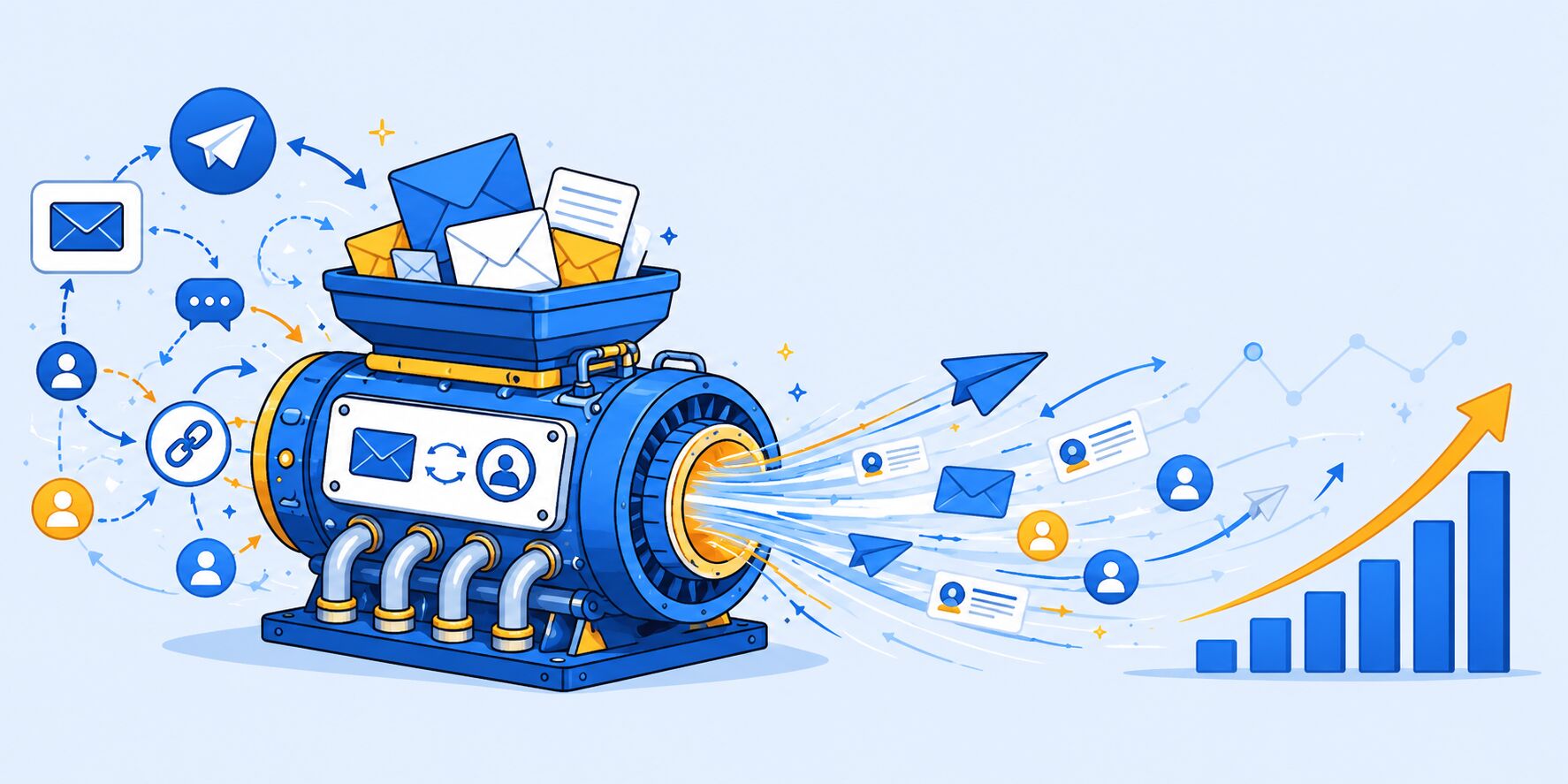
In reality, the secret to high conversion rates is almost always timing.
Dropping a generic referral request into a random Tuesday afternoon promotional newsletter is the digital equivalent of wallpaper—it fades into the background noise. However, sending that exact same request immediately after a customer leaves a glowing five-star review yields a completely different psychological response. The copy might be identical, but the context changes the outcome entirely.
Smart e-commerce brands continuously monitor specific customer milestones to gauge satisfaction:
- A successful second or third repeat purchase.
- The submission of a positive product review or rating.
- A direct customer service interaction or support ticket that ended on a high note.
- A direct reply to an automated welcome or content email expressing love for the brand.
These specific milestones represent windows of peak goodwill. During these moments, asking, "Do you know someone who would love this too?" feels like a natural extension of the conversation rather than an aggressive extraction attempt.
Naturally, monitoring thousands of customer accounts manually to catch these micro-moments is impossible. This is precisely where modern marketing automation proves its worth. A repeat purchase should automatically trigger a referral invitation sequence a few days following delivery. A high satisfaction review score can instantly trigger a personalized thank-you email with a dedicated sharing link embedded neatly inside. By configuring these rules once, the brand ensures that the referral ask lands at the absolute psychological sweet spot indefinitely.
The Double-Sided Incentive Structure
When designing the mechanics of a referral program, transparency and fairness are paramount. One-sided referral rewards—where only the person making the referral receives a benefit—frequently fall flat.
If only the referrer gets paid, the dynamic shifts from a friendly recommendation into a transaction where they are seemingly monetizing their personal relationships, which can feel transactional and grubby. Conversely, if only the referred friend receives a discount, the existing customer has zero external incentive to lift a finger. Both scenarios introduce structural flaws into the acquisition funnel.
The proven solution is a double-sided incentive structure—a classic "Give $10, Get $10" model.
This approach transforms the act of referring into a mutual favor. The referrer is genuinely helping their friend save money while earning a reward of their own as a token of appreciation. Meanwhile, the new customer arrives at your storefront greeted by an introductory discount that drastically reduces friction on their first transaction. Every stakeholder’s incentives align harmoniously, including your own bottom line.
The rewards themselves do not need to be extravagant or margin-crushing. Free shipping, modest dollar-off credits, or early access to upcoming product drops work brilliantly for brands with regular release schedules. What ultimately kills referral programs is rarely a reward that feels too small; rather, it is the operational friction that follows.
Eliminating Friction: The 15-Second Rule
Every poorly optimized referral program leaks potential revenue in the exact same two places: the exact moment a customer has to stop and think about what to write, and the moment they have to figure out how and where to share their link.
To maximize participation, these barriers must be systematically dismantled:
- Unique Tracking Links: Every participating customer must be assigned a unique tracking URL that handles attribution automatically behind the scenes.
- Pre-Written Copy: Provide a short, human, and conversational draft that the customer can either send as-is or lightly tweak to fit their personal voice.
- Omnichannel Share Buttons: Place sharing options directly where mobile thumbs already live—SMS text messaging, WhatsApp, and native email—designed for a single tap.
As a general rule of thumb: If referring a friend takes more than fifteen seconds from the moment a user opens your email, the process is too complex.
Your hardcore superfans will inevitably push through a clunky, poorly designed user flow regardless of the hurdles. However, superfans typically make up only about 2% of any given email list. The remaining 98%—the quietly satisfied majority who would happily recommend your business if it were entirely effortless—will simply abandon a frustrating user journey. And that quiet majority represents where your actual volume and scale live.
Equally important is the unglamorous work of consistent reminders. A referral program announced once during a launch week produces a brief spike followed by total silence. Programs that compound over time are mentioned steadily and subtly: within post-purchase automated flows, inside regular newsletters, and even on digital receipts. They are not shouted from the rooftops, but rather integrated often enough that when a friend eventually asks, "Where did you get that?" your customer immediately remembers they have a link ready to share.
Strategic Segmentation: Stop Broadcasting to Strangers
Would you walk up to a complete stranger waiting at a bus stop and demand that they recommend your business to their inner circle?
Of course not. Yet, that is precisely what a brand does when it broadcasts a generic referral blast out to its entire, unwashed email database. A subscriber who made a single impulse purchase eight months ago and has not opened a single email since is certainly not going to refer their friends. Pestering them with generic referral demands only conditions your entire audience to skim past your future messages.
Instead, brands must build micro-segments specifically tailored for the referral ask:
- Verified repeat buyers.
- Active product reviewers and brand advocates.
- Highly engaged subscribers who consistently open and click content.
- Anyone who has previously replied directly to an email with positive feedback.
This qualified segment should hear about your referral program more frequently and through more personalized channels than the rest of your list, because they are statistically the only subscribers likely to take meaningful action.
Platforms like Omnisend excel precisely in this arena. Advanced customer segmentation isolates these high-value brand advocates effortlessly, while deep integrations with loyalty platforms like Smile and Yotpo handle loyalty points, tiered rewards, and referral tracking behind the scenes. These integrations automatically trigger the correct email notification the moment a customer earns a reward or their friend finalizes a purchase. The operational plumbing runs itself smoothly, leaving your team with only one core responsibility: crafting an ask that is truly worth saying yes to.
Conclusion: Amplifying Natural Word of Mouth
Word-of-mouth marketing is already happening around your brand right now, at this very moment, whether you have consciously engineered a formal program or not. People naturally mention products, services, and experiences they genuinely enjoy. The fundamental question for modern founders is simply whether you have made it frictionless for those positive mentions to travel digitally, and whether your loyal advocates receive proper recognition and thanks when they do.
Ultimately, a structured referral engine is simply the digital infrastructure required to support the goodwill that already exists within your community. By leveraging automated lifecycle triggers, precise audience segmentation, and seamless reward integrations, brands can finally unlock the true, compounding potential of their existing email subscriber base—allowing their customers to do what they were already doing, just a whole lot louder.