In the modern digital economy, the mechanism by which a business collects revenue is as critical as the product or service itself. For small business owners and entrepreneurs in 2025, the landscape of payment processing has evolved from simple card swiping to a complex, multi-layered ecosystem of digital wallets, API-driven gateways, and omnichannel solutions. Selecting the wrong provider can lead to inflated transaction fees, high shopping cart abandonment rates, and security vulnerabilities that jeopardize customer trust.
As we navigate the fiscal year of 2025, the sheer volume of options can be paralyzing. Whether you are a solopreneur launching your first e-commerce store or a brick-and-mortar retailer looking to modernize your point-of-sale (POS) hardware, this analysis breaks down the leading payment systems to help you optimize your cash flow and user experience.
Understanding the Modern Payment Ecosystem
Before evaluating specific providers, it is essential to define what constitutes a robust payment system. At its core, a payment system is the technological infrastructure that bridges the gap between a buyer’s funds and a seller’s bank account. This includes online payment gateways, merchant account providers, and mobile POS systems.
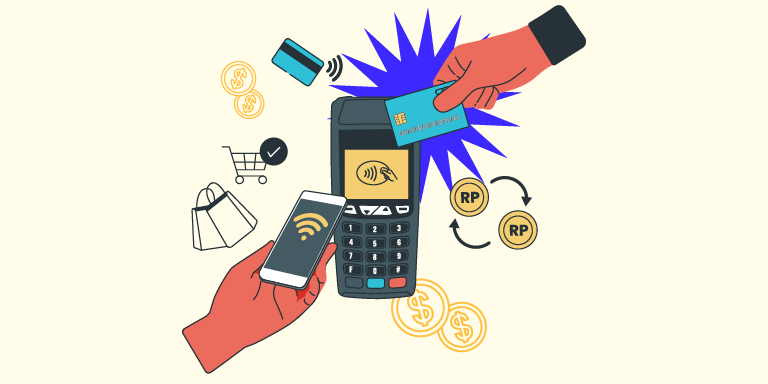
Crucially, payment systems are not the same as banking institutions, nor are they accounting software. While some platforms (like Square) offer integrated bookkeeping, the primary function of a payment processor is to securely authorize, transmit, and settle transaction data.
The Anatomy of a Transaction
- Authorization: The customer initiates payment. The gateway encrypts this information and sends it to the merchant’s acquiring bank.
- Authentication: The acquiring bank sends the data to the card network (Visa, Mastercard, etc.), which verifies the funds with the customer’s issuing bank.
- Settlement: Once approved, the funds are held and eventually moved from the issuer to the merchant’s account, typically within a few business days.
Criteria for Selection: A Framework for Founders
When narrowing down the top providers for 2025, I evaluated each system against five key metrics essential for small business stability:
- Payout Latency: Cash flow is the lifeblood of a small business. We looked for providers that minimize the "settlement gap" between the time a customer pays and the time the funds hit your operating account.
- Conversion Friction: The best payment system is one the customer barely notices. Solutions that keep users on-site during checkout consistently outperform those that redirect users to third-party domains.
- Geographic Flexibility: If your growth strategy involves international expansion, you need a provider that supports multi-currency settlement and complies with global tax and data privacy regulations.
- Pricing Transparency: The industry is notorious for "hidden" fees, including PCI compliance surcharges and gateway fees. We prioritized providers with clear, flat-rate, or volume-tiered structures.
- Security Standards: Compliance with PCI-DSS (Payment Card Industry Data Security Standard) is non-negotiable.
Top 6 Payment Systems for 2025
1. Stripe: The Developer’s Gold Standard
Stripe remains the market leader for businesses that prioritize customization and a seamless user experience.

- The Advantage: Stripe’s greatest asset is its API. It allows for "embedded" payments, meaning your customers never leave your website to pay. This significantly reduces bounce rates.
- The Trade-off: While powerful, Stripe’s full potential is unlocked through code. Small business owners without technical expertise may find the interface daunting or may need to hire a developer to implement advanced features like subscription billing or custom checkout flows.
- Pricing: Generally follows a standard "pay-as-you-go" model (typically 2.9% + 30¢ per transaction).
2. PayPal: The Trusted Household Name
PayPal continues to be a powerhouse, primarily because of the immense trust it commands among consumers.
- The Advantage: The "Pay with PayPal" button is a psychological trigger for security. Consumers who are hesitant to share credit card details with a new, unknown merchant are often perfectly comfortable using their PayPal account.
- The Trade-off: The user experience often requires a redirect to PayPal’s own servers, which can introduce friction. Furthermore, account holds or disputes can sometimes be difficult to resolve for smaller merchants.
3. Authorize.net: The Enterprise-Grade Veteran
Owned by Visa, Authorize.net is a reliable choice for businesses that want a stable, battle-tested gateway.
- The Advantage: It offers advanced fraud protection and is compatible with almost any merchant account, giving you the flexibility to switch banks without needing to change your entire payment stack.
- The Trade-off: It is less "plug-and-play" than modern competitors like Square, often requiring a more formal setup process.
4. Amazon Pay: Leveraging Global Trust
Amazon Pay allows merchants to offer their customers the ability to pay using the shipping and billing information already stored in their Amazon accounts.
- The Advantage: Speed. By removing the need to manually input credit card details and shipping addresses, Amazon Pay significantly boosts mobile conversion rates.
- The Trade-off: It is primarily an online solution. If your business is heavily focused on physical retail, you will need a secondary provider.
5. Square: The King of Physical Retail
If you run a cafe, a boutique, or a mobile pop-up shop, Square is the industry leader for a reason.
- The Advantage: Their hardware ecosystem is unmatched. From contactless card readers to full-service POS terminals, Square integrates physical and digital sales into one dashboard.
- The Trade-off: While their virtual terminal is excellent, their online-only capabilities are sometimes less flexible than Stripe’s API-driven approach.
6. SecurePay: The Emerging Challenger
SecurePay offers a balanced approach, providing a user-friendly interface that is particularly well-suited for businesses that aren’t using major platforms like Shopify or WooCommerce.
- The Advantage: Excellent customer support and a trial-friendly model that allows you to test the integration before committing to a long-term contract.
- The Trade-off: Lack of brand recognition. Because it is less "famous" than PayPal or Stripe, some customers may hesitate at checkout.
Chronology of Payment Evolution
To understand why these systems are the leaders today, we must look at the timeline of the industry:
- Pre-2010: The era of clunky bank-provided terminals and complex merchant service agreements that took weeks to process.
- 2010–2015: The rise of the "aggregator" model (Square, Stripe), which allowed businesses to start accepting payments in minutes rather than weeks.
- 2015–2020: The integration of digital wallets (Apple Pay, Google Pay) and the shift toward omnichannel retailing.
- 2020–2025: The current focus on "invisible" payments, AI-driven fraud detection, and the integration of crypto-assets and local payment methods for global reach.
Supporting Data and Implications
Market data from 2024 indicates that businesses utilizing optimized, "one-click" checkout experiences see an average of 15–20% higher conversion rates compared to those with multi-step, redirected checkout processes.
The Implications for your bottom line:
- Security Costs: Neglecting PCI compliance can lead to fines ranging from $5,000 to $100,000 per month until compliance is met. Always ensure your provider manages these security burdens for you.
- Fee Creep: A 0.5% difference in processing fees may seem negligible, but on a $1M annual revenue, that is a $5,000 discrepancy. Always re-evaluate your fee structure annually as your volume scales.
Frequently Asked Questions (FAQ)
Q: Can I use more than one payment provider?
A: Absolutely. Many retailers use Stripe for their website and Square for their physical store. However, keep in mind that splitting your volume can sometimes make it harder to reach the thresholds required for "enterprise-level" volume discounts.
Q: What is a Payment Service Provider (PSP) vs. a Merchant Account?
A: A PSP (like Stripe or Square) aggregates many merchants under one master account, making it easier to start. A traditional merchant account is a direct relationship with a bank, which is usually cheaper at very high volumes but much harder to qualify for as a startup.
Q: How do mobile payments affect security?
A: Mobile payments (NFC) are actually more secure than physical card swipes. They use "tokenization," meaning the actual card number is never transmitted to the merchant; instead, a one-time use digital token is used.
Final Thoughts for the 2025 Entrepreneur
The landscape is competitive, and your choice of payment processor should align with your specific growth stage. If you are scaling rapidly, prioritize the API-heavy flexibility of Stripe. If you are a physical business, look to Square. If you are struggling with trust-based cart abandonment, PayPal or Amazon Pay may be your strongest allies.
Remember that payment systems are not a "set it and forget it" utility. Review your transaction costs, monitor your bounce rates, and keep an eye on emerging fintech trends. By treating your payment infrastructure as a strategic asset rather than an operational burden, you can significantly improve your margins and your customer’s loyalty.
Disclaimer: Pricing information is accurate as of early 2025 but is subject to change based on provider updates, volume, and negotiated contracts. Always consult the official documentation of your chosen provider before finalizing your integration.