In the modern digital marketing landscape, where algorithms dictate reach and budgets are increasingly scrutinized by finance departments, a silent crisis is brewing. It is a crisis of measurement, where global organizations continue to anchor their success on "vanity metrics"—data points that offer the illusion of progress while masking deep, structural unprofitability.
Strategic consultant and analytics expert Avinash Kaushik recently sounded the alarm on a metric that has begun to infiltrate boardrooms: Cost Per Session (CPS). For veteran marketers, the emergence of CPS as a primary KPI is not just surprising; it is a signal of a dangerous disconnect between marketing activity and actual business health. As the industry pivots toward AI-driven search and automated advertising, the insistence on measuring "traffic" rather than "value" is no longer just a bad habit—it is a threat to the long-term viability of the marketing department.
The Mirage of "Cost Per Session"
A few years ago, during a strategic engagement with a global enterprise operating in 75 countries, a marketing sub-team presented their success criteria. They were proud of their "Cost Per Session" metric. For a consultant with decades of experience, having authored bestselling books on analytics and helped pioneer modern measurement tools, this was a revelation—and not a positive one.
In the marketing lexicon, the standard is usually "Cost Per Sale" or "Cost Per Acquisition." Measuring "Cost Per Session" implies that the primary objective of a marketing campaign is merely to shovel traffic onto a website as cheaply as possible. It treats the website visitor as a commodity rather than a potential customer.
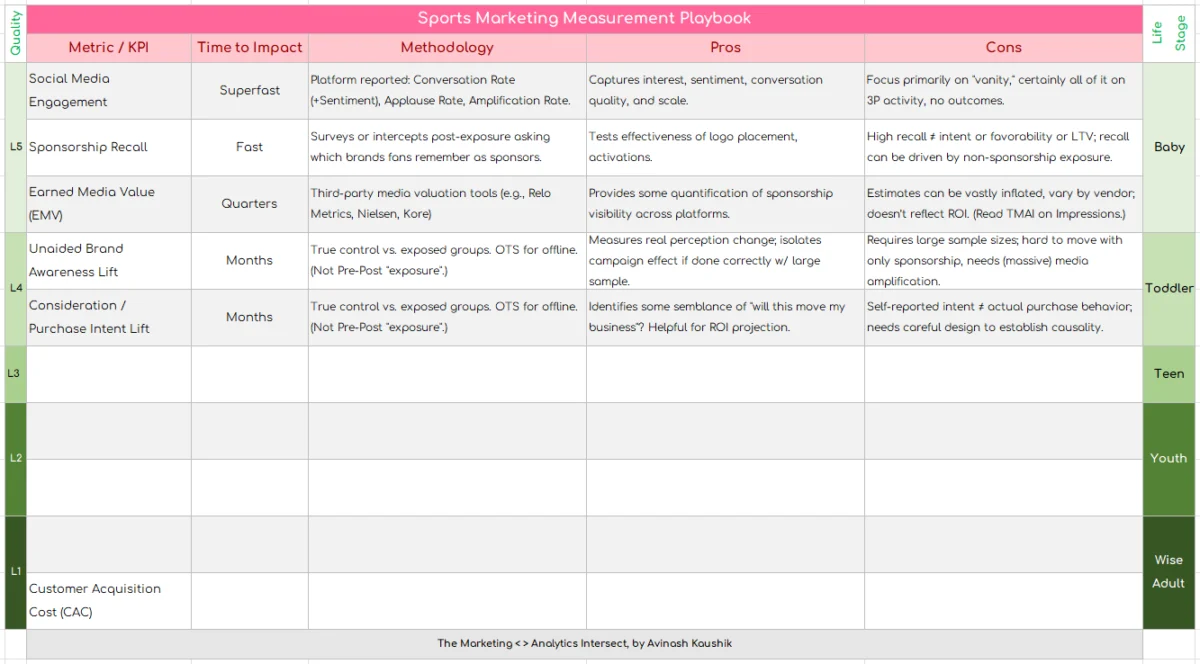
This approach is symptomatic of a larger industry malaise: the obsession with "Activity" over "Outcomes." Whether it is Impressions, Views, or Sessions, these metrics are fundamentally value-deficient. They measure the act of marketing, not the result of marketing. As the industry moves into an era where AI can generate traffic on command, simply paying to "get people in the door" without regard for whether those people actually engage or convert is a recipe for fiscal disaster.
The Hierarchy of Measurement: From Activity to Accountability
To protect the CMO from the CFO, and to ensure that marketing budgets are treated as investments rather than expenses, organizations must adopt a rigorous hierarchy of measurement.
Phase 1: Moving Beyond Activity
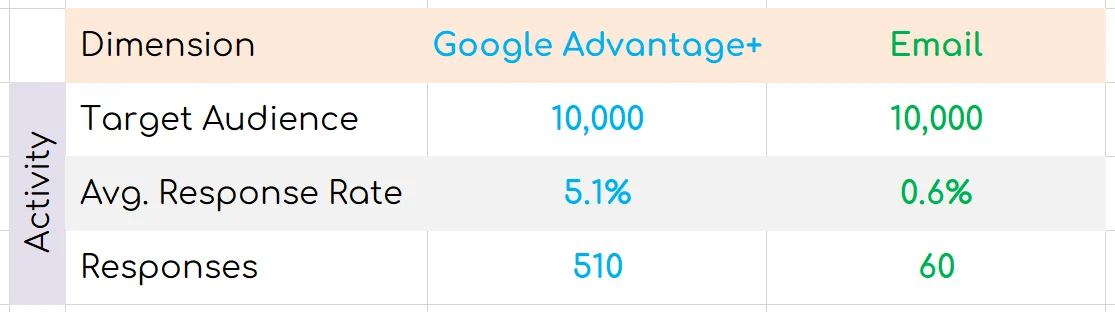
Most corporate reports focus on the "Activity" layer: how many clicks did the campaign generate? How many people saw the ad? While platforms like Google’s Advantage+ are excellent at eliciting higher response rates and driving traffic, celebrating these numbers in isolation is a mistake. An engaged CFO will immediately ask: "What are the outcomes of this activity?"
Phase 2: Prioritizing Outcomes
The shift to "Outcomes" involves tracking Revenue, Conversion Rates, and actual sales. Even for B2B or complex B2C organizations with long sales cycles, this is achievable. If a direct sale isn’t the immediate outcome, companies should measure "Micro-Conversions"—actions that indicate high intent—and multiply them by the average lead-to-close rate and the average outcome value. This may not be 100% perfect, but it is infinitely more valuable than looking at "Sessions."
Phase 3: The Gold Standard—Accountability
True "Accountability" requires accounting for the cost of goods sold (COGS) and the total investment of the campaign. When a CFO asks to see the impact of marketing, they are looking for a clear line of sight from the dollar spent to the dollar of net profit generated.
Data-Driven Accountability: The Case Against Unchecked Spending
To illustrate the necessity of this shift, consider a comparison between two common marketing channels: Google Advantage+ and Email.
A standard report might show that Google Advantage+ generates 173 orders, while Email generates only 14. A shallow analysis would suggest that Google is the superior channel. However, when we apply an "Accountability" filter—subtracting campaign costs and COGS—the picture changes dramatically.
The Metrics of Reality
- ROAS (Return on Ad Spend): Often used by marketing teams to inflate their perceived impact, it fails to account for the actual cost of the ads themselves.
- ROI (Return on Investment): A step up, as it subtracts campaign costs from revenue.
- POAS (Profit on Ad Spend): A more refined look that considers margins.
- POI (Profit on Investment): The ultimate measure. It asks: "For every dollar we gave marketing, how much actual net profit did we receive?"
In a real-world scenario, Google Advantage+ might show a high volume of traffic, but when the POI is calculated, the company might discover that for every $1 spent, they are receiving only $0.70 in profit. In this instance, the marketing department is effectively serving as an employee for the advertising platform’s sales team, rather than a growth engine for their own company. Conversely, an Email campaign might generate fewer total orders but yield a profit of $5.70 for every $1 spent.
Strategic Implications: What Should CMOs Do Now?
When the data shows that a campaign is "eliminating profit" rather than creating it, the reaction must be swift and decisive.
- The "Hard Stop": If a campaign is yielding negative POI, the budget should be paused immediately. It is uncomfortable to watch traffic and revenue "disappear," but it is necessary to stop the hemorrhaging of profit.
- The Reset: Use this pause to challenge internal teams and external agencies to re-evaluate their tactics. Why is the platform not delivering? Is it the audience targeting? Is it the creative? Is it the offer?
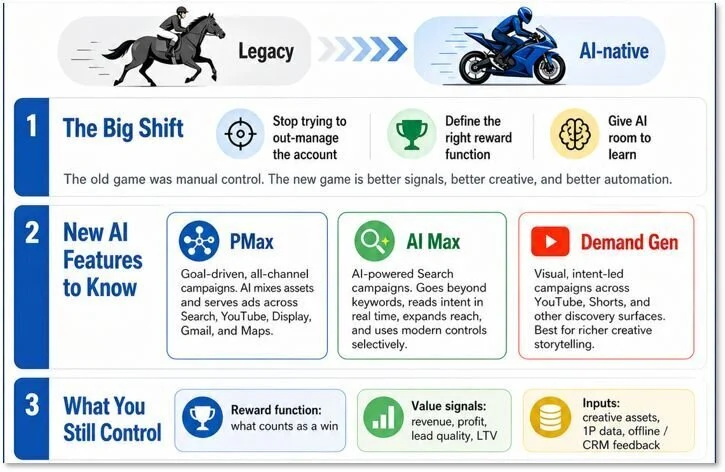
- The AI Integration: As search behavior shifts to AI-driven discovery, the nature of "traffic" is changing. Google’s own guidance for AI-integrated search suggests that users coming from AI summaries are higher quality and more engaged. Therefore, optimizing for the "click" (the session) is becoming obsolete. Marketers must optimize for the "value of the visit."
Why "Cost Per Session" is a Dead End in the AI Era
The industry’s reliance on Cost Per Session is not just inefficient; it is increasingly at odds with the future of search. Google’s recent documentation on succeeding in "AI Search" explicitly advises against focusing on clicks. AI Overviews provide users with more context and more relevant links, leading to higher-quality, more engaged visitors. If you are optimizing for cheap sessions, you are actively working against the quality-focused nature of the modern search experience.
For those who find it impossible to abandon the "Session" metric entirely, the advice is to "suck less." Shift the metric to Cost Per Non-Bounced Session. By stripping away the traffic that "comes, pukes, and leaves," you are left with a number that reflects reality. If a Non-Bounced Session costs $27 instead of $14, the team is far more likely to recognize that the tactic is not sustainable.
Conclusion: A Career-Proofing Strategy
The path to a sustainable marketing career—and a prosperous company—lies in the courage to move away from the noise. The "Activity" layer is for those who want to hide from scrutiny. The "Outcomes" layer is for those who want to be competent. The "Accountability" layer is for those who want to lead.
It is a difficult transition. It requires challenging the status quo, demanding more from agencies, and having uncomfortable conversations with leadership. But in return, you gain something invaluable: a marketing strategy that is not only resistant to AI disruption but is fundamentally aligned with the financial objectives of the business.
In the race for budget and authority, the marketer who can prove their impact through Profit on Investment will always win over the marketer who simply reports on how many people clicked a link. Stop measuring the activity, start measuring the business impact, and watch as your influence—and your budget—grows.