The marketing landscape is undergoing a tectonic shift. For decades, the relationship between brands and their marketing agencies has been defined by a predictable, albeit antiquated, transactional model: the "execution army." Agencies were hired to build, traffic, optimize, and report—tasks that formed the bedrock of the traditional Statement of Work (SOW).
However, the rapid maturation of platform-based artificial intelligence and agentic automation has rendered the traditional "manual labor" model obsolete. We are no longer in Kansas; the rise of AI-driven performance marketing and algorithmic optimization means that the very tasks agencies once billed thousands of hours for are now being performed better, faster, and more cheaply by machines.
This transformation isn’t just an operational tweak; it is a fundamental reconfiguration of value. For clients, this represents a massive opportunity to slash waste and pivot toward high-impact, strategic partnerships.
The Three Strategic Drivers of Change
The "we are not in Kansas anymore" realization is fueled by three distinct, irresistible forces that are reshaping the agency ecosystem:
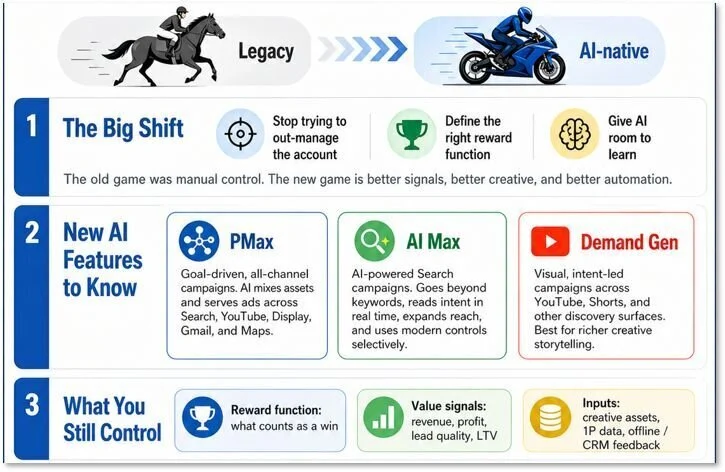
- Algorithmic Superiority: Platforms like Google (PMax) and Meta (Advantage+) have evolved to a point where the machines now possess more data and faster iteration cycles than any human team. Attempting to "micro-optimize" these platforms manually is not just inefficient—it is actively destructive to the algorithm’s learning process.
- The Death of the "Percent of Media Spend" Model: This archaic billing structure, which incentivized agencies to keep budgets high and manual intervention constant, is fundamentally misaligned with an AI-first world. It rewards volume over efficacy and discourages the use of efficiency-driving automation.
- The Shift from Execution to Judgment: As the "how" of marketing becomes automated, the value of the agency shifts entirely to the "why." Agencies are being forced to pivot from being "hands-on-keyboard" executioners to becoming strategic, high-level advisors focused on governance, creative ideation, and business outcomes.
Chronology of the Transformation: From 2024 to 2027
To understand where we are going, one must look at the timeline of this evolution.
- Late 2024: The "tipping point." AI performance reached a level of sophistication where manual intervention by agency staff began to yield diminishing returns. The first cracks in the traditional SOW appeared as savvy brands realized that "over-touching" accounts was hindering performance.
- 2025: The year of the "re-evaluation." Brands began questioning why they were paying high retainers for tasks like keyword research and daily pacing—tasks that were now native to the ad platforms.
- July 2026 (The Current Horizon): The period of mandatory contract renegotiation. By this time, it is estimated that the reduction in manual work will allow for 25% to 75% savings in traditional agency fees across all disciplines—media, creative, performance, and CRM.
- 2027 and Beyond: The "Agentic Era." Agencies that have successfully transitioned will be those that have codified their value as partners in innovation, with contracts structured around outcome-based incentives rather than hourly labor or media spend percentages.
Supporting Data: Where the Cuts Happen
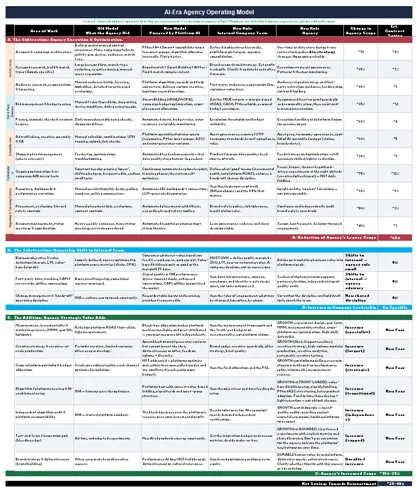
The financial implications of this shift are significant. An analysis of agency SOWs reveals that the "Agency Activity Army"—comprising campaign architecture, keyword sculpting, and audience segmentation—is now 78% redundant due to platform AI.
The Breakdown of Agency Fee Reductions
| Area of Work | Cost Weight | Potential Reduction |
|---|---|---|
| Agency Activity Army (Architecture, Targeting) | 22% | 78% |
| Bid & Pace Dancers (Manual bidding, adjustments) | 14% | 73% |
| The Assembly Line (Trafficking, QA, Tagging) | 12% | 45% |
| Optimization Theater (A/B testing, manual tweaks) | 16% | 75% |
| Reporting & Servicing (Decks, meetings, emails) | 30% | 60% |
When these figures are aggregated, the total potential savings for a brand that cleanses its SOW of "ghost work" ranges from 60% to 65% of the current total contract cost.
The New Operating Model: A Blueprint for Success
If the old model was a "rent on an execution army," the new model must be a "purchase of strategic judgment." To thrive in the coming years, brands should move toward a tripartite fee structure:
- The Base Retainer (40%–50%): A lean, predictable fee for governance, data engineering, and steering. This covers the essential human oversight required to ensure brand safety and platform alignment.
- Project Fees (30%–40%): Dedicated budget for high-value strategic work—creative concepting, pre-testing, portfolio strategy, and complex cross-platform analytics that require human intuition.
- Outcome Incentives (15%–25%): A performance-based kicker tied to incremental profit or revenue lift. This aligns the agency’s financial success directly with the business outcomes of the client, rather than the volume of media spent.
Implications for Stakeholders
For the Client: A Call to Action
Renegotiating your contract is not about penny-pinching; it is about incentivizing excellence. If your agency is currently working off an old-world SOW, they are legally obligated to ignore AI and maintain the status quo. By shifting to an outcome-based model, you provide them with the incentive to embrace automation, build new skills, and provide the strategic depth that your business will require to compete in 2027.
For the Agency: A Pivot or Perish Moment
This transition will be uncomfortable, but it is ultimately liberating. Agencies that move away from the "hamster wheel" of micro-optimization are free to hire better talent, pay them more, and focus on work that actually moves the needle. The "agency of the future" will be smaller, more senior-led, and deeply integrated into the client’s core business strategy.
The Role of Procurement and Leadership
CFOs and Procurement leads must move beyond the "cost per hour" mindset. They should look for partners who can demonstrate "Value Signals Hunting" and "Agentic Wrangling." The goal is to stop paying for "motion" and start paying for "impact."
Final Considerations: A Warning on Ownership
As the industry pivots, two cautionary points remain for brands:
- Data Sovereignty: Ensure absolute ownership of your ad accounts, pixels, and data pipelines. If your agency controls your data, you are a hostage. Do not allow "agency-owned" setups to persist.
- Internal Toxicity: Beware of internal stakeholders who benefit from the "Percent of Media Spend" model—specifically, those who thrive on the complexity, rebates, and lack of transparency inherent in the old system. When you cut the waste, you may find that the biggest resistance comes from within your own halls.
The future of marketing is not about doing less; it is about doing better. By embracing the AI revolution and fundamentally restructuring the client-agency contract, brands can eliminate the "optimization theater" of the past and build a, sustainable, and highly profitable future. The agencies that survive will be the ones that understand: their value is no longer in the manual labor of the present, but in the strategic guidance for an unknown, automated future.