By Global Business Insights Desk
Co-created with insights from short-form video expert Melissa Laurie, Michael Stelzner, and Jerry Potter.
Main Facts
The landscape of digital advertising is undergoing a profound structural shift. For years, small-to-medium-sized business (SMB) owners and corporate marketing teams alike have faced a steep learning curve when attempting to navigate TikTok Ads Manager. Complex interfaces, rigorous data parameterization, and technical API integration requirements frequently created high barriers to entry.
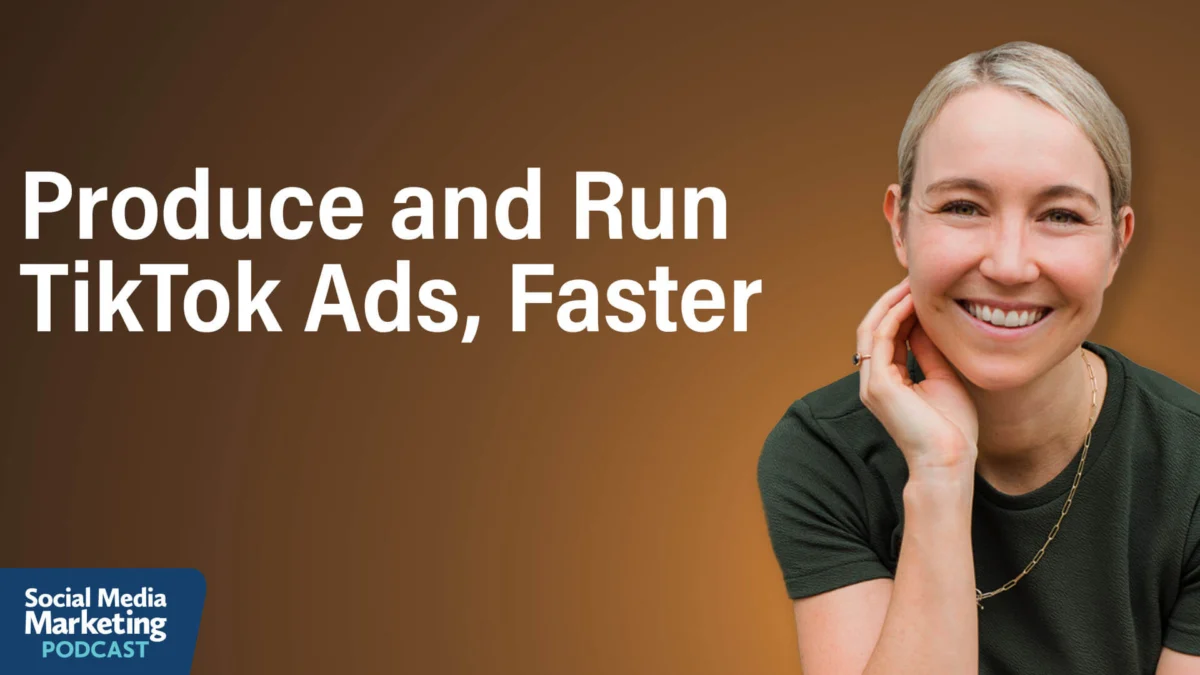
Today, however, the playing field is leveling. TikTok has rolled out an aggressive suite of AI-driven tools designed to automate, optimize, and streamline ad creation and campaign management. Chief among these innovations are Agentic Hub, Symphony Creative Studio, and Content Suite.
Through the integration of the Model Context Protocol (MCP)—a developer-less bridge connecting external large language models (LLMs) like ChatGPT and Claude directly to TikTok Ads Manager—marketers can now build, evaluate, and troubleshoot campaigns using plain, conversational language. Yet, as automation lowers the barrier to entry, industry experts stress that human strategic oversight, rigorous creative direction, and critical evaluation of AI outputs remain absolute prerequisites for high-performing campaigns.
Chronology: The Evolution of TikTok’s AI Advertising Ecosystem
To understand how the platform reached this juncture, it is helpful to look at how programmatic advertising and generative AI have recently converged:
- The Pre-MCP Era: Historically, connecting external artificial intelligence tools to major ad platforms required specialized developer resources. Marketers had to commission custom API integrations to bridge the gap between analytics data and generative writing engines, placing advanced automation out of reach for companies lacking dedicated engineering staff.
- The Introduction of MCP Protocols: TikTok launched the Model Context Protocol (MCP), creating a secure, two-way communication channel between AI chat interfaces (such as Claude or ChatGPT) and TikTok Ads Manager. This removed the necessity for manual coding and complex credential generation.
- The Launch of Agentic Hub: TikTok established Agentic Hub as a dedicated marketplace for third-party and native AI-powered advertising modules. Platforms like Wix quickly integrated into this ecosystem, expanding the "smorgasbord" of tools available to advertisers.
- Advanced Generative Feature Rollouts: TikTok upgraded its Symphony Creative Studio and Symphony Agent suites, enabling brands to move from basic text briefs to fully realized video storyboards, scripts, and product showcase clips at scale. Concurrently, Content Suite received upgraded AI search functionalities to expedite competitive research and creative ideation.
Supporting Data & Functional Capabilities
The modern TikTok advertising stack relies on distinct interoperable components designed to solve specific operational bottlenecks.
1. Agentic Hub and MCP Integration
Described by short-form video expert and Oysterly Media founder Melissa Laurie as being similar to a restaurant dining experience—where TikTok Ads Manager is the restaurant kitchen, MCP is the waiter, and tools like Claude or ChatGPT act as the menu—this architecture changes how marketers interact with campaign data.
Through MCP connections, communication is bidirectional. Some integrations operate on a read-only basis (ideal for pulling diagnostic performance reports), while others grant read-and-write permissions (allowing the AI to draft campaigns, adjust targeting parameters, or modify budgets directly from the chat interface).
2. Official AI Skills Library
TikTok has published downloadable instruction sets known as "AI skills." Operating within tools like ChatGPT or Claude, these specialized packages function as prebuilt tactical playbooks. Prominent examples include:
- Viral Video Creator: Analyzes platform trends to help model hook structures, pacing, and calls to action.
- Ad Group Optimizer: Assists with performance tuning and budget allocation.
- Account Diagnosis Co-pilots: Pinpoints systemic inefficiencies or creative fatigue within active ad sets.
According to industry practitioners, these AI skills accelerate creative production to roughly 70% completion, leaving the remaining 30%—such as precise product feature callouts and emotional resonance—to human refinement.
3. Symphony Creative Studio
Symphony serves as TikTok’s native generative video engine. By ingesting business goals, brand guidelines, and historical performance signals, Symphony transforms written briefs into product briefs, insights, scripts, and rough-cut videos. Product-based businesses have leveraged this to mass-produce variation assets—such as a furniture manufacturer generating 100 distinct video variations per week highlighting individual pieces without needing human actors on camera.
4. Content Suite AI Search
Functioning as TikTok’s equivalent to an advanced competitor intelligence archive, Content Suite allows marketers to filter user-generated content (UGC) style ads and organic posts by keyword, industry sector, timeframe, geographical region, and campaign objective. This infrastructure gives brands a blueprint for what is currently resonating across feeds before they allocate capital.
Official Responses and Expert Insights
While the automation capabilities are vast, leading agency practitioners emphasize that trusting AI recommendations blindly can severely damage campaign ROI.
Melissa Laurie warns against accepting algorithmic suggestions at face value, citing a common pitfall:
"When a new creative has only been running for a few days, TikTok’s AI might recommend pausing it because it isn’t performing as well as older creative, but that recommendation ignores the fact that the platform naturally prioritizes ads that have been running longer."
To counteract algorithmic bias, marketers are advised to actively challenge AI suggestions by prompting the system with inquiries like, "What’s another way to do this?" or "Could I be doing this better?" When pushed, LLMs routinely recalibrate their initial analytical output.
Furthermore, industry consensus highlights the current limitations of human-like AI video generation. While synthetic product showcases thrive in sectors like beauty and home goods, artificial human avatars attempting to deliver natural social proof (e.g., saying "All my friends are talking about this") routinely trigger consumer skepticism. Consequently, leading brands favor hybrid models: real human creators film foundational demonstrations, and AI tools overlay visual enhancements (such as animated elements to symbolize product efficacy).
Implications for Marketers and Small Businesses
The lowering of technical barriers carries profound strategic implications across the digital marketing ecosystem.

The Rise of the Empowered Generalist
For small and medium-sized enterprises (SMBs) that previously lacked the budget to retain dedicated media buyers or programmatic experts, AI tools provide an accessible onboarding ramp. Business owners can now use plain language to diagnose underperforming ad sets, audit creative hooks, and draft campaign structures.
A Shift in Skill Sets
The nature of time investment in digital marketing is changing. Marketers are spending less time navigating complex dashboard dropdown menus and manual report generation, and more time mastering prompt engineering, creative refinement, and conceptual strategy.
The Survival of Authentic Content
As AI-generated content floods digital channels, the baseline of visual quality across feeds is rising. To stand out above this noise, performance marketers must prioritize authentic structural frameworks:
- The Critical First Frame: Viewers evaluate content instantly against millions of alternatives. The initial visual must immediately compel the user to stop scrolling.
- Billboard Text: On-screen text must function like a highway billboard—legible and impactful at a glance.
- The Connective Tissue (The Glue): Successful short-form videos maintain momentum by seamlessly bridging the hook into the core content without awkward transitional pauses.
- Sharp Endings: Videos should conclude abruptly rather than tapering off in volume or speed, signaling high completion rates to platform distribution algorithms.
The Future of Agencies
Far from rendering marketing agencies obsolete, these tools redefine their value proposition. Just as commercial aviation offers economy, business class, and first class to reach the same destination, agencies now serve as full-service strategic partners for brands seeking expert oversight, while DIY tools empower internal teams to handle baseline execution.
Ultimately, the democratization of TikTok ads via artificial intelligence does not eliminate the need for marketing acumen; rather, it shifts the competitive advantage toward those who combine machine-driven scale with authentic human creativity.