Main Facts
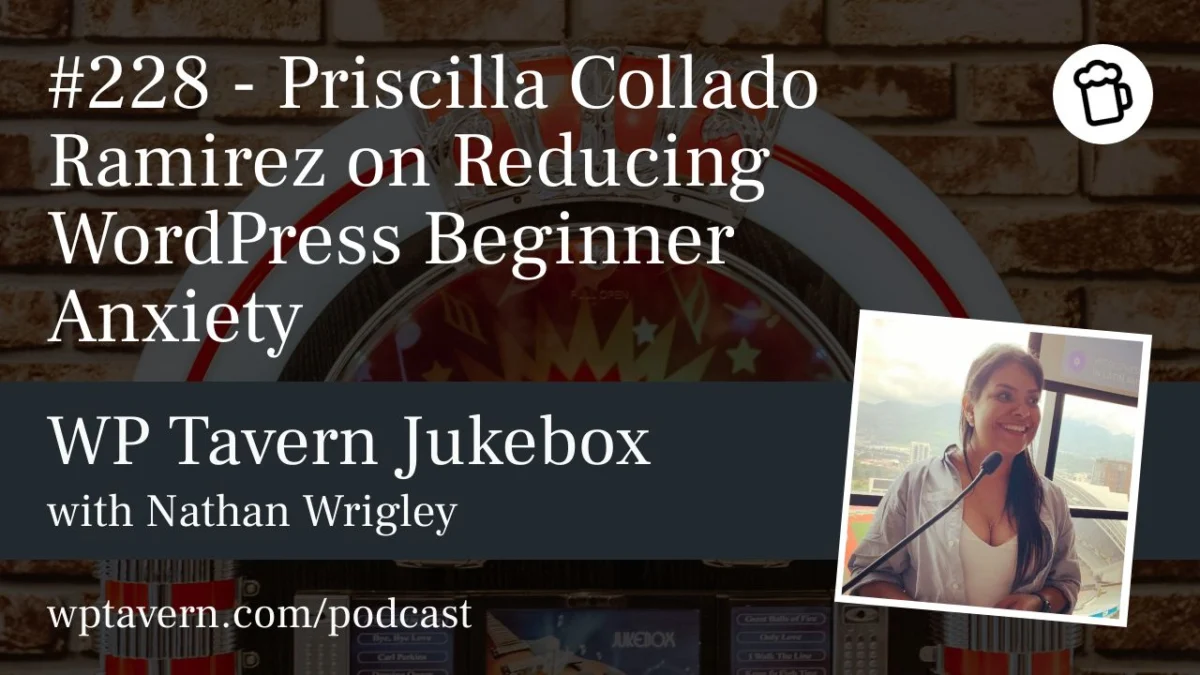
The modern WordPress ecosystem, while expansive and powerful, continues to present a significant psychological barrier to entry for newcomers. During a recent episode of the Jukebox Podcast from WP Tavern, host Nathan Wrigley sat down with Priscilla Collado Ramirez—an educator, fashion designer, and wellness coach who traveled 14 hours from Costa Rica to speak at WordCamp Europe.
Ramirez’s journey into the WordPress community is emblematic of the struggles faced by many non-technical users. Having initially abandoned WordPress 17 years ago due to information overload and a perceived lack of supportive community structures, she returned to the platform later in life to help her own fashion students navigate the digital landscape. Today, Ramirez champions a radically different approach to open-source software education: one that replaces technical jargon and anxiety-inducing "it depends" answers with stress management, somatic breathing exercises (pranayama), and a deep understanding of neurodiversity in learning styles.
Her message highlights a critical blind spot in tech education: the assumption that digital tools can be learned effectively in isolation while ignoring the psychological and physiological stress of the learner. By advocating for "confidence through action," localized learning paths, and emotional reset tools, Ramirez is redefining how the global WordPress community can welcome and retain new users.
Chronology
The narrative of Priscilla Collado Ramirez’s relationship with WordPress spans nearly two decades, characterized by early frustration, a long hiatus, and a triumphant return as an international speaker and mentor.
- Seventeen Years Ago: While studying advertising and web design at university, Ramirez encounters early iterations of WordPress. Faced with an overwhelming array of choices, a lack of female representation in the space, and technical environments dominated by rigid thinking, she experiences severe information overload. Feeling inadequate, she formally quits WordPress, concluding that the platform is "not for me."
- The Interim Period: Over the next decade and a half, Ramirez builds a multifaceted career as a fashion designer, educator, and wellness coach. She observes her own fashion design students struggling to build basic digital portfolios and frequently falling victim to predatory pricing from web design agencies.
- The Return to WordPress: Motivated by a desire to liberate her students from external financial dependencies, Ramirez re-examines WordPress. Finding a vastly evolved ecosystem—and notably, the burgeoning women’s leadership and speaker initiatives within the community—she discovers a renewed sense of belonging and confidence.
- Recent Years (2023–Present): Ramirez steps into her role as an advocate and speaker. She attends her first women speakers’ group at WordCamp in 2023, realizing that the WordPress ecosystem has transformed into a collaborative, inclusive space. She begins presenting locally and internationally on the intersection of stress management and technical education.
- WordCamp Europe: Traveling 14 hours from Costa Rica—one of Latin America’s most vibrant and active WordPress communities—Ramirez takes the stage at WordCamp Europe to deliver her seminal talk on why WordPress feels overwhelming for beginners and how wellness tools can solve this crisis.
Supporting Data
The challenges Ramirez addresses are rooted in tangible educational and psychological dynamics that affect thousands of new software users daily:
- Travel and Community Scale: Ramirez’s 14-hour transit underscores the dedication of the Costa Rican WordPress scene, which she notes is the largest and most active community in Latin America.
- The Two Learning Frameworks: Ramirez categorizes learners into two primary cognitive styles:
- Linear Learners: Individuals who absorb information in a sequential, step-by-step manner (A to B to C).
- Spiral Learners: Individuals (such as Ramirez herself) whose brains process information non-linearly, requiring cyclical exposure to topics in a low-stress environment before mastery is achieved.
- The Plugin Paradox: With tens of thousands of options available in the official WordPress repository, beginners are routinely paralyzed by choice. Asking a beginner to select an SEO plugin or theme without context frequently leads to user abandonment.
- The "Delete Button" Fear: Psychological data from beginner testing reveals that newcomers often treat software modifications as irreversible disasters, fearing that a single misclick will permanently destroy their digital presence. Ramirez counters this by introducing pranayama (breathwork) to regulate the nervous system and lower cognitive load.
Official Responses and Perspectives
Priscilla Collado Ramirez on Overcoming Technical Anxiety
Ramirez emphasizes that technical self-doubt is rarely a reflection of intelligence, but rather a mismatch in pedagogical approaches.
"I felt in that time overwhelmed by the too many options… For beginners, sometimes those options feel paralysing because we need to start with one at a time."
Addressing the culture of technical mentoring, she critiques the traditional dynamic where engineers teach beginners without understanding cognitive diversity:
"We have mentors in WordPress, but the mentors sometimes don’t study university education… An engineer tries to teach another engineer, or an engineer teaches an entrepreneur or a beginner, so their minds work differently."
Crucially, Ramirez flips the conventional script on how confidence is developed in tech spaces:
"Confidence does not come before action. Confidence is built through action."
Nathan Wrigley on the Realities of Tech Isolation
Host Nathan Wrigley reflected on his own entry into the WordPress space in 2015, echoing the sentiment of feeling like an outsider before discovering the community at a large-scale event in London. Wrigley noted how easily tech-savvy individuals overlook the anxiety experienced by newcomers:
"My parents, when I put the phone in their hand for the first time… assume that they would have the same approach as me, which was just play around with it and then you’ll figure it out. Oh, no. No touching anything was, will I break it?"
Wrigley also acknowledged the friction between technical pragmatism and Ramirez’s holistic approach, noting that software engineers often dismiss wellness practices as unconventional, despite their proven efficacy in reducing cognitive overload.
Implications
The insights shared by Priscilla Collado Ramirez carry profound implications for the future of WordPress education, community building, and open-source software onboarding.
1. Re-evaluating Open-Source Onboarding
As WordPress pushes deeper into block-based editing and full-site editing paradigms, the platform risks compounding the very complexity that Ramirez warns against. If the software continues to expand its feature set without localized, empathetic onboarding pathways, entry-level adoption rates may plateau. The implication is clear: software developers and core contributors must collaborate closely with educators and psychologists to simplify the out-of-the-box user experience.
2. The Rise of Holistic Tech Education
Ramirez’s integration of wellness coaching, sound therapy, and pranayama into digital training challenges the hyper-accelerated culture of the tech industry. By demonstrating that learning cannot occur under physiological stress, she lays the groundwork for a new movement of "mindful mentoring." Agency owners, community organizers, and course creators are challenged to move beyond purely technical tutorials and address the emotional and mental well-being of their students.
3. Elevating "Teaching the Teachers" (Pedagogy in Tech)
One of the most radical concepts emerging from Ramirez’s framework is the need to "educate the educators." In the open-source world, anyone with technical competence can become a mentor or tutorial creator, yet few possess formal training in pedagogical strategy. Developing programs that teach technical leaders how different human brains process information—acknowledging both linear and spiral learners—could drastically reduce the attrition rate among WordPress beginners.
4. Globalizing Inclusivity
Ramirez’s journey from feeling alienated in a male-dominated, hyper-technical environment 17 years ago to speaking on a major international stage highlights the success of intentional diversity and inclusion initiatives within the WordPress project—such as women-focused speaker training groups. Her story serves as a proof-of-concept that intentional community outreach can reclaim talented contributors who might otherwise have been permanently lost to tech burnout.
Ultimately, Priscilla Collado Ramirez’s message to the global WordPress community is both simple and revolutionary: technology serves humanity, not the other way around. By pairing technical education with deep empathy, controlled pacing, and emotional regulation, the WordPress ecosystem can transform anxiety into empowerment—one breath, and one small win, at a time.