In the current marketing landscape, artificial intelligence is often treated as a high-octane engine for a legacy vehicle. Teams across the globe are rushing to integrate AI tools into their tech stacks, primarily with one goal in mind: speed. They are drafting emails in seconds, automating lead scoring, and churning out content variations at a pace that was unimaginable just three years ago.
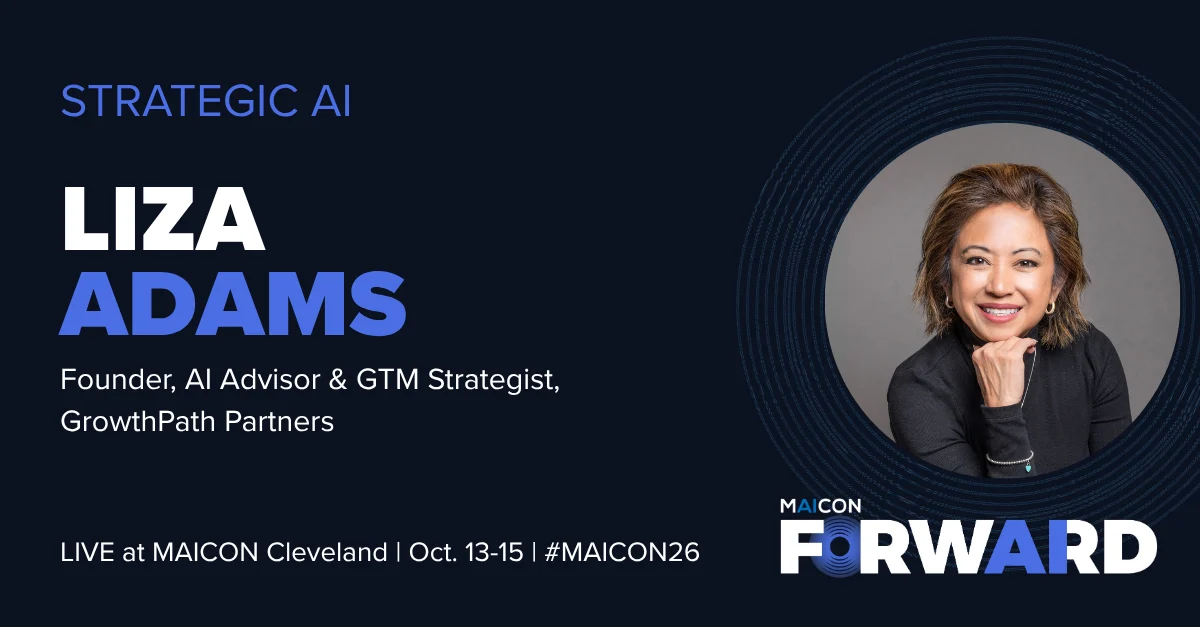
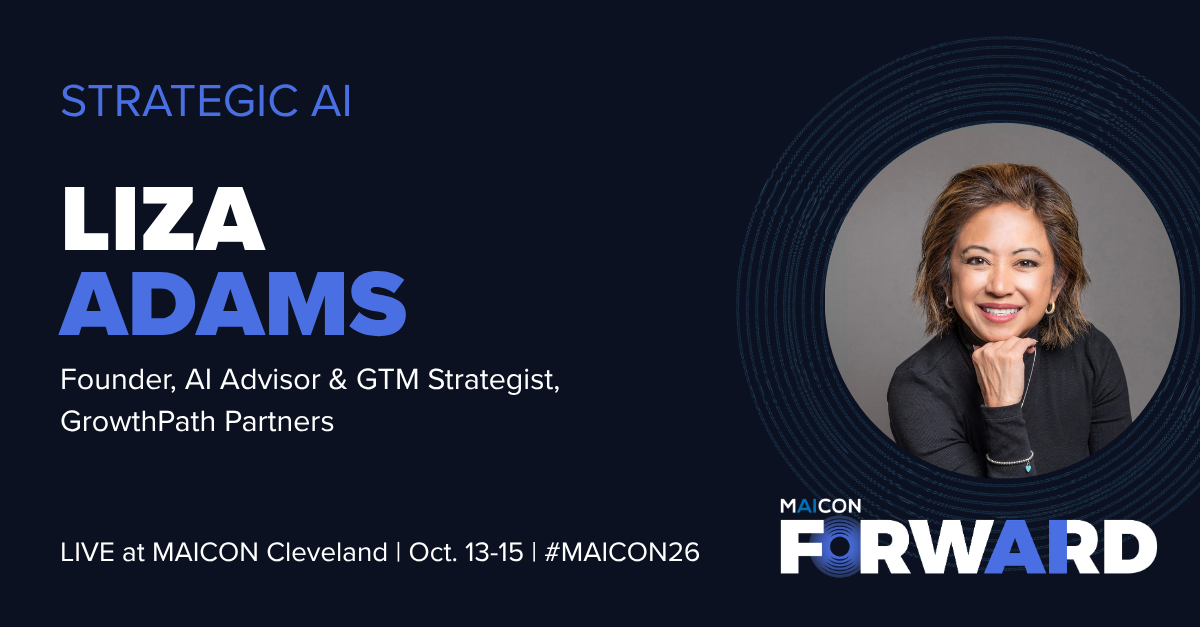
However, according to Liza Adams, Founder and AI Advisor at GrowthPath Partners, this race toward efficiency is a strategic trap. By focusing solely on "doing old work faster," marketing leaders are not only missing the true potential of the technology, but they are also inadvertently building a business case for why their teams should be downsized.
As the marketing industry prepares for the upcoming MAICON 2026 conference, Adams is positioning herself as a leading voice for a necessary paradigm shift: moving away from simple automation and toward the creation of "Human+AI" organizations that tackle work that was previously impossible.
The Efficiency Trap: A Strategic Miscalculation
For most CMOs and marketing managers, the allure of AI lies in the ROI of time saved. If a team of ten can do the work of twenty by utilizing generative AI, the balance sheet looks immediately better. But Adams argues that this is a short-sighted perspective that misunderstands the nature of technological transformation.
"Most teams use AI to do old work faster," Adams observes. "They draft emails, generate variations, and score leads. But doing faster work should not be all we do with AI. It’s just a starting point."
The implication of an efficiency-only strategy is profound. If the goal of AI adoption is merely to compress time, the logical endpoint is a smaller workforce. When leadership views AI as a replacement for human hours, they set the stage for headcount reduction. Conversely, when AI is used to unlock new capabilities—such as hyper-personalized, data-dense, real-time consumer engagement that no human team could manually execute—the strategy shifts from cost-cutting to value-creation. In this model, humans become essential, not as manual laborers, but as architects of complex, AI-driven ecosystems.
The "Removal Test" for Innovation
To help leaders differentiate between "faster work" and "reimagined work," Adams proposes a simple yet rigorous diagnostic: the Removal Test.
If you take AI out of your current workflow and the only consequence is that it takes longer to complete, you are merely engaging in faster work. However, if the removal of AI means the task would vanish entirely—because it was previously too costly, too complex, or technically impossible to execute—then you have successfully entered the realm of reimagined work.
The Anatomy of Organizational Failure
The failure to achieve true AI transformation is rarely a technological issue. It is, according to Adams, a failure of leadership, philosophy, and change management. Many organizations treat AI implementation as a simple procurement task—buying licenses and expecting the staff to figure out the rest.
Why Org Charts Should Come Last
A common mistake in corporate AI adoption is the "Top-Down Reorganization" approach. Leaders often attempt to map out new job titles or restructure departments to fit AI before they have actually defined the new nature of the work itself.
"The work changes first, then roles, then the org chart," Adams explains. "Reorganizing the team first is backwards. It’s like hiring actors before we have a script."
When companies shuffle their personnel before identifying the new, AI-enabled workflows, they create confusion and friction. Employees are left wondering how their roles fit into a new structure that lacks a clear, functional purpose. By focusing on the output—the new types of campaigns, analysis, or customer experiences that AI allows—leaders can organically determine what skills are required and how teams should be structured to support those outcomes.
The Death of Experimentation
Another silent killer of AI progress is the intolerance of failure. While many organizations claim to foster an "innovation-first" culture, the reality of the corporate environment often punishes the very experimentation required to master new technology.
"Leaders say they want experimentation and then shut it down the first time it fails," says Adams. In an environment where failure is met with judgment or budget cuts, employees naturally revert to the safety of traditional, manual workflows. For AI integration to flourish, leaders must treat failed experiments not as waste, but as data points in the journey toward a new, viable workflow. Transparency in failure is the only way to ensure that experimentation remains a persistent feature of the organizational culture.
Reimagining the Workflow: A Roadmap for Leaders
At MAICON 2026, Adams will lead a session titled How to Reimagine and Build Workflows That Weren’t Possible Before. This is designed as a practical, live-build session intended to transition marketing leaders from theoretical interest to concrete implementation.
Her methodology draws on over 25 years of experience leading major companies through periods of technological disruption. Her approach to building these new workflows generally follows a tiered maturity model:
- Audit the Current State: Identifying where AI is being used as a "speed-hack" versus where it is being used to expand capability.
- Define the "Impossible": Collaborating with stakeholders to identify high-value marketing outcomes that were previously abandoned due to complexity or budget.
- The Human+AI Bridge: Mapping out exactly where human judgment, ethical oversight, and creative strategy must intervene in the AI-generated process.
- Scalable Implementation: Deploying these workflows within enterprise systems, ensuring they are robust, measurable, and compliant.
The Human+AI Imperative: Implications for the Future
The shift toward a "Human+AI" organization has significant implications for the future of marketing careers. If the industry continues to prioritize speed, it risks commoditizing marketing professionals. If it pivots toward "reimagined work," it elevates the role of the marketer to that of a strategist, an auditor, and an orchestrator of complex systems.
This transformation requires a new set of soft skills. The ability to prompt, iterate, and troubleshoot AI systems is becoming as vital as traditional skills like copywriting or data analysis. Furthermore, the capacity to lead a team through the ambiguity of constant change is now a non-negotiable trait for senior leadership.
Building a Case for Humans
Adams’s core philosophy is perhaps best summarized by her conviction regarding the long-term value of the human workforce. Teams that stop at efficiency are building a case for fewer humans, whereas teams that reimagine what is possible are building a case for better humans.
As companies begin to see the limitations of "AI-only" or "AI-first" marketing, they will likely find that the most successful campaigns require a deeply human touch to handle nuance, brand voice, and emotional resonance. The companies that thrive will be those that have integrated AI to handle the "heavy lifting" of data and execution, freeing their human talent to focus on the high-level strategy that AI cannot yet replicate.
Conclusion: Joining the Conversation at MAICON 2026
The trajectory of the marketing industry is currently being written by those who dare to move beyond the superficial benefits of AI. As we approach MAICON 2026, the question for every marketing leader is not, "How can we use AI to save time?" but rather, "What new, transformative work can we do now that we have AI at our disposal?"
Liza Adams’s upcoming session at MAICON 2026 offers a rare opportunity for leaders to get their hands on the frameworks that are already working inside enterprise organizations. By shifting the focus from headcount and speed to capability and transformation, attendees will learn how to build teams that are future-proofed against the rapid evolution of the AI landscape.
For those ready to move past the initial hype and dive into the mechanics of deep, structural change, MAICON 2026 provides the essential roadmap. With over 50 AI and business leaders presenting, the event is positioned as a critical nexus for professionals who are serious about long-term success in an AI-augmented world.
Registration for the event is currently open, and for those looking to follow Adams’s insights leading up to the conference, her work with GrowthPath Partners continues to set the standard for how we should be thinking about the future of work. The era of "doing more with less" is coming to a close; the era of "doing the impossible with the help of AI" has arrived.