Introduction: The Isolation Problem in Modern Web Hosting
For decades, the web hosting industry has operated as a sprawling, fragmented collection of silos. From domain registrars and DNS providers to massive cloud infrastructure giants and scrappy, independent shared hosts, the foundational architecture of the internet is decentralized by design. While this distribution ensures resilience and democratization, it has created a critical vulnerability: when bad actors launch coordinated attacks—such as credential-harvesting phishing rings and fraudulent e-commerce "fake shops"—they exploit the communication gaps between individual service providers.
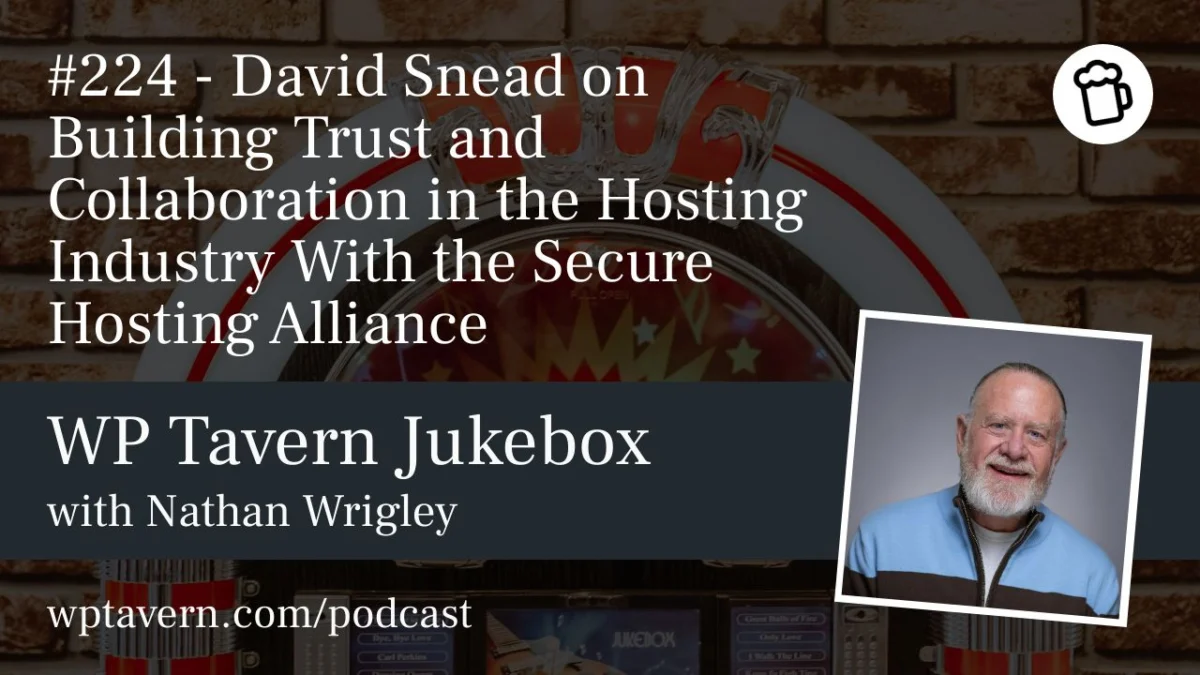
In a recent episode of the Jukebox Podcast from WP Tavern, host Nathan Wrigley sat down with David Snead, a veteran hosting attorney, co-founder of the i2Coalition, and current leader of the Secure Hosting Alliance. Their discussion peeled back the layers of web infrastructure to explore how cross-industry collaboration is shifting from an idealistic goal to a survival imperative. Central to this transformation is the Internet Infrastructure Forum (IIF), a groundbreaking initiative establishing a framework for real-time intelligence sharing and abuse reporting across the entire internet stack.
Main Facts: The Anatomy of the Secure Hosting Alliance and the IIF
To understand the scope of this collaborative effort, it is essential to examine the core entities driving change:
- The Secure Hosting Alliance (SHA): Launched just over a year ago as a working group under the i2Coalition, the SHA has grown rapidly to include 25 hosting members, three security vendors, and 17 Trust Seal Certified members. Its dual mission is to elevate ethics and professionalism in the hosting sector while fostering community interaction.
- The Internet Infrastructure Forum (IIF): Facilitated by the Paris-based Internet and Jurisdiction Foundation, the IIF serves as a neutral secretariat. It unites registrars, registries, DNS providers, and hosting companies to coordinate abuse responses through real-time intelligence sharing.
- The Core Test Case: The IIF is currently in its prototype phase, testing its framework against a singular, highly damaging threat vector: deceptive online storefronts ("fake shops") used for widespread financial fraud and credential harvesting.
- Actionable Intelligence over Proprietary Secrets: The data shared through the IIF avoids proprietary or confidential business information. Instead, participants exchange standardized, non-personal operational data points—such as domain names, IP addresses, timestamps, and abuse-reporting markers utilizing the Abuse Reporting Format (XARF).
Chronology: Tracing David Snead’s History in the Hosting Ecosystem
The story of the Secure Hosting Alliance cannot be separated from the career of its leader. David Snead’s perspective is shaped by a quarter-century of observing the evolution, consolidation, and maturation of the web hosting industry.
1999–2000s: The Early Days of Shared Hosting
Snead entered the hosting landscape in 1999 as in-house general counsel for one of the earliest specialized shared hosting companies. Back then, the industry possessed a distinct cultural cachet, characterized by a tight-knit community of operators who frequently collaborated and interacted.
The Mid-2000s to 2010s: Consolidation and Private Practice
As the internet commercialized, massive waves of corporate consolidation swept through the market, eroding the informal camaraderie of the early days. Snead transitioned into private legal practice, working with more than 50 different hosting companies—primarily drafting complex terms-of-service agreements and policies. Recognizing a legislative existential threat to internet providers in the United States, Snead teamed up with industry colleague Christian Dawson to co-found the i2Coalition, creating a unified trade association for internet infrastructure.
The cPanel Era and the Birth of the Secure Hosting Alliance
Following his work with the i2Coalition, Snead spent a decade as in-house counsel for cPanel and WebPros. Recognizing the mounting pressures of modern cyber threats and the isolation of smaller hosting providers, he stepped away from traditional corporate counsel to launch the Secure Hosting Alliance. Today, alongside his leadership of the SHA, Snead balances his time with mergers and acquisitions (M&A) legal work, helping early-generation hosts navigate acquisition pathways.
Supporting Data and Operational Mechanics: How Real-Time Sharing Works
The mechanics of the IIF are designed to dismantle operational silos without compromising competitive boundaries or triggering regulatory compliance nightmares.
Overcoming the Resource Imbalance
A persistent challenge in web security is the vast disparity in resources between hosting providers.
- Enterprise Hosts: Companies like GoDaddy and Newfold Digital possess massive security budgets and automated pipelines capable of processing a continuous "fire hose" of abuse complaints.
- Independent Hosts: Smaller providers might manage only a handful of abuse complaints monthly. However, when a single sophisticated "fake shop" operation targets their infrastructure, it can instantly overwhelm their limited administrative bandwidth, draining resources that should be dedicated to business growth.
The Secretariat Pipeline
The IIF resolves this imbalance by acting as a central clearinghouse. When a registrar detects a phishing domain or a fraudulent storefront, it submits standardized telemetry to the IIF secretariat.
- Ingestion: The registrar provides foundational data (timestamps, IP addresses, domain metadata).
- Enrichment: The IIF secretariat cross-references and enriches this submission with intelligence gathered from DNS providers, security vendors, and other infrastructure layers.
- Distribution: The enriched, actionable report is routed directly to the specific hosting provider servicing the malicious site.
By offloading the heavy lifting of cross-platform investigation, the IIF saves individual operators hours of tedious research, transforming fragmented complaints into coordinated, network-wide defense.
Official Responses: Navigating Legal Hurdles, Global Privacy, and Industry Buy-In
Building a global intelligence-sharing network is fraught with legal, technical, and cultural obstacles. Snead addressed several critical concerns regarding trust, privacy, and adoption.
The Legal and Privacy Landscape
A primary concern for any hosting executive considering data sharing is regulatory compliance—specifically balancing local and international privacy frameworks. Information that flows freely within the United States may run afoul of stringent data protection laws in the European Union (such as GDPR), India, or Brazil.
To address this, a dedicated legal working group within the IIF infrastructure constantly analyzes jurisdictional restrictions. By strictly abstracting shared data to technical markers (IP addresses, domain records, and standardized XARF syntax) rather than personally identifiable information (PII), the network minimizes regulatory exposure.
The Business Case Over Moral Persuasion
When asked about how the alliance convinces reluctant hosting executives to participate, Snead was remarkably candid: moral persuasion is largely ineffective in an industry where operators are fighting daily just to keep their heads above water.
Instead, the SHA and IIF rely on hard business economics. Hosting malicious content—such as fake shops—directly degrades a provider’s bottom line. It inflates credit card processing chargeback fees, wastes server bandwidth, and drains staff resources. By framing cross-industry collaboration as a direct cost-saving and risk-mitigation strategy, the alliance successfully compels both enterprise giants and boutique hosts to sit at the same table.
Implications: The Future of Trust Seals, Regulation, and Platform-Agnostic Defense
The ripple effects of the Secure Hosting Alliance and the IIF extend far beyond backend server administration, offering significant implications for web agencies, developers, and the broader digital ecosystem.
Platform-Agnostic Protection
While the conversation took place within the WordPress community (recorded during a WordCamp event surrounded by dozens of hosting and agency vendors), Snead emphasized that the initiative is entirely platform-agnostic. Whether a site runs on WordPress, Drupal, custom PHP, or any other CMS, internet infrastructure vulnerabilities remain the same.
The Rise of Trust Seals and Consumer Confidence
For web design agencies and freelancers selecting hosting partners for clients, evaluating security can be opaque. To bridge this trust gap, the Secure Hosting Alliance offers a Trust Seal Certification.
- Vetted hosts must meet strict professional and ethical benchmarks.
- A key requirement of the certification is that hosts must present clear, transparent contracts directly to customers before they sign up—eliminating the frustrating industry standard of hiding terms behind obscure email hyperlinks.
- Looking ahead, the SHA plans to launch a specialized trust seal in 2027 specifically for security vendors servicing hosting companies.
Preparing for the Wave of Infrastructure Regulation
For decades, the web hosting industry has remained largely free from heavy government regulation. However, as global anxieties regarding online content and digital safety mount, regulatory pressure is shifting toward infrastructure providers.
Initiatives like the Secure Hosting Alliance and the IIF provide the industry with a proactive shield. By demonstrating that responsible operators are actively self-organizing, sharing intelligence, and cleaning up their networks collectively, the hosting sector can present a unified front to lawmakers.
Conclusion: Joining the Alliance
As the web hosting landscape continues to consolidate, the need for community-driven defense mechanisms becomes increasingly urgent. David Snead’s work with the Secure Hosting Alliance and the Internet Infrastructure Forum proves that even fiercely competitive commercial entities can—and must—cooperate to preserve the integrity of the internet.
For hosting executives, agency owners, and infrastructure providers looking to engage further, the initiative welcomes participation across all organizational sizes. Interested parties can visit the official portal at hostingsecurity.net or reach out directly to David Snead via email at [email protected]. As the backbone of the web grows more complex, alliances like these ensure that the infrastructure supporting millions of websites stays connected, resilient, and secure.